



How to Get Rid of Carpenter Bees
If you have an active wood bee infestation, follow these guidelines to discover How To Get Rid of Carpenter Bees safely..
Carpenter bees wreak havoc on our pergolas, patios, potting benches, fences, and outdoor structures. Females drill holes into any wooden garden structures they can find in order to lay their eggs. This article will show you the best ways to identify carpenter bees, prevent infestations, and get rid of carpenter bees.
March 14, 2024
How To Get Rid Of Carpenter Bees (3 Steps)
To effectively eliminate carpenter bees and prevent future infestations, follow these easy steps:
1. Spray A Residual Insecticide to Kill Carpenter Bees
2. Use Dust In Carpenter Bee Nests
3. Plug Up Carpenter Bee Holes
Start with a thorough surface application of liquid insecticide in early spring, followed by regular treatments throughout the summer. For long-term control, especially against larvae, apply insecticidal dust deep into wood tunnels, eradicating existing infestations and inhibiting larvae development and reproduction.
Step 1. Spray A Residual Insecticide to Kill Carpenter Bees
If you have an active infestation, spray the areas where carpenter bees are boring into the wood with:
-
Cyzmic CS
-
Demon WP
-
FenvaStar EcoCap
Their holes are usually located on the underside of wooden structures, including siding, soffits, overhangs, decks, fence posts, fascia boards, and window frames. We recommend spraying twice during the spring months at intervals of 3-4 weeks to most efficiently get rid of carpenter bees.
If protected from the elements, like rain, this residual insecticide will last 2 to 3 months. If applied in late winter, the treatment will stay active through most of the bee season.
Severe Carpenter Bee Infestations
How to eliminate Carpenter bees when you have a severe infestation? You may need to repeat the above treatments more than twice. We suggest an interval of two weeks for spray treatments. After each spray treatment, apply D-Fense Dust or Tempo Dust to all possible nests, holes, or entry points.
Step 2. Use Dust In Carpenter Bee Nests
To get rid of a Carpenter Bee infestation, use Tempo Dust in as many Carpenter Bee holes as possible. Fill the JT Eaton Hand Bellow Duster or your chosen duster 1/2 way with dust and dust into the openings.
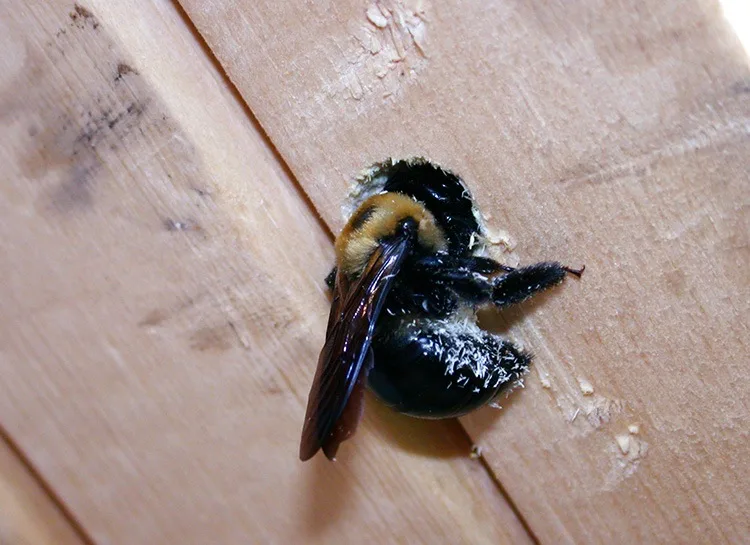
Although their holes appear only an inch or two deep, it usually extends at a 90-degree angle. The female will turn 90 degrees and bore a channel ranging from 6 inches to as long as 4 feet. This channel serves as the main corridor from which she will drill small chambers a few inches deep.
These chambers become egg holders. She will deposit an egg, bring in some food, and then seal it off to ensure the egg's development.
-
It may be difficult to treat each individual gallery with dust, aerosol, or liquid residual insecticides, due to the 90-degree angle, but it is important to try if you have a current infestation.
-
To learn more about nests: Carpenter Bee Holes
Step 3. Plug Up Carpenter Bee Holes
-
Plug the holes after all the bees are killed. A safe time to plug entrances is in the early fall months.
-
You can plug up the entrances with plugs, cork, or putty, You can also use a caulking compound. We suggest sealing the holes with wood putty since you can paint over the wooden structures. We also carry Carpenter Bee Blocker Kits that are made of stainless steel screens and come with installation tools.
-
Suppose you plug up the entrances too early. In that case, you will stop the carpenter bees from passing through the insecticide dust, and they may chew new openings in other locations.
-
The following year, spray bee nests early to prevent further boring.
Optional Step: A Non-Chemical Natural Approach to Kill Carpenter Bees
Carpenter Bee Traps And Natural Repellent
For those considering a non-chemical approach to get rid of carpenter bees, we recommend carpenter bee traps like, Best Bee Trap or Citrus Spray Carpenter Bee Repellent
The carpenter bee trap is specially designed to attract and trap carpenter bees. If you have an existing carpenter bee infestation, hang it directly over the carpenter bee holes. If you do not have a current infestation, hang the traps at the peaks and corners of your home, preferably on the sunniest side of your house.
How To Identify A Carpenter Bee
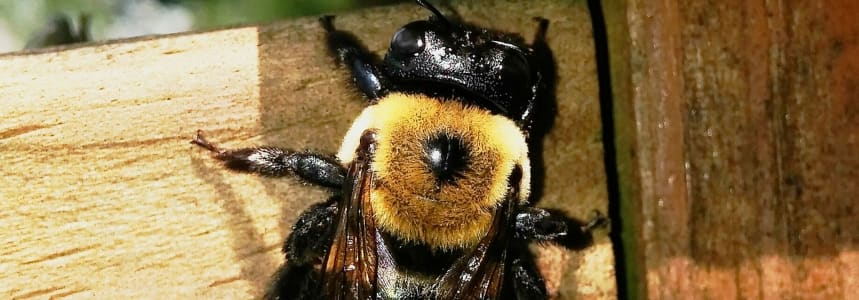
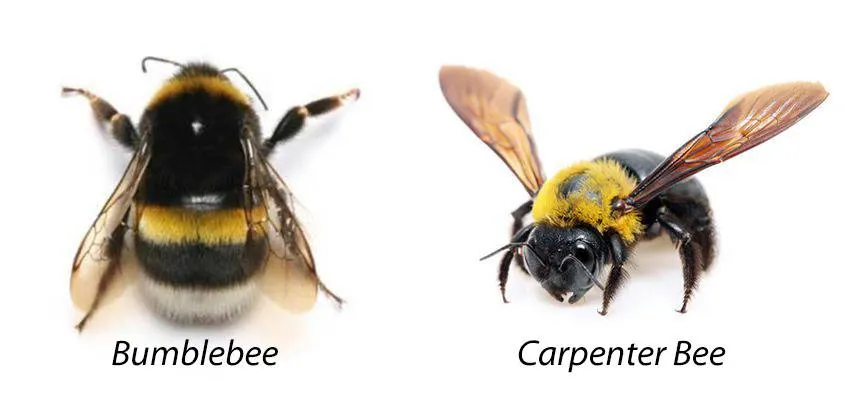
To successfully get rid of Carpenter bees, you need to be able to identify them around your home. Sometimes also called eastern Carpenter Bees, they look similar to Bumble Bees—large, with yellow and black patterns. Carpenters are significantly larger than honey bees and do not produce honey for their larvae as honey bees do.
They are about 1/2 to 1 inch and may have some metallic reflections ranging from dark blue, yellow, green, or purple tints. Bumblebees also feature striped abdomens as opposed to the solid black color of the Carpenter bee.
Their abdomens are bare and shiny compared to the hairier Bumblebees. It's also worth noting that if you see a hanging, external nest, it is likely to be a Bumblebee.
Male Carpenter Bees
Male carpenter bees pose little threat to humans, as they do not have the ability to sting. The males lack a stinger, but they will aggressively buzz around the female's nesting area, patrolling and warding off any potential intruder.
Additionally, we should note that males do not chew and drill into wooden structures like female carpenter bees do. They feature a white patch on their faces, which the female carpenter bees do not have.
They are commonly sighted in the spring, hovering like a helicopter around eaves, porch rails, and under decks. Sometimes carpenter bees are called "wood bees" because they bore into wood. Carpenter Bees do not eat wood for nutrition. Carpenter bees, as pollinators, eat nectar and pollen from flowering plants.
Carpenter bees are not considered a true structural pest since they do not spread throughout the entire structure. They prefer bare wood, unpainted wood, or unfinished wood.
Signs of Carpenter Bee Infestations
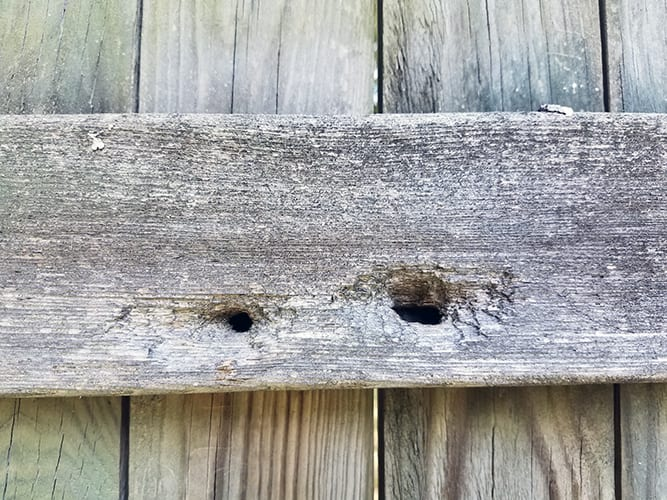
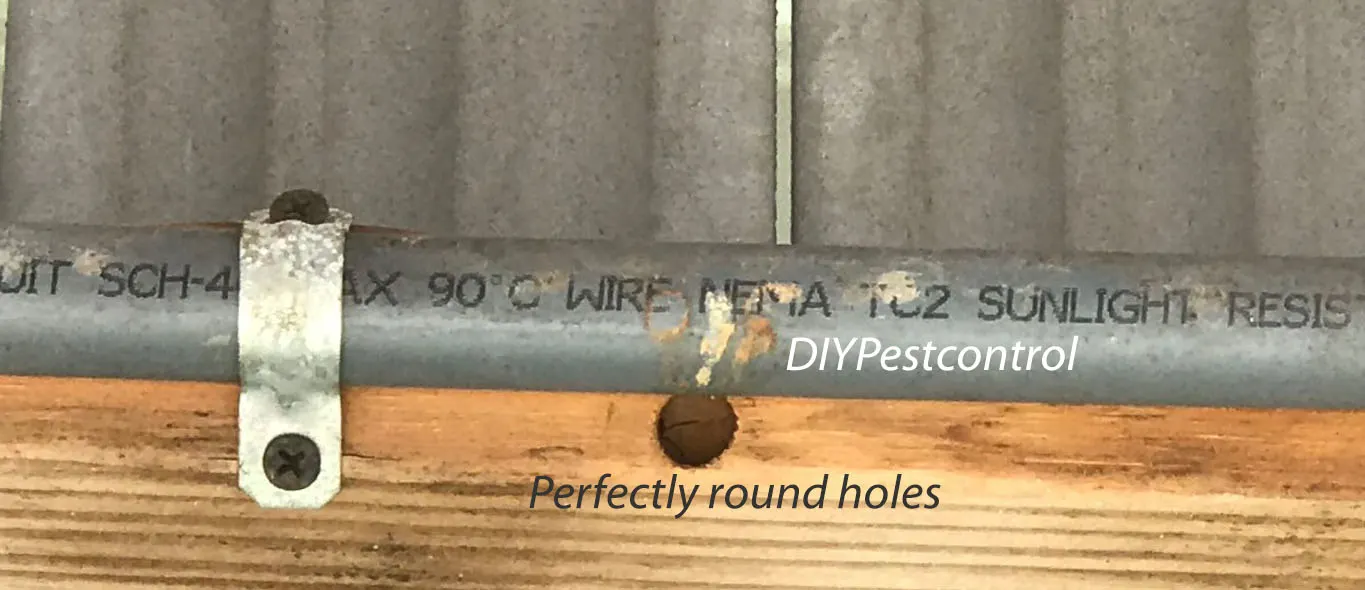
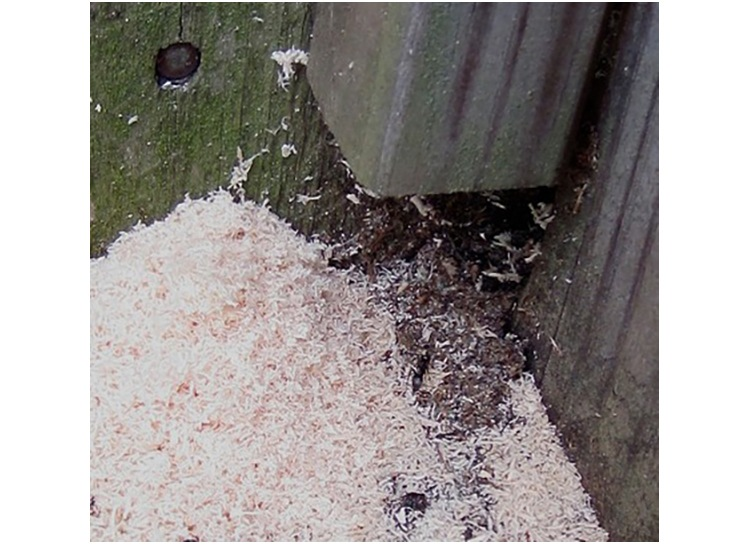
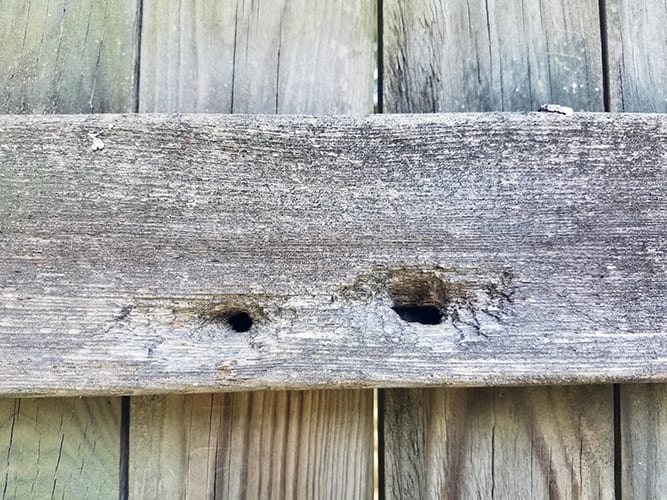
Carpenter Bees make holes about 1/2 inch in diameter. These flying insects create perfectly round carpenter bee tunnels. They prefer unfinished wood and can drill and create tunnels in seasoned hardwoods, softwoods, and decaying woods. Look for "frass," which looks like sawdust from these drilling areas.
Locate a Carpenter Bee Infestation
Carpenter bee damage can cause significant problems over time. A female carpenter bee bores a channel or main corridor in wood from 6" to as long as 4 feet to lay her eggs in areas called "galleries" or "cells". She deposits an egg into these galleries and brings them a mass of pollen for the newly hatched carpenter bee larvae to feed on.
Then, she seals them all off to ensure their development before she repeats the next egg process. This is one of the reasons it can be so hard to get rid of carpenter bees.
Carpenter bee galleries have entrance holes on the wood surface, continue inward for a short distance, and turn to run in the same direction as the wood grain.
How To Prevent Carpenter Bee Infestations

Want to successfully prevent Carpenter bee damage?
It all depends on the time of the year. You can prevent infestations of carpenter bees if you tackle the situation early enough. Prevention is the operative word for control.
-
Carpenter bees prefer to bore holes in the wooden areas that receive the morning sun or afternoon sun.
-
Carpenter Bees attack unfinished wood under decks, sills, and decks first. Varnish or paint these wood surfaces to make them less attractive to these bees. A fresh coat of paint is unattractive to Carpenter Bees.
-
Seal as many exterior openings as possible early, before spring. The Carpenter Bees are looking for cracks that will protect entrances. Seal and caulk these cracks and crevices.
-
To make sealing easier, we recommend Carpenter Bee Blocker Kits that have stainless steel screens that fit in carpenter bee holes. However, if you seal these holes while the carpenter bees are inside, they will drill out a hole to exit.
-
Nests are often reused from the previous season. Calk these holes in the fall, after the carpenter bees have emerged. Our top recommendation is the Carpenter Bee Blocker Kit.
-
Carpenter Bee prevention and extermination are usually best done before nesting activity gets started.
-
Spray the unfinished wood in these vulnerable areas (under rail sidings, under decks, around window sills, etc.) with the recommended residual insecticides.
-
The best time to spray preventative for carpenter bee control is springtime. Nesting and the rearing of young carpenter bees occur.
Key Takeaway
Prevent holes and carpenter bee nests from reappearing by spraying insecticide concentrates. Treat existing holes with insecticide dust.
Recommended Carpenter Bee Control Products
Residual Insecticides (For Active Infestations Or Prevention)
These residual insecticides will make several gallons of finished product and can also be used to treat a broad variety of insects. Apply them for carpenter bee prevention or if you have an active infestation.
-
Cyzmic CS or FenvaStar EcoCap: Will not leave a visible residue.
-
Cyper WSP or Demon WP: Will leave a visible residue seen against dark surfaces
-
Smith Multi-Use 1 Gallon Sprayer is both durable and economical and makes the application of insecticides easy with its variable tips.
-
Tempo Dust: This dust is very good against flying insects.
-
Carpenter Bee Kits: Combine the residual insecticides with dust and a duster for application.
Bee Traps and Natural Solutions
Carpenter Bee Traps offer an addition to your carpenter bee treatment or a stand-alone natural treatment method.
Citrus Spray Carpenter Bee Repellent is a natural repellent against carpenter bees.
Carpenter Bee Kits (Combines Residual Insecticides And Dusts)
Carpenter Bee Kits: Combine the residual insecticides with dust and a duster for application.
How To Get Rid Of Carpenter Bees
If you currently have a carpenter bee infestation, the time to treat is today. Follow these guidelines to Get Rid of Carpenter Bees safely.

Carpenter bees are a beneficial insect but they are also destructive to wooden structures. Female Carpenter Bees drill holes into any wooden structure they can find in order to lay their eggs. This article details the best ways to identify carpenter bees, prevent infestations, and stop them from doing further damage to your home.
How To Get Rid Of Carpenter Bees (3 Steps)
1. Spray A Residual Insecticide to Kill Carpenter Bees
A great way to get rid of carpenter bees is to spray residual insecticides. The best times to apply are early spring before the infestation starts or during the active infestation. You will want to spray the areas where carpenter bees are boring into wood with residual insecticides such as Cyzmic CS, Demon WP and FenvaStarCap.
Their holes are usually located on the underside of wood surfaces, We recommend spraying twice during the spring months at intervals of 3-4 weeks to most efficiently prevent carpenter bee damage.
When protected from the elements like rain, residual insecticides will last 2 to 3 months. If you apply in these areas in later winter, you could see residual effects that last through the carpenter bee season.
Severe Infestations
You may need to repeat carpenter bee treatments more than twice during the spring. We suggest an interval of two weeks for spray treatments. After each spray treatment, apply D-Fense Dust or Tempo Dust to all possible carpenter bee nests, holes or entry points.
2. Use Dust In Carpenter Bee Nests
Using insecticidal dusts such as Tempo Dust, D-Fense Dust and Delta Dust are grate way to help eliminate your active carpenter bee infestation. You will want to apply this dust in every carpenter bee hole that you find. We recommend using a duster such as the JT Eaton Hand Bellow Duster.
To get rid of an active Carpenter Bee infestation, apply Tempo Dust in every carpenter bee hole that you find. Use a recommended duster such as the JT Eaton Hand Bellow Duster
Although the initial damage to wood appears as a small hole, only an inch or two deep, it usually extends at a 90-degree angle. The female will turn 90 degrees and bore a channel from 6 inches to as long as 4 feet. This channel serves as the main corridor from which she will drill small chambers. These chambers serve as egg nests. She deposits eggs. Brings in food, and then seals off the area to ensure the egg's development.
- To learn more about carpenter bee holes: Carpenter Bee Holes

3. Plug Carpenter Bee Holes
- Plug the holes after all the bees are killed. A safe time to plug entrances is in the early fall months.
- You can plug the entrances with plugs, cork, putty, or a caulking compound. We suggest sealing the holes with wood putty since you can paint over the wood after the bees are removed. We also carry Carpenter Bee Blocker Kits that are made of stainless steel screens with installation tools.
- If you plug up the entrances too early, they may chew new openings in other locations.
- Spray carpenter bee nests early in the season (Jan, Feb, etc) to prevent further boring. You can prevent carpenter bee infestations if you tackle the situation early
(Optional Step)- A Non-Chemical Natural Approach
For those considering a non-chemical approach during an active carpenter bee infestation, we recommend using carpenter bee traps and natural repellents.
Carpenter bee traps are designed to attract and trap the bees. If you have an existing infestation, hang the trap directly over the carpenter bee holes. If you do not have a current infestation, hang the traps at the peaks and corners of your home, preferably on the sunniest side of your house.
Carpenter bees do not like the citrus scent. You can either make your own repellent using citrus fruits and boiling them or we have a citrus carpenter bee repellent we recommend. Other essential oils such as lemon, almond, and peppermint.
How To Identify A Carpenter Bee
Carpenter Bees look similar to Bumble Bees - large, with yellow and black patterns.
They are about 1/2 to 1 inch and may have some metallic reflections ranging from dark blue, yellow, green, or purple tints. Their abdomens are bare and shiny, compared to the Bumble Bee. Bumble Bees are not a wood boring insect. You’re more likely to find them sitting on flowers in the yard. They are highly beneficial and we suggest leaving them to tend to pollination.
Carpenter Bees are commonly found in the spring. They hover around eaves, porch rails, and under decks and any other unpainted wood around your home. Sometimes carpenter bees are called "wood bees" because they bore into wood.
For More Information:
Difference Between Carpenter Bees and Bumble Bees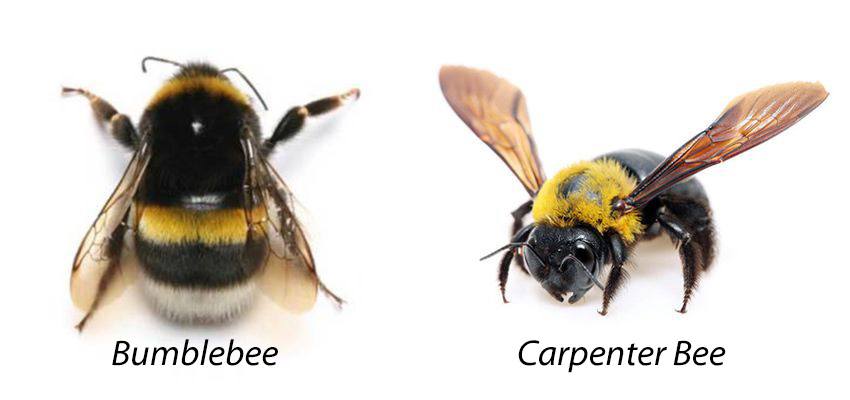

For More Information:
Carpenter Bee Signs/Identification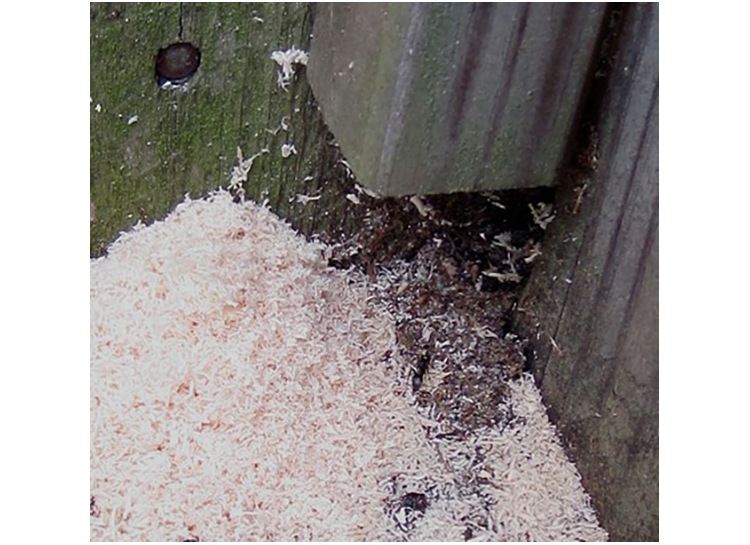
Do Carpenter Bee’s Sting?
Yes and no!
The female carpenter bee does have a stinger and is capable of stinging, but she rarely does unless she is really provoked. The male on the other hand does not have a stinger but will be more aggressive. Female’s will have a solid black head while the male’s will have a yellow splotch right in the center of their head.
To avoid being stung its best to avoid provoking carpenter bees all together because it can be difficult to identify male and females while they are flying around. Try to avoid picking the carpenter bees up and be careful if you are sticking something like a duster into a hole that they currently occupy.
At the end of the day, carpenter bees pose little threat to stinging you but it's always smart to be cautious when they are around. And the best way to prevent getting stung is by getting rid of you carpenter bees altogether.
Signs of Carpenter Bee Infestations
Carpenter Bees make holes about 1/2 inch in diameter. They prefer unfinished wood, but are capable of drilling and creating tunnels in seasoned hardwoods, softwoods, and decaying woods. Frass is the result of already damaged wood. It looks like sawdust around the drilling areas.
Female carpenter bees bore channels (also known as a main corridor in wood). The damaged area will be 6" to as long as 4 feet wide. The female lays her eggs in areas called "galleries" or "cells". She deposits eggs into these galleries and brings feeds them with a mass of pollen for the newly larvae to feed. She then seals them off to ensure their development before she repeats the next egg process. This is one of the reasons it can be so hard to get rid of carpenter bees.
Successfully preventing carpenter bees is determined by the time of year. You can prevent carpenter bee infestations if you tackle the situation early in the season.
- Finish wood: Carpenter Bees attack unfinished wood under decks, sills, and decks first. Varnish or paint these wood surfaces to make them less attractive to these bees. A fresh coat of paint is unattractive to a Carpenter Bee.
- Seal openings: Seal as many exterior openings as possible before spring. These openings could include Carpenter Bee holes from the previous season. For the existing Carpenter Bee holes, we recommend Carpenter Bee Blocker Kits that have stainless steel screens that fit in carpenter bee holes. These screens allow you to still be able to spray dusts inside which is important the eggs are still inside the hole.
- Spray Insecticides: Spray the unfinished wood in these vulnerable areas (under rail sidings, under decks, around windowsills, etc.) with the recommended residual insecticides in either early spring or during active infestations (springtime).
- Dust: Use insecticidal dust in the fall and early spring to eliminate any existing carpenter bees or their eggs.
- Carpenter bee traps: Hang Carpenter Bee Traps in areas where you have seen the most activity in previous years. Keep in mind that carpenter bees like sun so areas that receive the most sun are recommended. Carpenter bees are attracted to other carpenter bees so it may be necessary to apply a bait such as Bee-Luscious Bee Bait to the carpenter bee trap.
- Natural repellents: Apply natural repellents in the early spring where you have seen past infestations or under decks and sills.
- Play Music: Carpenter bees do not like loud music or sounds. If putting speakers outside near your infestation does not sound appealing, wind chimes could be used as a good alternative.
- Swing Away! As barbaric as it might sound, having any stringed racquet handy is a great way eliminate carpenter bees that may be flying around.
Pro Tip: If you have carpenter bee traps, place dead carpenter bees in the trap and it will make them more affective.

Residual Insecticides (For Active Infestations Or Prevention)
Residual Insecticide Sprays
- Cyzmic CS, FenvaStar EcoCap, and Avesta CS - Will not leave a visible residue.
- Cyper WSP or Demon WP - Will leave a visible residue seen against dark surfaces
Residual Insecticide Dusts
- Tempo Dust, D-Fense Dust, and Delta Dust
- Carpenter Bee Kits - Save Money - Combine the residual insecticides, with a dust and a duster for application.
Carpenter Bee Kits
Natural Solutions
Carpenter Bee Kits (Combines residual insecticides and Dusts)
- Save 10% on Carpenter Bee Kits, use code: carp22
How To Discourage Woodpeckers
Key Takeaway
Woodpeckers may peck into carpenter bee tunnels in the wood trying to eat the bee larvae. Spray a residual insecticide into the carpenter bee holes and on the wood in the spring. This will discourage the carpenter bees from attacking the wood. This, in turn, will discourage woodpeckers.
Quick Tips for Year-Round Carpenter Bee Prevention
Key Takeaway
Prevent holes by spraying insecticide concentrates. Treat existing holes with insecticide dusts.
Recommended Carpenter Bee Control Products
Written by our resident pest control expert Ken Martin.