




How to Get Rid of Bed Bugs
March 5, 2024
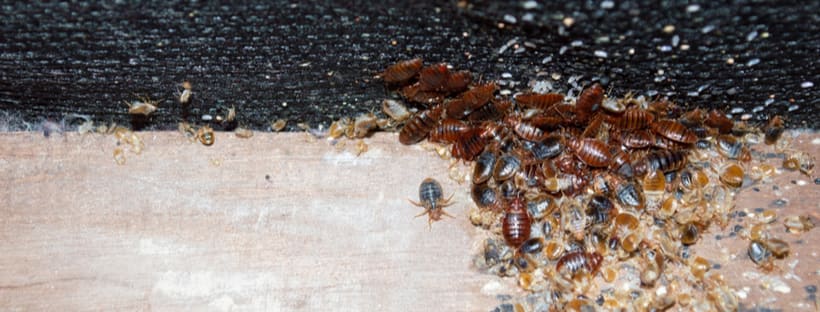
Get Rid of Bed Bugs: Step-by-Step
-
Step 1: Prepare the Area
-
Step 2: Inspect
-
Step 3: Treat Surrounding Areas
-
Step 4: Treat the Bed to Kill Bed Bugs
-
Step 5: Monitoring and Trapping
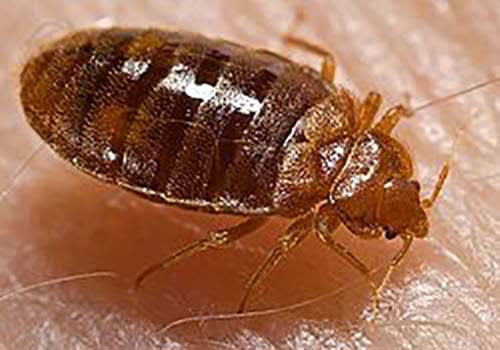
Bed Bug Preparation Tips
Reduce Clutter To Get A Clear Picture Of The Bed Bug Infestation
Remove all personal items (stuffed animals, soft toys, blankets, electronics, etc) and anything that does not stay in the room permanently. Caution: Be mindful that items from the infested area can transfer bed bugs to other areas. It is best to bag them in plastic with Nuvan Strips.
Launder Infested Garments and Linens
Launder or tumble dry any garments that are infested or suspected of being infested. Bag the garments and store them in a bed bug-free area until the infested storage area has been treated.
Dismantle Bed Frames
Dismantling bed frames in infested areas typically exposes bed bug-hiding sites. Having access to these areas during cleaning is important. Stand up the box spring and shine a flashlight through the gauze fabric, and look for bed bugs. If the fabric is torn (possible hiding place), remove the fabric to prepare for spraying. If the mattress and or box springs are infested, you may want to consider Encasements by Mattress Safe. Once covered with these encasements, bed bugs can not enter or exit. There is no need to treat the mattress or box spring when using these encasements. Keep them on for a year.
Remove Dresser Drawers
Remove drawers from desks and dressers since bed bugs like to hide in these areas. Turn furniture over to inspect and clean all hiding spots. All furniture should be pulled away from the walls to help you eliminate bed bugs.
Clean the Area
Scrub the bedbug-infested surfaces with a stiff brush to dislodge bedbug eggs. Vacuum the room extensively. Use a vacuum hose attachment to thoroughly vacuum cracks and crevices on furniture and along baseboards on the walls. Vacuum along baseboards, furniture, bed stands, rails, headboards, footboards, bed seams, tufts, buttons, edges of the bedding, as well as the edges of the carpets (particularly along the tack strips).
A good vacuum cleaning job may remove particles from cracks and crevices to encourage greater insecticide penetration. Bed bugs cling tightly to surfaces, so it is best to vacuum by scraping the end of the vacuum attachment over the infested areas to pull out the bed bugs. Caution: It is not good to use a bristle attachment because you may transfer bed bugs to other areas since they cling to the brush. Dispose of vacuum cleaner bags after you are finished in an outdoor trash can.
Caulk and Seal
Caulk and seal all holes where pipes and wires penetrate walls and floor and fill cracks around baseboards and molding to further reduce harboring areas.
Key Takeaway
Reducing clutter in the affected area allows for the area to be cleaned more easily.
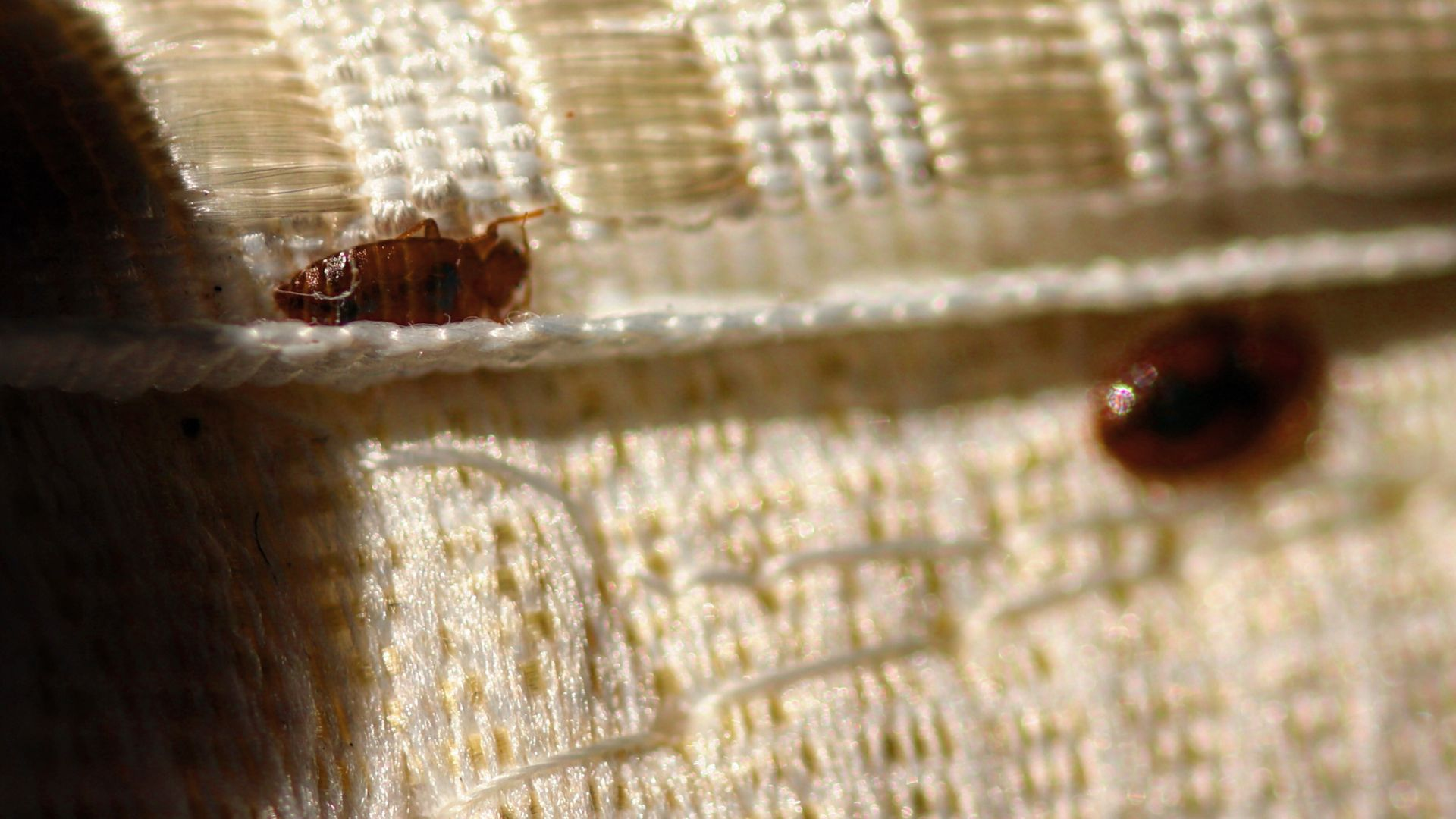
How to Treat Your Mattress for Bed Bugs
Use Bed Bug Bed Encasements
The brands Mattress Safe and JT Eaton have high-quality mattress and box spring encasements. Place them over your mattress or box spring so you don't have to throw them away.
They are certified to keep bed bugs out of the mattress or box springs. If using a labeled insecticide on the mattress to get rid of bed bugs, apply it on the mattress or box springs, then zip it up. It has a patented hook to keep the bed bugs inside the encasement so they cannot escape. Keep the encasement in place for one year (due to bed bug life cycles).
Try Active Guard Liners
Active Guard Mattress Liners may be placed on beds and are effective as preventative and active bed bug treatments. They kill bed bugs and dust mites within 72 hours and will prevent bed bugs from infesting mattresses. ActiveGuard Liners act like a fitted sheet; they come in single, full, queen, and king sizes that fit up to 17" in depth.
Apply Insecticides on Mattresses to Kill Bed Bugs
If you decide against Bed Bug Encasements or Bed Bug Liners, use insecticides labeled for beds.
These insecticides include Steri-Fab, Cimexa Dust, Crossfire Insecticide, Bedlam Plus Aerosol, or Temprid FX, and are all great for getting rid of bed bugs.
How to Treat Your Mattress with Insecticides
Get rid of bed bugs in your mattress with insecticides. Look carefully at the mattress's folds and seams, the headboard, footboard (if present), box spring/support platform, frame, etc., for bedbugs, and treat these areas after vacuuming.
Dusts last longer than aerosols, but the crack and crevice tips on the aerosols enable you to get into the smallest cracks. It is a good idea to use a combination of bed bug spray and dust.
Temprid SC may be used to get rid of bed bugs on the tufts and seams of mattresses. It works well as a residual insecticide sprayed in other recommended treatment areas, such as nightstands, chests, dressers, couches, and chairs.
Do I Have to Throw Out the Mattress?
This question is answered by the condition of the mattress and the size of the bed bug infestation. If there are holes or tears in the gauze fabric or fabric of the mattress, bed bugs and bed bug eggs may be inside. The bed bugs may be outside as well. There are restrictions on how beds can be treated with insecticides. We carry both Mattress Safe Bed Bug Encasements and ActiveGuard Mattress Liners.
Apply Bed Bug Treatment to the Surrounding Areas
Treat all baseboards and furniture (Night Stand, Chests, Dressers, Couches, and Chairs)
Bed Bug Spray and Dust Treatments:
There are several products on the market that work well to kill bed bugs: Apply residual liquid, aerosol, or residual dust insecticides such as Spectre 2 SC, CrossFire Bed Bug Insecticide Concentrate, Temprid FX, D-Fense NXT, Cimexa Dust, Crossfire Aerosol, and Bedlam Plus Aerosol.
It is best to use a combination of these products for application purposes.
You can get these at discounted rates in a kit: Bed Bug Kits. The kits have residual insecticide with dust and aerosols, perfect for getting rid of bed bugs.
How to Spray for Bed Bugs
-
Spray liquid insecticides or aerosols.
-
Spray around and under the bed and along the baseboards near the bed.
-
After removing the drawers from the furniture, the inside of the cabinetry should be sprayed, and the bottom and sides of the drawers.
-
Do not treat the inside of the drawers. If needed, the clothes in the drawers should be removed and laundered.
-
Use Bed Bug Spray around the inside of closets, door frames, and doors.
-
Spray molding at the top and bottom of the room.
-
Apply bed bug spray around windows.
-
Spray seams of drawers, both top and bottom.
-
Spray dressers from below. Spray where dressers touch the floor.
-
Spray where the bed touches the floor, and spray chairs and underneath chairs.
-
Spray all baseboards, loose plaster, behind bed frames and headboards, beneath beds and furniture, and bedsprings and bed frames to get rid of bed bugs in other hiding places.
Note: Do not apply to furniture surfaces or mattresses where people will be laying or sitting unless using a product labeled for that type of bedbug treatment. Infested bedding should not be treated but should be removed, placed in sealed plastic bags, and taken for laundering and drying at a high temperature.
Recommended Liquid Insecticides for Bed Bug Removal
This question is answered by the condition of the mattress and the size of the bed bug infestation. If there are holes or tears in the gauze fabric or fabric of the mattress, bed bugs and bed bug eggs may be inside. The bed bugs may be outside as well. There are restrictions on how beds can be treated with insecticides. We carry both Mattress Safe Bed Bug Encasements and ActiveGuard Mattress Liners.
-
This bed bug removal spray has a low odor and is not detectable by bed bugs. Adjust the bed bug spray pattern to a mist by turning the nozzle. A fine low mist is best for most spraying, but you may need to use a stream to get into some cracks and crevices. If you can't get into the cracks and crevices, use one of the aerosols described below with its crack and crevice tips to reach into these areas.
Mix 3 oz per gallon or 0.75 oz per quart and spray with a low-pressure sprayer into the areas where the bed bugs are hiding. Typical areas include bed frames, headboards, under beds, baseboards, moldings, behind pictures, etc. Remember to apply in the joints and crevices of furniture. If the crack and crevices are too small, use an aerosol with a crack and crevice tip (recommendations are below.)
You may spray mattress seams, zippers, and tufts. Please wait until it dries before remaking the bed.
Remember- 95% of the bed bug infestation will be within five feet of your bed.
-
This concentrate is ideal for getting rid of bed bugs as it has two different active ingredients for dual modes of action (both a quick kill and residual activity).
Mix 3 oz of CrossFire Insecticide with one gallon of water or 0.75 oz per quart (Remember to use what you have mixed within 24 hours.)
Adjust the spray pattern to a mist by turning the nozzle. A fine low mist is best for most spraying, but you may need to use a stream to get into some cracks and crevices. If you can't get into the cracks and crevices, use one of the aerosols described below with its crack and crevice tips to reach into these areas.
Apply as a coarse, low-pressure spray to harborage areas, including crevices, baseboards, loose plaster, behind bed frames and headboards, beneath beds and furniture, and bedsprings and bed frames.
After removal of bed linens, apply Transport Mikron to the mattress and boxsprings. Apply to tufts, edges, seams, and folds (do not spray clothes or bed linens). You may apply it to furniture but not to areas where there is direct access to seating or arm placements. Infested bed linens should not be treated but should be removed, placed in sealed plastic bags, and taken for laundering and drying at high temperatures.
Apply as a crack and crevice treatment to all baseboards, loose plaster, behind pictures and mirrors, moldings, beneath floor coverings and carpets, closets, shelves, curtains, furniture, and picture frames that may provide harborage to bed bugs.
-
Mix 8 ml (about 1/3 oz)(measurements on the bottle) or one 8 ml vial of Temprid FX with one gallon of water. Remember to use what you mix within 24 hours. Adjust the spray pattern to a mist by turning the nozzle. A fine low mist is best for most spraying, but you may need to use a stream to get into some cracks and crevices. If you can't get into the cracks and crevices, use one of the aerosols described below with its crack and crevice tips to reach into these areas.
Temprid FX controls bed bug populations that are resistant to pyrethroid insecticides.
For infested mattresses, remove linens and wash them before reuse. Apply Temprid to tufts, seams, folds, and edges until moist. Allow it to dry before remaking the bed. Do not spray bed linens.
Apply Temprid FX to bedsprings, box springs, and the interior of bed frames or headboards, including all cracks and joints.
When bed bugs are found in upholstered furniture, apply only to the infested tufts, seams, folds, and edges, but do not apply to flat surfaces where prolonged human contact will occur. If bugs heavily infest furniture (inside cushions and batting), use labeled insecticide dust or consider fumigation.
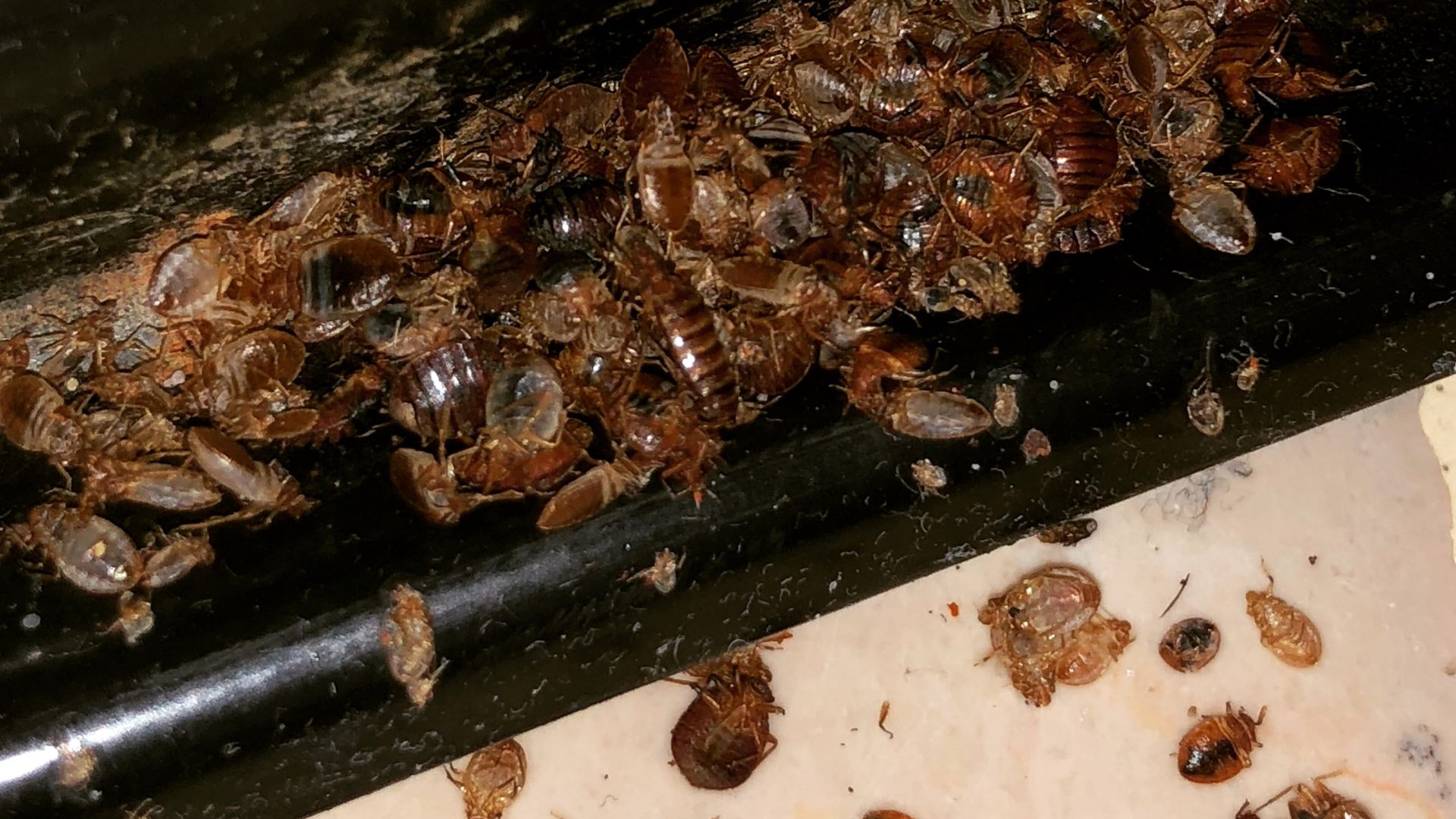
Recommended Aerosols for Bed Bug Removal
Bed Bug Aerosol sprays are perfect for applying where you can not spray liquid mixtures.
Recommend brands to get rid of Bedbugs:
Aerosol Usage:
-
Use the plastic tip to the aerosol can. Apply as a crack and crevice or spot bed bug treatment where evidence of bed bugs occurs.
-
This includes bed frames, box springs, inside empty dressers, baseboards, moldings, clothes closets, curtain rods, hollow spaces, carpet edges, high and low wall moldings, and wallpaper edges.
Recommended Insecticide Dust to Kill Bed Bugs
Bed Bug Aerosol sprays are perfect for applying where you can not spray liquid mixtures.
Cimexa Insecticide Dust kills bed bug adults and nymphs, killing bed bug nymphs hatched from dusted bed bug eggs. As low-toxic insecticide dust, CimeXa Dust is composed of 100% Amorphous Silica Gel. It is odorless and does not stain surfaces.
Use a Hand Bellow Duster to apply dust into the cracks and crevices with the Cimexa Dust. Put dust into the duster. Remove switch plates and electrical outlet covers and dust into the openings. Another tool used for dusting would be a small paintbrush or a small makeup brush.
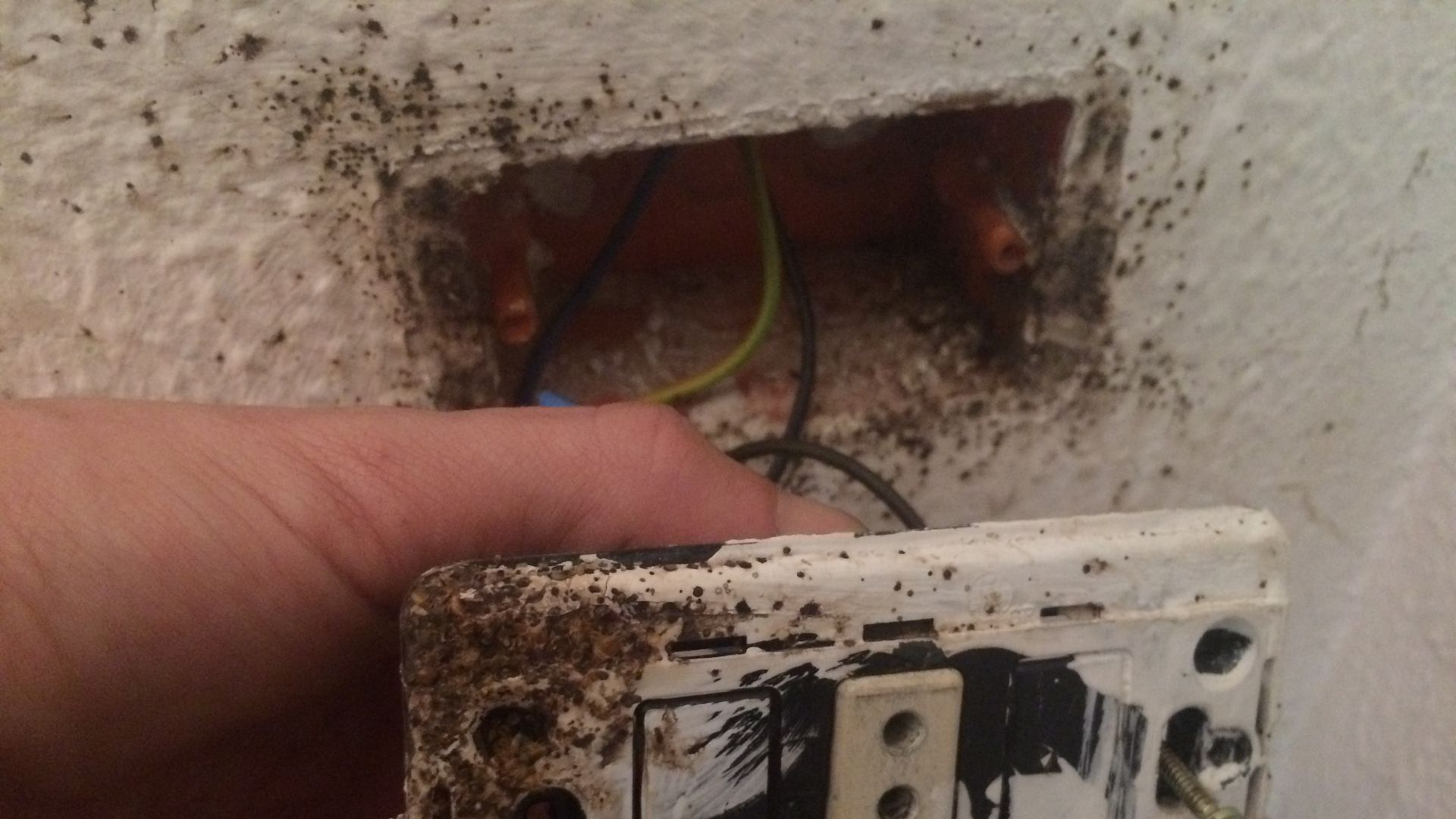
Apply a small amount of dust on the tip of the brush, brushing into cracks and crevices. Dust any items that are hanging on the wall, such as pictures, with a small paintbrush. Use a small paintbrush to paint dust on the seams and around the buttons of the mattress. Use dust or aerosol in all joints of the bed frame.
If possible, disassemble the bed frame and treat it from all angles with dust and aerosol. After the mattress and box spring have been treated, enclose both of these with Mattress Safe Bed Bug Encasements. With these covers, you can keep your bed and do not have to treat it again.
Organic Bed Bug Treatment Products
-
Cirkil RTU Organic Bed Bug Killer
This ready-to-use botanical insecticide does not need to be mixed with water. Spray on areas where bed bugs are hiding. These areas include box springs, mattress seams, dressers, closets, nightstands, carpet and rug edges, molding, and any place bed bugs would be hiding. Repeat in 2-4 weeks.
-
Cirkil CX is a concentrate with 22% Cold Pressed Neem Oil. Use one qt of Circkik CX to 3 Qts of water in a one-gallon sprayer, making one gallon of the finished product. Treat cracks and crevices where the bed bugs are hiding and repeat in 2-4 weeks.
-
Cirkil Electronics and Clutter Treatment Kit
Cirkil Electronics and Clutter Treatment Kit contain:
-
10 x Bed bug treatment Pads (treated with neem oil)
-
(5) 32"x50" sealable containment bags
Fill the containment bags with household items that may be damaged by water-based, dust-based, or aerosol-based pesticides.
Place such things as lamps, heaters, and electronics loosely in the bag and place two treatment pads on top of the items. This treatment kit will kill bed bugs within 24 hours.
-
Key Takeaway
Focus on getting insecticides into cracks and crevices where the bed bugs hide.
Integrated and Alternative Approaches to Bed Bug Control:
As an alternative or an addition to controlling bed bugs using chemicals, bed bug steamers and heaters have become increasingly important tools in the pest control industry. Use steamers and heaters for bed bug control where chemical sensitivity is a concern, such as in hospitals and nursing homes. As well as getting rid of bed bugs, these steamers also get rid of allergens, bacteria, germs, and viruses.
Bedbug Treatment Protocol - Important Tip!
Do all of the bed bug treatments (as described above) 3 times, 10 days apart. Bed bugs come out to feed every few weeks, so retreatment is critical.
DO NOT USE FOGGERS OF ANY KIND!!! FOGGERS SCATTER THE BED BUGS AND MAKE YOUR JOB MORE DIFFICULT!!!
Foggers are sometimes known as bug bombs. While they are advertised as being effective, bug bombs may only work when used in combination with other methods. Generally, it scares them away rather than killing them.
Bed Bug Kits - Combines the liquid, aerosols, and dust for greater savings!
Monitoring and Trapping Bed Bug Infestations
Bed Bug Monitor Traps
The Bed Bug Monitor Traps recreate the conditions that bedbugs consider perfect, including dark, tight tunneling areas and rough woodsy material. Bed bugs would usually be found inside the small grooves of corrugated boxes, between mattress creases, and around/under wooden furniture.
SenSci Volcano Monitors and Lures
These bed bug monitors/detectors may be used with the lures or with the Sensci lure to capture bed bugs. As an identification tool, you can monitor your bed bug treatment plan or monitor bed bug presence. Use the optional lure if a person is not present in the bedroom that is being monitored.
Bugo Bed Bug Monitors/Traps
Adhesive traps that are placed around the bed legs catch the bed bugs before they can crawl up the bed leg into your bed.
How to Identify Bed Bugs
The first step in getting rid of bed bugs and preventing them from returning is to correctly identify them. Whether you are inspecting your own home or the hotel room you just walked into, it is important to make sure you are checking the correct areas and looking for the proper identification signs.
What does a bed bug look like?
Adult bed bugs are brown to reddish-brown, oval-shaped, flattened, and about 1/4 to 5/8 inch long. Their flat shape enables them to readily hide in most cracks and crevices.
Bed Bug Diet
Although the preferred host for bed bugs is humans, they will feed on other animals, such as poultry, mice, rats, canaries, dogs, and cats, if necessary. They usually feed at night but may feed in the daylight in rooms that are not used at night.
Bed Bug Life Cycle
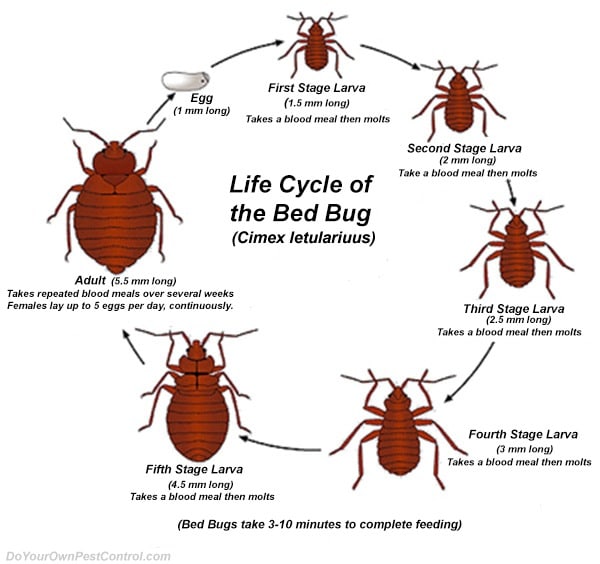
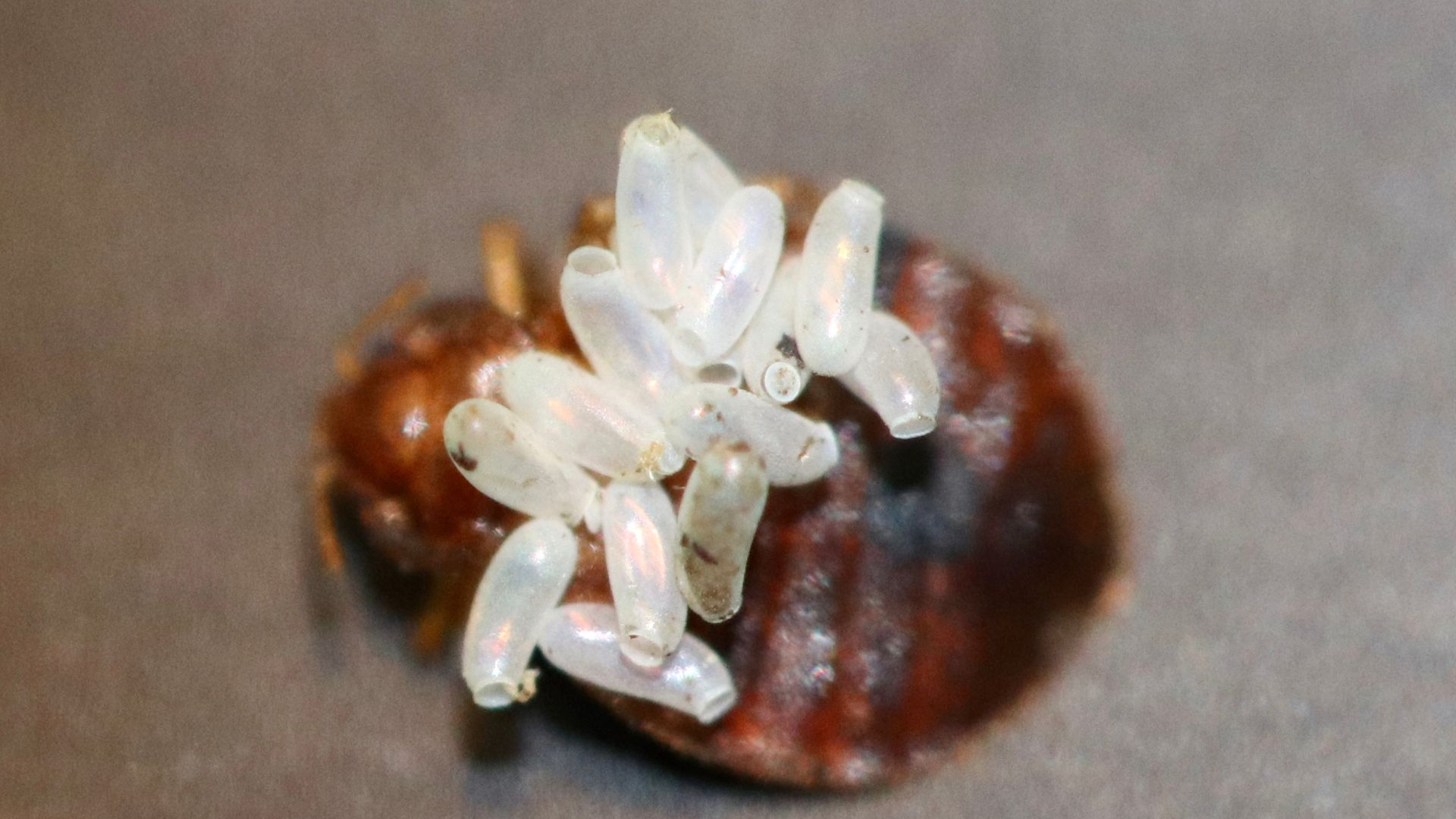
The life cycle stages of a bed bug are egg, nymph, and adult. They are called bed bugs because they readily infest mattresses, bed frames, and box springs. Bed bug eggs are laid along the edges of or around buttons on the mattresses. Bed bug eggs can also be glued to rough surfaces. Bed bug females lay about 200 eggs, usually at the rate of three or four a day. Bed bug eggs are placed in cracks, crevices, and other isolated and protected shelters.
Females lay eggs after a blood meal; they will hatch in one or two weeks into Nymphs. Newly hatched bugs (Nymphs) begin feeding immediately. At room temperature and with an available food supply, the nymphal period will last 14 to 30 days. They shed their skin (Instar) five times before becoming adults.
Bed bugs will mate soon after becoming mature, so the time from egg hatch to egg laying is 4 to 9 weeks under favorable conditions. The bed bug's average life span is 6-12 months, and they feed every ten days or so during this time. It can be tricky to get rid of bed bugs as these insects can survive many months without a blood meal, and their reproduction is high.
Bed Bug Inspection Tips
The common bed bug can not be seen with the naked eye. Since bed bugs are challenging to see, use a magnifying glass.
-
Inspect adjoining rooms where a bed bug infestation is found.
-
Look for droppings or fecal material spots they may leave behind, even if you don’t see any bed bugs.
-
Use an Insecticide Aerosol, such as Stryker 54 or PT 565, to get rid of bed bugs in suspected hiding places. These aerosols kill bed bugs on contact, but the idea is to flush them out for inspection.
-
Remember to declutter first. As you declutter, be careful not to spread bed bugs to other rooms.
-
Inspect thoroughly. Bed bugs are small and remarkably good at hiding.
-
Keep in mind that bed bugs are easy to kill but hard to find. So be thorough with both your inspection and your bed bug treatment.

What do bed bug bites look like, and do they carry disease?
Bed bugs do not carry disease. They suck blood from their host with piercing mouth parts, but the bite is painless.
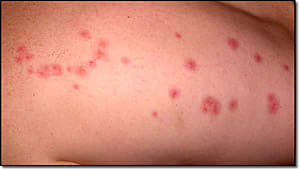
The skin may become irritated or inflamed due to the salivary fluid injected by the bed bugs. A small, hard, swollen, white welt may develop at the site of each bite. It is important to recognize that not all bites or bite-like reactions are due to bed bugs. Bed bugs or their signs will be present if it is a bed bug bite.
A Mosquito bite resembles red bumps with a puncture wound in the center; these bites usually occur in the dark, between sunset and sunrise. Their bites appear isolated and appear randomly over the skin.
Bed bugs do not live under the skin. If you experience biting sensations during the day, it may be an allergy-related condition.
(Other possible sources of irritation are discussed in the University of Kentucky entomology fact sheet Invisible Itches: Insect and Non-Insect Causes).
Bug Inspection Checklist
To get rid of bedbugs successfully, it pays to know where to find them. This checklist will discuss the top 5 places to inspect when starting a bedbug treatment program.
-
The Mattress and Box Spring
The female bed bug lays eggs in cracks and crevices along the edges of mattresses, box springs, and bed frames. Check the mattress thoroughly, paying close attention to seams and tufts along the edges.
Flip the mattress over and inspect the bottom carefully as well. Pay particular attention to any rips in the fabric. Bed bugs hide in the folds and tufts of mattresses, coils of springs, cracks, hollow bedposts, bed rails, and headboards.
View the fabric on the bottom of the box spring and shine a flashlight to verify that bed bugs have not penetrated the box spring's interior.
-
Bed Frame and Head and Foot Boards
Remove the mattress and box frame from the bed frame and shine a flashlight all along with every potential hiding place on the bed frame.
Remember, bed bugs can slip into a crack; if a business card can fit into the gap, bed bugs can fit.
-
Other Furniture: Desks, Chairs, Dressers, etc
Bed bugs also inhabit other cracks and crevices throughout infested rooms. These other areas include; behind picture frames, under furniture, in loose wallpaper, under door and window casings, baseboards, or along the edges of carpets.
-
Take out all drawers and cushions from surrounding furniture.
-
Check all seams and crevices carefully with a flashlight.
-
Take your time and inspect it thoroughly
-
Bed bugs are commonly found in this area in an infested room.
-
-
Walls and Carpet
Inspect the surrounding walls by removing electrical switch plates and any wall hangings.
Check under tack strips and behind baseboards where ever possible.
Shine light into cracks in plaster and seams on wallpaper.
-
Electronics and Other Appliances
Unfortunately, electronics and appliances provide a perfect hiding spot for bed bugs. Check them closely with a flashlight and magnifying glass as well. Remove them when possible. Placing smaller ones in a bag with Nuvan Strips is an effective way to save the device.
Additional Bed Bug Inspection Notes
Bed bug fecal and blood spots (look like rust) are left on sheets and pillowcases when the engorged bed bugs are crushed. These indicators serve as sure signs of bed bug infestation.
Bed bugs prefer to hide in cracks and crevices during the daytime and come out to feed on the host's blood at night, usually while the host is sleeping. Since bed bugs can flatten their bodies, they fit in tiny crevices, especially around the bed area.
They are found in habitual hiding places, preferably close to a blood meal. Even though their preference is to be close together, they can travel several feet for a blood meal. Initial bed bug infestations tend to be around beds, but the bugs eventually become scattered throughout a room, occupying any crevice or protected location. They can also spread to adjacent rooms or apartments.
DIY PestControl, with professional bed bug treatment products, has helped many customers with bed bug issues in their homes. If you're wondering if you can do this yourself, rest assured that you can with the guidance we've provided below. Also, you can call us at 1-800-476-3368 to speak with one of our pest control experts or use the live chat feature on our website. Either way, we're here to help!
Once you have identified areas of activity or potential activity, it's time to begin the bed bug treatment. You'll notice that we recommend treating the room's perimeter first and working inward to the bed. Since bed bugs are more often found on or immediately around the bed, this reduces the likelihood that bed bugs disturbed by the treatment will move or be scattered into untreated areas.
Key Takeaway
When inspecting, remember the 95-5 rule:
95% of the bed bugs will usually be within 5 feet of the bed.
Preventing Bed Bug Infestations
While it may be tough to completely prevent bed bug infestation, it's important to inspect used furniture, particularly bed frames and mattresses, before bringing it into the home. Mattresses, in particular, carry the most significant risk of harboring bed bugs and their eggs. It would help if you were wary of acquiring used furnishings, especially beds, and couches.
A practice that we have incorporated into our traveling is to inspect for bed bugs in hotel rooms. If possible, carry a flashlight with you and inspect the bed area thoroughly, as described above. You may also want to inspect or vacuum luggage when you arrive home to prevent transferring bed bugs to your home. You can use JT Eaton Control for Luggage and Mattresses to spray both luggage and mattresses during travel.
ActiveGuard Mattress Liners, treated with Permethrin, will help prevent and get rid of bed bug infestation on beds.
Can I Prevent Bed Bugs from Entering My Home?
After coming home from a trip, some infestations can be prevented by washing any clothing or bedding used on the trip. Do this immediately.
If you buy used furniture, inspect all the items before bringing them into your residence. Never bring discarded bed frames, mattresses, box springs, or upholstered furniture into your home.
Expertly Curated Bed Bug Control Products
Designed with effectiveness and ease of use in mind, our range collection offers everything you need to tackle bed bug infestations head-on. Trust in our solutions to reclaim your space from bed bugs. Shop now and take the first step towards lasting peace of mind and comfort in your home.
Shop Bed Bug Control ProductsHow to Get Rid of Bed Bugs
If you have an active bed bug infestation, follow these guidelines to learn how to get rid of bed bugs and about the best products for bed bug treatment. We have everything you need to know to tackle a bed bug problem.
INSERT SIDE-BY-SIDE YOUTUBE VIDEOS
How to Get Rid of Bed Bugs - Bed Bug Control Products - YouTube
Get Rid
How To Get Rid Of Bed Bugs - Step by Step
Step 1: Prepare the Area
Step 2: Inspect
Step 3: Treat Surrounding Areas
Step 4: Treat the Bed to Kill Bed Bugs
Step 5: Monitoring and Trapping
1. Bed Bug Preparation Tips
Reduce Clutter To Get A Clear Picture Of The Bed Bug Infestation
Remove all personal items (stuffed animals, soft toys, blankets, electronics, etc) and anything that does not stay in the room permanently. Caution: Be mindful that items from the infested area can transfer bed bugs to other areas. It is best to bag them in plastic with Nuvan Strips.
Launder Infested Garments and Linens
Launder or tumble dry any garments that are infested or suspected of being infested. Bag the garments and store them in a bed bug-free area until the infested storage area has been treated.
Dismantle Bed Frames
Dismantling bed frames in infested areas typically exposes bed bug-hiding sites. Having access to these areas during cleaning is important. Stand up the box spring and shine a flashlight through the gauze fabric and look for bed bugs. If the fabric is torn (possible hiding place), remove the fabric to prepare for spraying. If the mattress and or box springs are infested, you may want to consider Encasements by Mattress Safe. Once covered with these encasements, bed bugs can not enter or exit. There is no need to treat the mattress or box spring when using these encasements. Keep them on for a year.
Remove Dresser Drawers
Remove drawers from desks and dressers since bed bugs like to hide in these areas. Turn furniture over to inspect and clean all hiding spots. All furniture should be pulled away from the walls to help you eliminate bed bugs.
Clean the Area
Scrub the bedbug-infested surfaces with a stiff brush to dislodge bedbug eggs. Vacuum the room extensively. Use a vacuum hose attachment to thoroughly vacuum cracks and crevices on furniture and along baseboards on the walls. Vacuum along baseboards, furniture, bed stands, rails, headboards, footboards, bed seams, tufts, buttons, edges of the bedding, as well as the edges of the carpets (particularly along the tack strips).
A good vacuum cleaning job may remove particles from cracks and crevices to encourage greater insecticide penetration. Bed bugs cling tightly to surfaces, so it is best to vacuum by scraping the end of the vacuum attachment over the infested areas to pull out the bed bugs. Caution: It is not good to use a bristle attachment because you may transfer bed bugs to other areas since they cling to the brush. Dispose of vacuum cleaner bags after you are finished in an outdoor trashcan.
Caulk and Seal
Caulk and seal all holes where pipes and wires penetrate walls and floor and fill cracks around baseboards and molding to further reduce harboring areas.
Key Takeaway
Reducing clutter in the affected area allows for the area to be cleaned more easily.
2. How to Treat Your Mattress for Bed Bugs
Use Bed Bug Bed Encasements
The brands Mattress Safe and JT Eaton have high-quality mattress and box spring encasements. Place them over your mattress or box spring so you don't have to throw them away.
They are certified to keep bed bugs out of the mattress or box springs. If using a labeled insecticide on the mattress to get rid of bed bugs, apply it on the mattress or box springs, then zip it up. It has a patented hook to keep the bed bugs inside the encasement so they cannot escape. Keep the encasement in place for one year (due to bed bug life cycles).
Try Active Guard Liners
Active Guard Mattress Liners may be placed on beds and are effective as preventative and active bed bug treatments. They kill bed bugs and dust mites within 72 hours and will prevent bed bugs from infesting mattresses. ActiveGuard Liners act like a fitted sheet; it comes in single, full, queen, and king sizes that fit up to 17" in depth.
Apply Insecticides on Mattresses to Kill Bed Bugs
If you decide against Bed Bug Encasements or Bed Bug Liners, use insecticides labeled for beds.
These insecticides include Steri-Fab, Cimexa Dust, Crossfire Insecticide, Bedlam Plus Aerosol, or Temprid FX, and are all great for getting rid of bed bugs.
How to Treat Your Mattress with Insecticides
Get rid of bed bugs in your mattress with insecticides. Look carefully at the mattress's folds and seams, the headboard, footboard (if present), box spring/support platform, frame, etc. for bedbugs and treat these areas after vacuuming.
Dusts last longer than aerosols, but the crack and crevice tips on the aerosols enable you to get into the smallest cracks. It is a good idea to use a combination of bed bug spray and dust.
Temprid SC may be used to get rid of bedbugs on the tufts and seams of mattresses. It works well as a residual insecticide sprayed in other recommended treatment areas, such as nightstands, chests, dressers, couches, and chairs.
Do I Have to Throw Out the Mattress?
This question is answered by the condition of the mattress and the size of the bed bug infestation. If there are holes or tears in the gauze fabric or fabric of the mattress, bed bugs and bed bug eggs may be inside. The bed bugs may be outside as well. There are restrictions on how beds can be treated with insecticides. We carry both Mattress Safe Bed Bug Encasements and ActiveGuard Mattress Liners.
3. How to Apply Bed Bug Treatment to the Surrounding Areas
Treat all baseboards and furniture (Night Stand, Chests, Dressers, Couches, and Chairs)
Bed Bug Spray and Dust Treatments:
There are several products on the market that work well to kill bed bugs: Apply residual liquid, aerosol, or residual dust insecticides such as Spectre 2 SC, CrossFire Bed Bug Insecticide Concentrate, Temprid FX, D-Fense NXT, Cimexa Dust, Crossfire Aerosol, and Bedlam Plus Aerosol.
It is best to use a combination of these products for application purposes.
You can get these at discounted rates in a kit: Bed Bug Kits. The kits have residual insecticide with dust and aerosols, perfect for getting rid of bed bugs.
Bed Bug Spraying Procedures
Spray liquid insecticides or aerosols:
Spray around and under the bed and along the baseboards near the bed.
After removing the drawers from the furniture, the inside of the cabinetry should be sprayed, and the bottom and sides of the drawers.
Do not treat the inside of the drawers. If needed, the clothes in the drawers should be removed and laundered.
Use Bed Bug Spray around the inside of closets, door frames, and doors.
Spray molding at the top and bottom of the room.
Apply bed bug spray around windows.
Spray seams of drawers, both top and bottom.
Spray dressers from below. Spray where dressers touch the floor.
Spray where the bed touches the floor, and spray chairs and underneath chairs.
Spray all baseboards, loose plaster, behind bed frames and headboards, beneath beds and furniture, and bedsprings and bed frames to get rid of bed bugs in other hiding places.
Do not apply to furniture surfaces or mattresses where people will be laying or sitting unless using a product labeled for that type of bedbug treatment.
Infested bedding should not be treated but should be removed, placed in sealed plastic bags, and taken for laundering and drying at a high temperature.
Recommended Liquid Insecticides for Bedbug Removal
Spectre 2 SC Bed Bud Killer
This bedbug removal spray has a low odor and is not detectable by bed bugs. Adjust the bed bug spray pattern to a mist by turning the nozzle. A fine low mist is best for most spraying, but you may need to use a stream to get into some cracks and crevices. If you can't get into the cracks and crevices, use one of the aerosols described below with its crack and crevice tips to reach into these areas.
Mix 3 oz per gallon or 0.75 oz per quart and spray with a low-pressure sprayer into the areas where the bed bugs are hiding. Typical areas include bed frames, headboards, under beds, baseboards, moldings, behind pictures, etc. Remember to apply in the joints and crevices of furniture. If the crack and crevices are too small, use an aerosol with a crack and crevice tip (recommendations are below.)
You may spray mattress seams, zippers, and tufts. Please wait until it dries before remaking the bed.
Remember- 95% of the bed bug infestation will be within five feet of your bed.
CrossFire Bed Bug Insecticide
This concentrate is ideal for getting rid of bed bugs as it has two different active ingredients for dual modes of action (both a quick kill and residual activity).
Mix 3 oz of CrossFire Insecticide with one gallon of water or 0.75 oz per quart (Remember to use what you have mixed within 24 hours.)
Adjust the spray pattern to a mist by turning the nozzle. A fine low mist is best for most spraying, but you may need to use a stream to get into some cracks and crevices. If you can't get into the cracks and crevices, use one of the aerosols described below with its crack and crevice tips to reach into these areas.
Apply as a coarse, low-pressure spray to harborage areas, including crevices, baseboards, loose plaster, behind bed frames and headboards, beneath beds and furniture, and bedsprings and bed frames.
After removal of bed linens, apply Transport Mikron to the mattress and boxsprings. Apply to tufts, edges, seams, and folds (do not spray clothes or bed linens). You may apply it to furniture but not to areas where there is direct access to seating or arm placements. Infested bed linens should not be treated but should be removed, placed in sealed plastic bags, and taken for laundering and drying at high temperatures.
Apply as a crack and crevice treatment to all baseboards, loose plaster, behind pictures and mirrors, moldings, beneath floor coverings and carpets, closets, shelves, curtains, furniture, and picture frames that may provide harborage to bed bugs.
Temprid FX Bed Bug Treatment
Mix 8 ml (about 1/3 oz)(measurements on the bottle) or one 8 ml vial of Temprid FX with one gallon of water. Remember to use what you mix within 24 hours. Adjust the spray pattern to a mist by turning the nozzle. A fine low mist is best for most spraying, but you may need to use a stream to get into some cracks and crevices. If you can't get into the cracks and crevices, use one of the aerosols described below with its crack and crevice tips to reach into these areas.
Temprid FX controls bed bug populations that are resistant to pyrethroid insecticides.
For infested mattresses, remove linens and wash them before reuse. Apply Temprid to tufts, seams, folds, and edges until moist. Allow it to dry before remaking the bed. Do not spray bed linens.
Apply Temprid FX to bedsprings, box springs, and the interior of bed frames or headboards, including all cracks and joints.
When bed bugs are found in upholstered furniture, apply only to the infested tufts, seams, folds, and edges, but do not apply to flat surfaces where prolonged human contact will occur. If bugs heavily infest furniture (inside cushions and batting), use labeled insecticide dust or consider fumigation.
Recommended Aerosols for Bedbug Removal
Bed Bug Aerosol sprays are perfect for applying where you can not spray liquid mixtures.
Recommend brands to get rid of Bedbugs:
D-Fense NXT, Crossfire Aerosol, or Bedlam Plus
Aerosol Usage:
Use the plastic tip to the aerosol can. Apply as a crack and crevice or spot bed bug treatment where evidence of bed bugs occurs.
This includes bed frames, box springs, inside empty dressers, baseboards, moldings, clothes closets, curtain rods, hollow spaces, carpet edges, high and low wall moldings, and wallpaper edges.
Recommended Insecticide Dust to Kill Bedbugs
INSERT EMBEDDED YOUTUBE VIDEO
Bed Bugs and Cimexa Dust - YouTube
Cimexa Dust
Cimexa Insecticide Dust kills bed bug adults and nymphs, killing bed bug nymphs hatched from dusted bed bug eggs. As low-toxic insecticide dust, CimeXa Dust is composed of 100% Amorphous Silica Gel. It is odorless and does not stain surfaces.
Use a Hand Bellow Duster to apply dust into the cracks and crevices with the Cimexa Dust. Put dust into the duster. Remove switch plates and electrical outlet covers and dust into the openings. Another tool used for dusting would be a small paintbrush or a small makeup brush.
Apply a small amount of dust on the tip of the brush, brushing into cracks and crevices. Dust any items that are hanging on the wall, such as pictures, with a small paintbrush. Use a small paintbrush to paint dust on the seams and around the buttons of the mattress. Use dust or aerosol in all joints of the bed frame.
If possible, disassemble the bed frame and treat it from all angles with dust and aerosol. After the mattress and box spring have been treated, enclose both of these with Mattress Safe Bed Bug Encasements. With these covers, you can keep your bed and do not have to treat it again.
Organic Bed Bug Treatment Products
Cirkil RTU Organic Bed Bug Killer
This ready-to-use botanical insecticide does not need to mix with water. Spray on areas where bed bugs are hiding. These areas include box springs, mattress seams, dressers, closets, nightstands, carpet and rug edges, molding, and any place bed bugs would be hiding. Repeat in 2-4 weeks.
Cirkil CX
Cirkil CX is a concentrate with 22% Cold Pressed Neem Oil. Use one qt of Circkik CX to 3 Qts of water in a one-gallon sprayer, making one gallon of the finished product. Treat cracks and crevices where the bed bugs are hiding and repeat in 2-4 weeks.
Cirkil Electronics and Clutter Treatment Kit
Cirkil Electronics and Clutter Treatment Kit contain:
10 x Bed bug treatment Pads (treated with neem oil)
(5) 32"x50" sealable containment bags
Fill the containment bags with household items that may be damaged by water-based, dust-based, or aerosol-based pesticides.
Place such things as lamps, heaters, and electronics loosely in the bag and place two treatment pads on top of the items. This treatment kit will kill bed bugs within 24 hours.
Key Takeaway
Focus on getting insecticides into cracks and crevices where the bed bugs hide.
Integrated and Alternative Approaches to Bed Bug Control
As an alternative or an addition to controlling bed bugs using chemicals, bed bug steamers and heaters have become increasingly important tools in the pest control industry. Use steamers and heaters for bed bug control where chemical sensitivity is a concern, such as in hospitals and nursing homes. As well as getting rid of bed bugs, these steamers also get rid of allergens, bacteria, germs, and viruses.
Bedbug Treatment Protocol - Important Tip!
Do all of the bed bug treatments (as described above) 3 times, 10 days apart. Bed bugs come out to feed every few weeks, so retreatment is critical.
DO NOT USE FOGGERS OF ANY KIND!!! FOGGERS SCATTER THE BED BUGS AND MAKE YOUR JOB MORE DIFFICULT!!!
Foggers are sometimes known as bug bombs. While they are advertised as being effective, bug bombs may only work when used in combination with other methods. Generally, it scares them away rather than killing them.
Bed Bug Kits - Combines the liquid, aerosols, and dust for greater savings
4. Monitoring and Trapping Bed Bug Infestations
Bed Bug Monitor Traps
The Bed Bug Monitor Traps recreate the conditions that bedbugs consider perfect, including dark, tight tunneling areas and rough woodsy material. Bed bugs would usually be found: inside the small grooves of corrugated boxes, between mattress creases, and around/under wooden furniture.
SenSci Volcano Monitors and Lures
These bed bug monitors/detectors may be used with the lures or with the Sensci lure to capture bed bugs. As an identification tool, you can monitor your bed bug treatment plan or monitor bed bug presence. Use the optional lure if a person is not present in the bedroom that is being monitored.
Bugo Bed Bug Monitors/Traps
Adhesive traps that are placed around the bed legs, catch the bed bugs before they can crawl up the bed leg into your bed.
Identify
Bed Bug Identification
The first step in getting rid of bed bugs and preventing them from returning is to correctly identify them. Whether you are inspecting your own home or the hotel room you just walked into, it is important to make sure you are checking the correct areas and looking for the proper identification signs.
Bedbug Pictures: What does a bed bug look like?
Adult bed bugs are brown to reddish-brown, oval-shaped, flattened, and about 1/4 to 5/8 inch long. Their flat shape enables them to readily hide in most cracks and crevices.
Bed Bug Diet
Although the preferred host for bed bugs is humans, they will feed on other animals, such as poultry, mice, rats, canaries, dogs, and cats, if necessary. They usually feed at night but may feed in the daylight in rooms that are not used at night.
Bed Bug Life Cycle
The life cycle stages of a bed bug are egg, nymph, and adult. They are called bed bugs because they readily infest mattresses, bed frames, and box springs. Bed bug eggs are laid along the edges of or around buttons on the mattresses. Bed bug eggs can also be glued to rough surfaces. Bed bug females lay about 200 eggs, usually at the rate of three or four a day. Bed bug eggs are placed in cracks, crevices, and other isolated and protected shelters.
Females lay eggs after a blood meal; they will hatch in one or two weeks into Nymphs. Newly hatched bugs (Nymphs) begin feeding immediately. At room temperature and with an available food supply, the nymphal period will last 14 to 30 days. They shed their skin (Instar) five times before becoming adults.
Bed bugs will mate soon after becoming mature, so the time from egg hatch to egg laying is 4 to 9 weeks under favorable conditions. The bed bug's average life span is 6-12 months, and they feed every ten days or so during this time. It can be tricky to get rid of bed bugs as these insects can survive many months without a blood meal, and their reproduction is high.
Bed Bug Inspection Tips
Tip: The common bed bug can not be seen with the naked eye. Since bed bugs are challenging to see, use a magnifying glass.
Inspect adjoining rooms where a bed bug infestation is found.
Look for droppings or fecal material spots they may leave behind, even if you don’t see any bed bugs.
Use an Insecticide Aerosol, such as Stryker 54 or PT 565, to get rid of bed bugs in suspected hiding places. These aerosols kill bed bugs on contact, but the idea is to flush them out for inspection.
Remember to declutter first. As you declutter, be careful not to spread bed bugs to other rooms.
Inspect thoroughly. Bed bugs are small and remarkably good at hiding.
Keep in mind that bed bugs are easy to kill but hard to find. So be thorough with both your inspection and your bed bug treatment.
What do bed bug bites look like, and do they carry disease?
Bed bugs do not carry disease. They suck blood from their host with piercing mouth parts, but the bite is painless.
The skin may become irritated or inflamed due to the salivary fluid injected by the bed bugs. A small, hard, swollen, white welt may develop at the site of each bite. It is important to recognize that not all bites or bite-like reactions are due to bed bugs. Bed bugs or their signs will be present if it is a bed bug bite.
A Mosquito bite resembles red bumps with a puncture wound in the center; these bites usually occur in the dark, between sunset and sunrise. Their bites appear isolated and appear randomly over the skin.
Bed bugs do not live under the skin. If you experience biting sensations during the day, it may be an allergy-related condition.
(Other possible sources of irritation are discussed in the University of Kentucky entomology fact sheet Invisible Itches: Insect and Non-Insect Causes).
Inspect
Bug Inspection Checklist
To get rid of bedbugs successfully, it pays to know where to find them. This checklist will discuss the top 5 places to inspect when starting a bedbug treatment program.
The Mattress and Box Spring
Bed Frame and Head/Foot Boards
Other Furniture
Walls and Carpet
Electronics and Appliances
Where Bed Bugs Hide
The Mattress and Box Spring
The female bedbug lays eggs in cracks and crevices along the edges of mattresses, box springs, and bed frames. Check the mattress thoroughly, paying close attention to seams and tufts along the edges.
Flip the mattress over and inspect the bottom carefully as well. Pay particular attention to any rips in the fabric. Bed bugs hide in the folds and tufts of mattresses, coils of springs, cracks, hollow bedposts, bed rails, and headboards.
View the fabric on the bottom of the box spring and shine a flashlight to verify that bed bugs have not penetrated the box spring's interior.
Bed Frame and Head and Foot Boards
Remove the mattress and box frame from the bed frame and shine a flashlight all along with every potential hiding place on the bed frame.
Remember, bed bugs can slip into a crack; if a business card can fit into the gap, bed bugs can fit.
Other Furniture: Desks, Chairs, Dressers, etc
Bed bugs also inhabit other cracks and crevices throughout infested rooms. These other areas include; behind picture frames, under furniture, in loose wallpaper, under door and window casings, baseboards, or along the edges of carpets.
Take out all drawers and cushions from surrounding furniture.
Check all seams and crevices carefully with a flashlight.
Take your time and inspect it thoroughly
Bed bugs are commonly found in this area in an infested room.
4. Walls and Carpet
Inspect the surrounding walls by removing electrical switch plates and any wall hangings.
Check under tack strips and behind baseboards where ever possible.
Shine light into cracks in plaster and seams on wallpaper.
Electronics and Other Appliances
Unfortunately, electronics and appliances provide a perfect hiding spot for bed bugs. Check them closely with a flashlight and magnifying glass as well. Remove them when possible. Placing smaller ones in a bag with Nuvan Strips is an effective way to save the device.
Additional Bed Bug Inspection Notes
Bed bug fecal and blood spots (look like rust) are left on sheets and pillowcases when the engorged bed bugs are crushed. These indicators serve as sure signs of bed bug infestation.
Bed bugs prefer to hide in cracks and crevices during the daytime and come out to feed on the host's blood at night, usually while the host is sleeping. Since bed bugs can flatten their bodies, they fit in tiny crevices, especially around the bed area.
They are found in habitual hiding places, preferably close to a blood meal. Even though their preference is to be close together, they can travel several feet for a blood meal. Initial bed bug infestations tend to be around beds, but the bugs eventually become scattered throughout a room, occupying any crevice or protected location. They can also spread to adjacent rooms or apartments.
DIY PestControl, with professional bed bug treatment products, has helped many customers with bed bug issues in their homes. If you're wondering if you can do this yourself, rest assured that you can with the guidance we've provided below. Also, you can call us at 1-800-476-3368 to speak with one of our pest control experts or use the live chat feature on our website. Either way, we're here to help!
Once you have identified areas of activity or potential activity, it's time to begin the bed bug treatment. You'll notice that we recommend treating the room's perimeter first and working inward to the bed. Since bed bugs are more often found on or immediately around the bed, this reduces the likelihood that bed bugs disturbed by the treatment will move or be scattered into untreated areas.
Key Takeaway
When inspecting, remember the 95-5 rule:
95% of the bed bugs will usually be within 5 feet of the bed.
Preventing Bed Bug Infestations
While it may be tough to completely prevent bed bug infestation, it's important to inspect used furniture, particularly bed frames and mattresses, before bringing it into the home. Mattresses, in particular, carry the most significant risk of harboring bed bugs and their eggs. It would help if you were wary of acquiring used furnishings, especially beds, and couches.
A practice that we have incorporated into our traveling is to inspect for bed bugs in hotel rooms. If possible, carry a flashlight with you and inspect the bed area thoroughly, as described above. You may also want to inspect or vacuum luggage when you arrive home to prevent transferring bed bugs to your home. You can use JT Eaton Control for Luggage and Mattresses to spray both luggage and mattresses during travel.
ActiveGuard Mattress Liners, treated with Permethrin, will help prevent and get rid of bed bug infestation on beds.
Can I prevent bed bugs from entering my home?
After coming home from a trip, some infestations can be prevented by washing any clothing or bedding used on the trip. Do this immediately.
If you buy used furniture, inspect all the items before bringing them into your residence. Never bring discarded bed frames, mattresses, box springs, or upholstered furniture into your home.
How to Get Rid of Bed Bugs
If you have an active bed bug infestation, follow these guidelines to learn how to get rid of bed bugs, and the best products for bed bugs treatment.
Bed Bug Identification and Inspection
Bedbug Pictures: What does a bed bug look like?
Adult bed bugs are brown to reddish-brown, oval-shaped, flattened, and about 1/4 to 5/8 inch long.
Note: Their flat shape enables them to readily hide in most cracks and crevices.
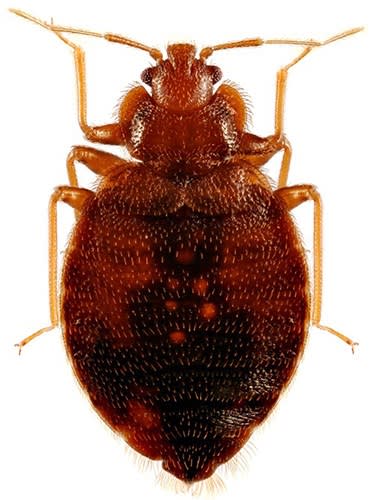
The body of the male bed bug is more elongated than the female, and has a pointed tip.

Females lay eggs where they run. Their eggs take 6-10 days to hatch.

Bed Bug Inspection Tips
Tip: The common bed bug can not be seen with the naked eye. Since bed bugs are challenging to see, use a magnifying glass.
- Immature bed bugs can be difficult to see. A hand lens or magnifying glass will be very helpful.
- Inspect adjoining rooms where an infestation is found.
- Locate bed bug activity by looking for fecal material spots that they leave, even if you can see no visible bed bugs.
- Look for droppings or fecal material spots they may leave behind, even if you don’t see any bed bugs.
- Use an Insecticide Aerosol, such as Stryker 54 or PT 565, to flush the bed bugs out of suspected hiding places. These aerosols kill on contact, but the idea is to flush them out for inspection.
- Remember to declutter first. As you declutter, be careful not to spread bed bugs to other rooms.
- Inspect thoroughly. Bed bugs are small and remarkably good at hiding.
- Keep in mind that bed bugs are easy to kill but hard to find. So be thorough with both your inspection and your treatment.


Bug Inspection Check List

Key Takeaway
When inspecting, remember the 95-5 rule:
95% of the bed bugs will usually be within 5 feet of the bed.
The Mattress and Box Spring
Check the mattress thoroughly, paying close attention to seams and tufts along the edges.
- Flip the mattress over and inspect the bottom carefully as well.
- Pay particular attention to any rips in the fabric.
- View the fabric on the bottom of the box spring and shine a flashlight to verify that bed bugs have not penetrated the box spring's interior.
Bed Frame and Head and Foot Boards
- Remove the mattress and box frame from the bed frame and shine a flashlight all along with every potential hiding place on the bed frame.
- Remember, bed bugs can slip into a crack; if a business card can fit into the gap, bed bugs can fit.
Other Furniture: Desks, Chairs, Dressers, etc
- Take out all drawers and cushions from surrounding furniture.
- Check all seams and crevices carefully with a flashlight.
- Take your time and inspect it thoroughly
- Bed bugs are commonly found in this area in an infested room.
Walls and Carpet
- Inspect the surrounding walls by removing electrical switch plates and any wall hangings.
- Check under tack strips and behind baseboards where ever possible.
- Shine light into cracks in plaster and seams on wallpaper.
Electronics and Other Appliances
Unfortunately, electronics and appliances provide a perfect hiding spot for bed bugs. Check them closely with a flashlight and magnifying glass as well. Remove them when possible. Placing smaller ones in a bag with Nuvan Strips is an effective way to save the device.
Additional Bed Bug Inspection Notes
Bed bug fecal and blood spots (look like rust) are left on sheets and pillowcases when the engorged bed bugs are crushed. These indicators serve as sure signs of infestation. Bed bugs prefer to hide in cracks and crevices during the daytime and come out to feed on the host's blood at night, usually, while the host is sleeping. Since bed bugs can flatten their bodies, they fit in tiny crevices, especially around the bed area. They are found in habitual hiding places, preferably close to a blood meal. Even though their preference is to be close together, they can travel several feet for a blood meal. Initial infestations tend to be around beds, but the bugs eventually become scattered throughout a room, occupying any crevice or protected location. They can also spread to adjacent rooms or apartments.
DIY PestControl with professional bed bug treatment products has helped many customers with bed bug issues in their homes. If you're wondering if you can do this yourself, rest assured that you can with the guidance we've provided below. Also, you can call us at 1-800-476-3368 to speak with one of our pest control experts or use the live chat feature on our website. Either way, we're here to help!
Once you have identified areas of activity or potential activity, it's time to begin the treatment. You'll notice that we recommend treating the room's perimeter first and working inward to the bed. Since bed bugs are more often found on or immediately around the bed, this reduces the likelihood that bed bugs disturbed by the treatment will move or be scattered into untreated areas.
Steps To Get Rid Of Bed Bugs
1. Bed Bug Preparation Tips
Reduce Clutter:
Remove all personal items (stuffed animals, soft toys, blankets,
electronics, etc) and anything that does not stay in the room permanently. Caution: Be
mindful that items from the infested area can transfer bed bugs to other areas. It is best to bag them in
plastic with Nuvan
Strips.
Launder Infested Garments and Linens:
Launder or tumble dry any garments that are
infested or suspected of being infested. Bag the garments and store them in a bed bug free area until the
infested storage area has been treated.
Dismantle Bed Frames:
Dismantling bed frames in infested areas typically expose bed bug
hiding sites. Having access to these areas during cleaning is important. Stand up the box spring and shine a
flashlight through the gauze fabric and look for bed bugs. If the fabric is torn (possible hiding place),
remove fabric to prepare for spraying. If the mattress and or box springs are infested, you may want to
consider Encasements by Mattress Safe. Once covered with these
encasements, bed bugs can not enter or exit. There is no need to treat the mattress or box spring when using
these encasements. Keep them on for a year.
Remove Dresser Drawers:
Remove drawers from desks and dressers since bed bugs like to
hide in these areas. Turn furniture over to inspect and clean all hiding spots. All furniture should be
pulled away from the walls.
Clean the Area:
Scrub infested surfaces with a stiff brush to dislodge bed bug eggs.
Vacuum the room extensively. Use a vacuum hose attachment to thoroughly vacuum cracks and crevices on
furniture and along baseboards on the walls. Vacuum along baseboards, furniture, bed stands, rails,
headboards, footboards, bed seams, tufts, buttons, edges of the bedding, as well as the edges of the carpets
(particularly along the tack strips). A good vacuum cleaning job may remove particles from cracks and
crevices to encourage greater insecticide penetration. Bed bugs cling tightly to surfaces, so it is best to
vacuum by scraping the end of the vacuum attachment over the infested areas to pull out the bed bugs.
Caution: It is not good to use a bristle attachment, because you may transfer bed bugs to
other areas since they cling to the brush. Dispose of vacuum cleaner bags after you are finished in an
outdoor trashcan.
Caulk and Seal:
Caulk and seal all holes where pipes and wires penetrate walls and
floor and fill cracks around baseboards and molding to further reduce harboring areas.
Key Takeaway
Reducing clutter in the affected area allows for the area to be cleaned more easily.
2. How to Treat your Mattress for Bed Bugs
Do I Have to Throw Out the Mattress?
This question is answered by the condition of the mattress and the size of the infestation. If there are holes or tears in the gauze fabric or fabric of the mattress, bed bugs and bed bug eggs may be inside. The bed bugs may be outside as well. There are restrictions on how beds can be treated with insecticides. We carry both Mattress Safe Bed Bug Encasements and ActiveGuard Mattress Liners.
1. Bed Bug Bed Encasements: The brands, Mattress Safe and JT Eaton have high-quality mattress and box spring encasements. Place them over your mattress or box spring, so you don't have to throw them away. They are bedbug certified to keep bed bugs out of the mattress or box springs. If using a labeled insecticide on the mattress or box spring first, apply on the mattress or box springs then zip it up. It has a patented hook to keep the bed bugs inside the encasement so they cannot escape. Keep the encasement in place for one year (due to bed bug life cycles).
2. Active Guard Liners: Active Guard Mattress Liners may be placed on beds and effective as preventative and active bed bug treatments. They kill bed bugs and dust mites within 72 hours and will prevent bed bugs from infesting mattresses. ActiveGuard Liners act like a fitted sheet; it comes in single, full, queen, and king sizes that fit up to 17" in depth.
3. Insecticides on Mattresses: If you decide against Bed Bug Encasements or Bed Bug Liners, use insecticides labeled for beds.
These insecticides include Steri-Fab, Cimexa Dust, Crossfire Insecticide, Bedlam Plus Aerosol, or Temprid FX.
Look carefully at the mattress's folds and seams, the headboard, footboard (if present), box spring/support platform, frame, etc. for bedbugs and treat these areas after vacuuming. Dusts last longer than aerosols, but the crack and crevice tips on the aerosols enable you to get into the smallest cracks. It is a good idea to use a combination of bed bug spray and dust. Temprid SC may be used on the tufts and seams of mattresses. It works well as a residual insecticide sprayed in other recommended treatment areas such as nightstands, chests, dressers, couches, and chairs.
3. How to Treat the Surrounding Areas
Bed Bug Spray and Dust Treatments:
There are several products on the market that work well for bed bugs: Apply residual liquid, aerosol, or residual dust insecticides such as Spectre 2 SC, CrossFire Bed Bug Insecticide Concentrate, Temprid FX, Doxem NXT, D-Fense NXT, Cimexa Dust, Crossfire Aerosol,and Bedlam Plus Aerosol.
- It is best to use a combination of these products for application purposes.
- You can get these at discounted rates in be a form of kits: Bed Bug Kits
- The kits have the residual insecticide with the dust and aerosols
- Spray liquid insecticides or aerosols:
- Spray around and under the bed and along the baseboards near the bed.
- After removing the drawers from the furniture, the inside of the cabinetry should be sprayed and the bottom and sides of the drawers.
- Do not treat the inside of the drawers. If needed, the clothes in the drawers should be removed and laundered.
- Spray around the inside of closets, door frames, and doors.
- Spray molding at the top and bottom of the room.
- Spray around windows.
- Spray seams of drawers, both top, and bottom.
- Spray dressers from below. Spray where dressers touch the floor.
- Spray where the bed touches the floor, spray chairs, and underneath chairs.
- Spray all baseboards, loose plaster, behind bed frames and headboards, beneath beds and furniture, and bedsprings and bed frames.
- Do not apply to furniture surfaces or mattresses where people will be laying or sitting unless using a product labeled for that type of treatment.
- Infested bedding should not be treated, but should be removed, placed in sealed plastic bags, and taken for laundering and drying at high temperature.
Spectre 2 SC has a low odor and is not detectable by the bed bugs. Adjust the bed bug spray pattern to a mist by turning the nozzle. A fine low mist is best for most spraying, but you may need to use a stream to get into some cracks and crevices. If you can't get into the cracks and crevices, use one of the aerosols described below with it's crack and crevice tips to reach into these areas.
- Mix 3 oz per gallon or 0.75 oz per quart and spray with a low-pressure sprayer into the areas where the bed bugs are hiding. Typical areas include bed frames, headboards, under beds, baseboards, moldings, behind pictures, etc. Remember to apply in the joints and crevices of furniture. If the crack and crevices are too small, use an aerosol with a crack and crevice tip (recommendations are below.)
- You may spray mattress seams, zippers, and tufts. Please wait until it dries before remaking the bed.
- Remember- 95% of the bed bug infestation will be within five feet of your bed.
CrossFire Bed Bug Insecticide bed bug concentrate has two different active ingredients for dual modes of action (both a quick kill and residual activity). Mix 3 oz of CrossFire Insecticide with one gallon of water or 0.75 oz per quart (Remember to use what you mix-within 24 hours.) Adjust the spray pattern to a mist by turning the nozzle. A fine low mist is best for most spraying, but you may need to use a stream to get into some cracks and crevices. If you can't get into the cracks and crevices, use one of the aerosols described below with it's crack and crevice tips to reach into these areas.
- Apply as a coarse, low-pressure spray to harborage areas including crevices, baseboards, loose plaster, behind bed frames and headboards, beneath beds and furniture, and bedsprings and bed frames. After removal of bed linens, apply Transport Mikron to mattress and boxsprings. Apply to tufts, edges, seams, and folds (do not spray clothes or bed linens). You may apply it to furniture, but not to areas where there is direct access to seating or arm placements. Infested bed linens should not be treated, but should be removed, placed in sealed plastic bags, and taken for laundering and drying at high temperatures.
- Apply as a crack and crevice treatment to all baseboards, loose plaster, behind pictures and mirrors, moldings, beneath floor coverings and carpets, closets, shelves, curtains, furniture, and picture frames that may provide harborage to bed bugs.
- Remember- 95% of the bed bug infestation will be within five feet of your bed.
Temprid FX Mix 8 ml (about 1/3 oz)(measurements on the bottle) or one 8 ml vial of Temprid FX with one gallon of water. Remember to use what you mix-within 24 hours. Adjust the spray pattern to a mist by turning the nozzle. A fine low mist is best for most spraying, but you may need to use a stream to get into some cracks and crevices. If you can't get into the cracks and crevices, use one of the aerosols described below with its crack and crevice tips to reach into these areas.
- Temprid FX controls bed bug populations that are resistant to pyrethroid insecticides.
- For infested mattresses, remove linens and wash before reuse. Apply Temprid to tufts, seams, folds, and edges until moist. Allow to dry before remaking bed. Do not spray bed linens.
- Apply Temprid FX to bedsprings, box springs, and the interior of bed frames or headboards, including all cracks and joints.
- When bed bugs are found in upholstered furniture, apply only to the infested tufts, seams, folds, and edges, but do not apply to flat surfaces where prolonged human contact will occur. If bugs heavily infest furniture (inside cushions and batting), use labeled insecticide dust or consider fumigation.
- Apply as a crack and crevice treatment to all baseboards, moldings, beneath floor coverings and carpets, closets, shelves, curtains, furniture, and picture frames that may provide harborage to bed bugs.
- Remember- 95% of the bed bug infestation will be within five feet of your bed.
Recommended Aerosols-Aerosols are perfect for application where you can not spray liquid mixtures.
Aerosols ( Doxem NXT, D-Fense NXT, Crossfire Aerosol, or Bedlam Plus) Usage: Use the plastic tip to the aerosol can. Apply as a crack and crevice or spot treatment where evidence of bed bugs occurs. This includes bed frames, box springs, inside empty dressers, clothes closets, curtain rods, hollow spaces, carpet edges, high and low wall moldings, and wallpaper edges.
Recommended Insecticide Dust: CimeXa Dust
Cimexa Dust: Cimexa Insecticide Dust kills bed bug adults and nymphs, killing bed bug nymphs hatched from dusted eggs. As low-toxic insecticide dust, CimeXa Dust is composed of 100% Amorphous Silica Gel. It is odorless and does not stain surfaces.
Use a Hand Bellow Duster to apply dusts into the cracks and crevices with the Cimexa Dust. Put dust into duster. Remove switch plates and electrical outlet covers and dust into the openings. Another tool used for dusting would be a small paintbrush or small makeup brush. Apply a small amount of dust on the tip of the brush, brushing into cracks and crevices. Dust any items that are hanging on the wall, such as pictures with a small paintbrush. Use a small paintbrush to paint dust in seams and around the buttons of the mattress. Use dust or aerosol in all joints of the bed frame.
If possible, disassemble the bed frame and treat it from all angles with dust and aerosol. After the mattress and box spring have been treated, enclose both of these with Mattress Safe Bed Bug Encasements. With these covers, you can keep your bed and do not have to treat it again.
Organic Treatment Products
Cirkil RTUThis ready-to-use botanical insecticide does not need to mix with water. Spray on areas where bed bugs are hiding. These areas include box springs, mattress seams, dressers, closets, nightstands, carpet and rug edges, molding, and any place bed bugs would be hiding. Repeat in 2-4 weeks.
Cirkil CXCirkil CX is a concentrate with 22% Cold Pressed Neem Oil. Use one qt of Circkik CX to 3 Qts of water in a one-gallon sprayer, making one gallon of the finished product. Treat cracks and crevices where the bed bugs are hiding and repeat in 2-4 weeks.
Cirkil Electronics and Clutter Treatment KitCirkil Electronics and Clutter Treatment Kit contain:
- 10 x treatment Pads (treated with neem oil)
- (5) 32"x50" sealable containment bags
Fill the containment bags with household items that may be damaged by water-based, dust-based, or aerosol-based pesticides. Place such things as lamps, heaters, electronics loosely in the bag and place two treatment pads on the top of the items. This treatment kit will kill bed bugs within 24 hours.
Key Takeaway
Focus on getting insecticides into cracks and crevices where the bed bugs hide.
Treatment Protocol
Important!! Do all of the treatments (as described above) 3 times, 10 days apart. Bed bugs come out to feed every few weeks, so retreatment is critical.
DO NOT USE FOGGERS OF ANY KIND!!! FOGGERS SCATTER THE BED BUGS AND MAKE YOUR JOB MORE DIFFICULT!!!
Bed Bug Kits-Combines the liquid, aerosols and dust for greater savings
Integrated and Alternative Approaches to Bed Bug Control
As an alternative or an addition to bed bug control using chemicals, bed bug steamers and heaters have become an increasingly important tool in the pest control industry. Use steamers and heaters where chemical sensitivity is a concern, such as hospitals and nursing homes. These steamers also get rid of allergens, bacteria, germs, and viruses.
Bed Bug Kits - Combines the liquid, aerosols and dust for greater savings.
Shop Here: Bed Bug Steamers and Heaters
4. Monitoring and Trapping Bed Bug Infestations
Bed Bug Monitor Traps: The Bed Bug Monitor Traps recreate the conditions that bedbugs consider perfect, including dark, tight tunneling areas and rough woodsy material. Bed bugs would usually be found: inside the small grooves of corrugated boxes, between mattress creases, and around/under wooden furniture.
SenSci Volcano Monitors and Lures: These bed bug monitors/detectors may be used with the lures or with the Sensci lure to capture bed bugs. As an identification tool, you can monitor your bed bug treatment plan or monitor bed bug presence. Use the optional lure if a person is not present in the bedroom that is being monitored.
Bugo Bed Bug Monitors/Traps are adhesive traps that are placed around the bed legs, catch the bed bugs before then can crawl up the bed leg into your bed.
More About Bed Bugs
Bed Bug Diet
Although the preferred host for bed bugs is humans, they will feed on other animals, such as poultry, mice, rats, canaries, dogs, and cats, if necessary. They usually feed at night but may feed in the daylight in rooms that are not used at night.
Bed Bug Life Cycle
The life cycle stages of a bed bug are egg, nymph, and adult. They are called bed bugs because they readily infest mattresses, bed frames, and box springs. Bed bug eggs are laid along the edges of or around buttons on the mattresses. Eggs can also be glued to rough surfaces. Bed bug females lay about 200 eggs, usually at the rate of three or four a day. Eggs are placed in cracks, crevices, and other isolated and protected shelters.
Females lay eggs after a blood meal; they will hatch in one or two weeks into Nymphs. Newly hatched bugs (Nymphs) begin feeding immediately. At room temperature, and with an available food supply, the nymphal period will last 14 to 30 days. They shed their skin (Instar) five times before becoming adults.
Bed bugs will mate soon after becoming mature, so the time from egg hatch to egg laying is 4 to 9 weeks, under favorable conditions. The bed bug's average life span is 6-12 months, and they feed every ten days or so during this time. Bed bugs can survive many months without a blood meal, and their reproduction is high.
Bedbug Habits
- The female lays eggs in cracks and crevices along the edges of mattresses, box springs, and bed frames. Bed bugs also inhabit other cracks and crevices throughout infested rooms. These other areas include; behind picture frames, switch plate covers, loose wallpaper, under door and window casings, baseboards, or along the edges of carpets.
- Bed bugs hide in cracks and crevices during daylight hours.
- They hide in the folds and tufts of mattresses, coils of springs, cracks, hollow bedposts stand bed rails and headboards. They may be found in box springs, inside the furniture's cabinetry, and drawers' bottom and sides.
- Bed bugs may hide in the upholstery of chairs and sofas.
- They are not restricted to these places, however.
- A second common source for bedbug infestation occurs in homes where bats, swallows, chimney swifts, pigeons, or other wild hosts have been roosting. Although similar in appearance, these bedbug species that typically feed on bats and birds can be differentiated from the Common Bedbug that prefers humans.
- The bat bed bug can and often feeds on humans. The bat bedbug has long hairs on its body. Eliminate their bat hosts from the building and seal all openings so that bats cannot enter.
- Another group of bugs resembling the bed bug infests birds. These bugs are usually confined to bird nests. To control these parasites, the birds and their nests must be removed. An application with a residual spray such as Temprid SC should be applied to the area.
What do bed bug bites look like and do they carry a disease?
- Bed bugs do not carry disease.
- They suck blood from their host with piercing mouth parts but the bite is painless.
- They are attracted to the carbon dioxide exhaled during the night.
- The skin may become irritated or inflamed due to the salivary fluid injected by the bed bugs. A small, hard, swollen, white welt may develop at the site of each bite.
- It is important to recognize that not all bites or bite-like reactions are due to bed bugs. Bed bugs or their signs will be present if it is a bed bug bite.
- A Mosquito bite resembles red bumps with a puncture wound in the center; these bites usually occur in the dark, between sunset and sunrise. Their bites appear isolated and appear randomly over the skin.
- Bed bugs do not live under the skin. If you experience biting sensations during the day, it may be an allergy-related condition.
- (Other possible sources of irritation are discussed in the University of Kentucky entomology fact sheet Invisible Itches: Insect and Non-Insect Causes).
Preventing Bed Bug Infestations
It's important to inspect used furniture, particularly bed frames, and mattresses before bringing it into the home. Mattresses, in particular, carry the most significant risk of harboring bed bugs and their eggs. It would help if you were wary of acquiring used furnishings, especially beds and couches. A practice that we have incorporated in our traveling is to inspect for bed bugs in hotel rooms. If possible, carry a flashlight with you and inspect the bed area thoroughly, as described above. You may also want to inspect or vacuum luggage when you arrive home to prevent transferring bed bugs to your home. You can use JT Eaton Control for Luggage and Mattresses to spray both luggage and mattresses during travel.
ActiveGuard Mattress Liners, impregnated with Permethrin will help prevent bed bug infestation on beds.
- After coming home from a trip, some infestations can be prevented by washing any clothing or bedding used on the trip. Do this immediately.
- If you buy used furniture, inspect all the items before bringing them into your residence.
- Never bring discarded bed frames, mattresses, box springs, or upholstered furniture into your home.
Written by our resident pest control expert Ken Martin.

