




How to Get Rid of Drain Flies
If drain flies are causing you issues at home or in the office, learn how to get rid of drain flies for good. In this article, we step you through the best elimination and treatment practices for drain flies.
December 16th, 2023

What are Drain Flies?
Most drain gnats are harmless to humans, though they may transmit and spread bacteria and other microorganisms from their breeding ground to areas where people are. Drain flies do not bite, but they can be a nuisance and make for an uncomfortable living situation, as they may have been recently in c0ntact with things like animal waste. Drain Flies breed in the drain, drain openings, sewers, septic tanks, septic systems, kitchen sinks, and soil that has been contaminated with sewage which is why they are often called sewer flies. They feed off the filth and scum that build up in these areas.
Do Drain Flies Bite?
No, drain flies will not bite you. Their food source is organic material found in dirty places like drains.
Are drain flies harmful?
No, they aren't harmful, but they are a sign you need to do a deep clean in your drains or sinks. Understanding where they breed is a key first step in getting rid of your drain fly problem.
Sanitation
As simple as it may sound, the best way to get rid of drain flies and prevent them is proper sanitation. Drain flies feed on filth and scum that can build up in areas such as drains, drain openings, sewers, septic tanks, and kitchen sinks. A great way to identify which drain-source the drain flies are coming from is to put clear tape over the drain so that they will fly into it and get stuck.
Regular household cleaning products can be used, but we recommend using products specifically designed with microbes to eat and eliminate the scum that drain flies feed on.
Natural Cleaning Solutions
Products that you can regularly find in your home can be used to help get rid of your drain flies and clean the areas they are breeding in. These may serve as solutions for those who don't want to use chemical sprays.
-
Use a toothbrush or pipe brush to start cleaning your pipes and drains. You want to make sure you are getting hard-to-reach areas like the pipes under your sinks. Run hot water down the pipes after you have scrubbed thoroughly.
-
Mix 1 cup of vinegar, ½ cup of salt, and ½ cup of baking soda and pour down the drains where you have seen drain fly activity. Leave the solution overnight and flush it down with hot water.
Using Bio Sanitation Products
These products are specifically designed with microbes to eat and eliminate the scum that drain flies feed on.
Invade Bio Drain
Use Invade Bio Products in the drains and drain pipes. The use of a drain cleaner treatment such as Invade Bio-Gel Treatment will remove the organic matter and improve sanitation. Since these flies love filthy debris, you must sanitize all possible breeding grounds to get rid of drain flies. This can be poured directly into the contaminated area.
Invade Hot Spot
a Microbial/Citrus Foam that comes in an easy-to-use 16 oz aerosol. Hot Spot drain cleaner is an aerosol can that contains the same premium microbes and ingredients as InVade Bio Foam. The 360-degree valve allows for foam dispensing in any orientation to hit hard-to-reach areas easily.
Invade Bio Foam
This is another type of Invade Bio product that is particularly useful in commercial establishments. It is a concentrated bio-liquid with the use of a foamer. Invade Bio Foam contains concentrated scum-eating, odor-eliminating microbes, and a foaming agent.
Invade Mop Clean
These comes in easy-to-use packets and are designed to be poured right into your mop bucket. These are great to use even after you have eliminated the drain fly problem because it will help prevent the build-up of scum and filth that drain flies feed on.
Key Takeaway
Clean, clean, and clean some more. Identify the area they are breeding in and follow these methods to sanitize the area and get rid of your drain flies.
Pesticides and IGRs to Get Rid of Drain Flies
When it comes to getting rid of drain flies, sometimes cleaning by itself is not enough. Using pesticides and IGRs (insect growth regulators) can be easily used with your sanitation efforts to eliminate and prevent drain flies and any further drain fly problems.
Drain Application
Insect Growth Regulators (IGRs) can be used in drains to prevent drain flies and their developing larvae from maturing into breeding adults.
When used in conjunction with good sanitation, IGRs can be a very effective tool to help eliminate drain flies. There are liquid concentrates such as Gentrol IGR and Tekko Pro IGR. There are traditional aerosol spray IGRs like Gentrol Aerosol as well as foaming aerosols like Tekko Trio Foam. All are effective and easy to use in drains against Drain Flies.
Contact Spray
While not labeled for use in the drains, aerosol contact sprays containing pyrethrin such as Stryker 5-4, CB-80, and PT 565, can quickly reduce drain fly populations. It is important to remember that this is a temporary measure, and drain fly populations will quickly increase to previous levels if additional measures are not taken to find and remove their breeding site.
Get Rid Of Drain Flies!
Pro Tip for Recurring Drain Fly Problems
You’ve cleaned and cleaned and used multiple products and still can’t seem to get rid of your drain flies. Well, the drain flies might be breeding in the soil under a concrete slab. In that case, the only way to eliminate the infestation is to remove the contaminated soil by breaking through the slab and replacing the soil. Any broken drain pipes need repair. Drilling and treating the infested soil under the slab with residual insecticides alone does not work.
Remove all organic debris trapped in small cracks and crevices under the legs and bottom edges of kitchen equipment. The debris needs to be removed, and thoroughly dried, and a long-lasting caulk applied to seal the crack to effectively kill drain flies.
If adult drain flies do not disappear within about a week, you will need to look for other breeding sources and treat these areas properly.
Identification
Do I Have Drain Flies, Sink Flies, or Fruit Flies?
So, what is a drain fly? Drain flies belong to the Psychodidae family and are often referred to as sewer flies, sewer gnats, sink flies, filter flies, drain gnats, moth flies, and phorid flies. These flies are frequently found in the drain, kitchen sink, septic tank, and anywhere else they can find wet slimy substances in which to lay their eggs.There's no need to have a pest control company or pest control professional visit your home - with our identification tips below, you'll be able to tell exactly what kind of pest you are dealing with.
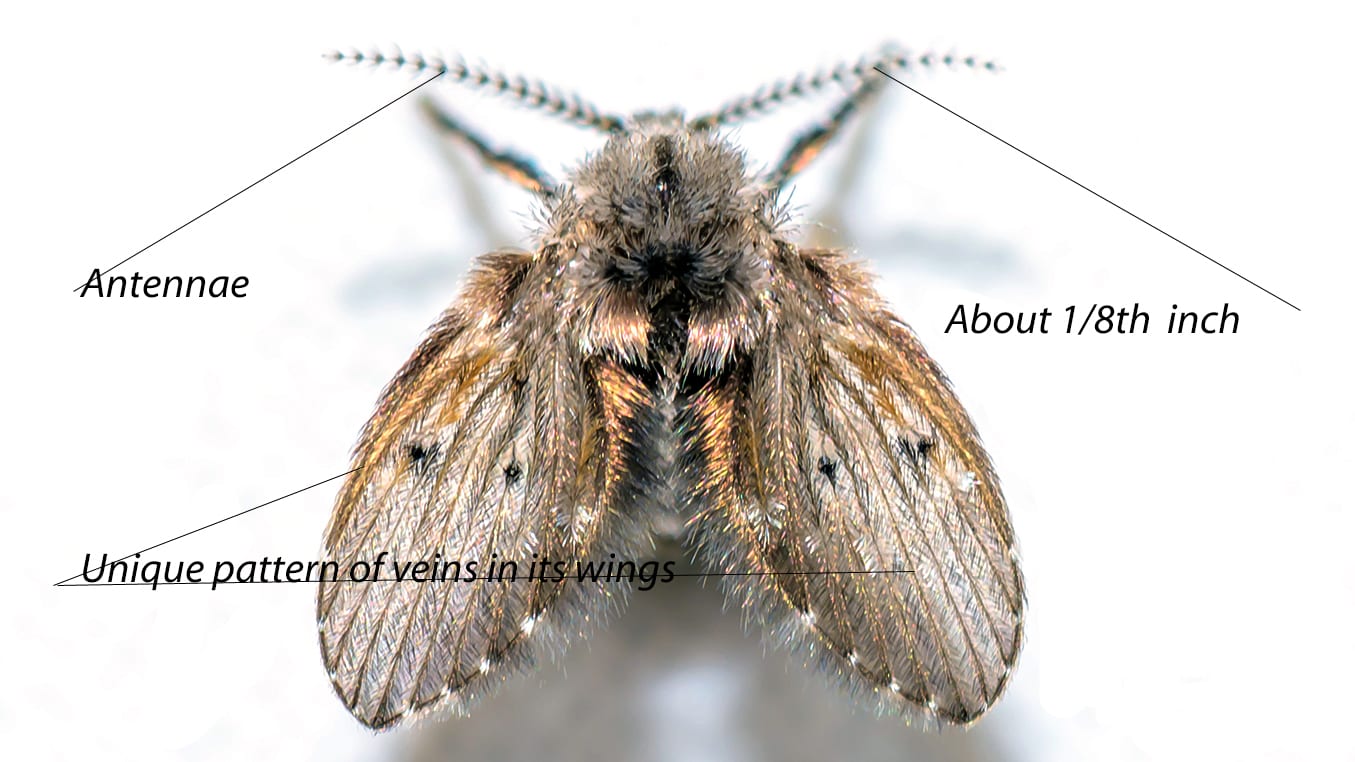
Drain Fly Identification
-
Drain Flies have a pair of wings and antennae with six legs.
-
Adult drain fly size is about 1/16th inch long.
-
Body colors vary from a tan to a light gray color. Both body and wings are densely covered with long hairs that give the body a fuzzy appearance.
-
The wings fold over the body and are held roof-like over the body when at rest.
-
The wings of drain gnats will become fine dust when they are swatted or mashed.
-
They will hop or fly short distances if they are disturbed.
-
The drain fly larvae are about 3/8" long, wormlike, and without legs. The drain fly larvae are gray, with darker colors on the ends.
It is important to note that drain flies can be easily confused with other flies, such as fruit flies, phorid flies, and sphaerocerid flies, so knowing the breeding locations for each of these is important to properly identifying your fly problem.
-
Fruit flies: Fruit Flies can be spotted around fresh fruits/vegetables, rotting fruits and vegetables, drains, garbage, and damp organic materials.
-
Phorid Flies: Phorid Flies are found in sewage-contaminated soil, garbage, drains, human corpses, rotting vegetables, fruit, garbage as well as damp organic materials.
-
Sphaerocerid Flies: These flies may be found in manure, damp organic material, drains, rotting fruits and vegetables, and garbage
Fruit Flies or Drain Flies?
Drain Fly Biology and Habits
To treat a drain fly infestation properly, it is helpful to know how long a fly lives. Drain flies, develop by complete metamorphosis. The Psychodidae life cycle ranges from 8 to 24 days.
Sewer Fly Eggs and Larvae
Sewer flies lay eggs in a mass of 30 to 100 in a suitable medium. These eggs hatch in less than 48 hours. The eggs from these drain flies are laid in irregular masses in such places as dirty garbage disposal units, rain barrels, water traps in plumbing fixtures, sewage plant filters, sewage systems, and almost anywhere a few drops of water are accumulating or decomposing organic materials are found. Since drain flies eat organic material, this is why you'll find them in these areas.
The drain fly larvae and pupae live in the thin gelatinous film found in the drain opening, septic tank field lines, or filter stones. The drain fly larvae feed on sediment, decaying vegetation, and microscopic plants and animals. The drain fly larva stage lasts from 9 to 15 days before pupating.
The pupal stage lasts from 20 to 40 hours. Newly emerged adult drain flies are sexually mature and copulate within the first few hours of their life.
Despite their name, drain flies are actually poor flyers. Drain flies tend to remain at the edge of standing water and are commonly seen walking or running on walls and other resting surfaces. Drain flies travel through the air in short jerky lines for only a few feet.
During the day, adult drain flies rest in shaded areas, on walls near plumbing fixtures, or on the sides of tubs and showers. Most of the activity of the moth fly occurs during the evening. They may be seen hovering around the sink areas in your home at this time.
Inspect Your Home for Drain Flies
Adult drain flies typically breed in drains, hence the common name of drain flies. These drains are an excellent place to begin the inspection. Drain flies live off debris in the form of a sticky, humid film on the drain sides and the drain trap. You can use a metal pipe brush to scrape the sides and examine the sludge for live drain fly eggs and larvae.
Don't stop looking when one breeding ground has been located. In most cases, several breeding grounds will be present.
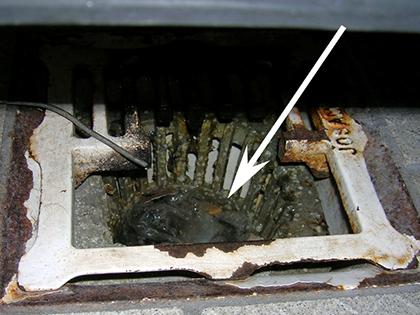
Below we have listed some tips for finding the source of your drain fly infestation:
Sticky Tape Test
Place some tape over the drain opening, with some holes in it for airflow. If the drain flies get stuck on the tape as they exit the drain, you know you have drain flies.
Check Slab Floors
Sometimes, these drain gnats can come from under slab floors from broken drain pipes. Drain flies love the organic debris under this slab, so it’s a perfect breeding ground. Adult drain flies then enter the living space through cracks in the slab and back through drain pipes. To determine if they are coming up through the slab, place the masking tape over the crack as described above.
If you think drain flies are breeding under a slab, a hole must be broken through the slab to see if drain pipes have broken and the flies are breeding there. After a hole is broken through the slab, dig in the soil under the slab, and inspect. The organic debris and moist soil may be several inches under the surface. The presence of drain fly eggs and larvae confirms the site as a breeding ground.
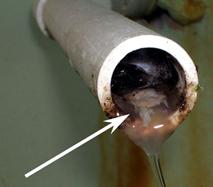
Inspect Sewer Tank
Particularly in commercial buildings, a prime breeding ground for drain gnats is in a sump pump pit and sewer tank. The sewer tank and pump pits need to be checked for activity, even if it is not close to where the moth flies have been seen flying. Also, inspect the pits of elevators in commercial buildings for excess water or moisture.
Bathroom Drains
In homes, drain flies are generally found breeding in bathroom drain pipes, particularly those in showers. Shower pans are prone to leaking, and the area under the shower pan becomes a prime drain fly breeding ground.
If you believe that the shower is a source, it may be necessary to drill a hole into the area under the shower pan or the wall behind the shower. In most cases where these flies are breeding in this area, adult drain flies will begin emerging from the hole within minutes. Light can attract drain flies and they will fly to the hole drilled through the wall in search of it.
Moisture Areas Outside
Drain flies love moist, shady areas, so it’s important to check these locations if you want to find and kill drain flies. Check under potted plants, bird feeders and baths, in moss-clogged roof gutters, under air conditioners, in thick mulch, or on wet ground areas.
Drain flies, or moth flies, can be found in moist, highly organic debris areas such as sink drains, moist mops, septic tanks, compost piles, storm drains, pipes, dung, and rotten vegetation. Re-grouting tiles to prevent water seepage into walls will stop breeding in those sites. If found in rotting vegetable matter, the source should be destroyed.
In natural settings, drain fly larvae feed on decaying plants and animals. Removing this material as much as possible will limit how long a fly lives.
Quick Sanitation Tips
Clean dirty garbage containers, wet lint under the washing machine, and even standing water in containers under houseplant pots. Outside the home, inspect air conditioners, birdbaths, shallow, stagnant pools of water, and sewage treatment facilities upwind as adult drain flies travel with the wind.
Key Takeaways
-
Inspect your home for areas of moisture
-
Inspect loose ceramic floor tiles where standing water may collect
-
If drain pipes are leaking, a breeding source has been found.
How to Prevent Drain Flies
Drain fly larvae need moisture to survive, and they may be found anywhere that standing water accumulates. A fine slime layer can develop along the water surface in infrequently used toilet bowls and tanks. Drain fly larvae can often be found in these locations, so it is important to treat these areas properly if you want to discover how to get rid of drain flies.
The drain fly larvae can also be found in the kitchen sink, or floor drains in basements and garages, even in condensation drip pans under refrigerators. Look for the small, gray larvae wiggling in the water. These areas need to be cleaned thoroughly with attention to removing the slimy surface film. Some sites may be easy to clean with traditional methods. Other places like drains can be harder to access and can be treated with a probiotic drain cleaner like Invade Bio Drain.
It is sometimes difficult to find or recognize breeding sites because the drain fly larvae are tiny and easy to overlook. However, adult drain flies can be detected using simple traps at home. A common trap to use involves filling a bowl with a cup of vinegar, such as apple cider vinegar, and covering it in plastic wrap. Simply poke a few small holes into the plastic wrap and leave it out near the drain overnight. Once you punch small holes for your drain traps, they will be able to enter the trap, but not exit, and the vinegar mixture will kill drain flies.
Another variation of this trap is to combine a cup of baking soda, a cup of salt, and a cup of vinegar in a bowl. Pour this solution down the drain opening and let it sit overnight. In the morning, pour boiling water down the treated drain to flush the drain pipes and get rid of drain flies.
Key Takeaway:
Pouring bleach or strong chemical cleaners down a drain will not remove the buildup that the flies lay eggs in, and it might damage your plumbing. If you want to learn how to get rid of drain flies for good, do not just pour boiling water down your drain pipes.
Use Invade Bio Drain Cleaner or Invade Bio Foam.
How to Kill Drain Flies | Drain Fly Pest Control Tips
If you see a small fly or gnat-type insect flying around in the kitchen, do not assume it is coming from the drains. Check all possible breeding grounds (small puddles, grease, rotting organic material, etc.) to help identify the fly. Using a sanitation drain product like Invade Bio Drain will help destroy the breeding ground if there are drain fly larvae in the drains.
It is necessary to inspect all possible breeding sources and remove them. Many potential areas serve as a breeding ground for drain gnats. Removing the breeding ground is an essential part of figuring out how to get rid of drain flies.
Regularly clean any floor drains and remove organic material. Use Invade Bio products to eat the organic matter where the flies breed and prevent more drain flies from infesting the area.
Let Our Expert Pest Control Professionals Help
With years of experience in the pest control industry, our pest control specialists are able to assist you with the correct products you need and the know-how to back it up. Drain fly infestations can be unsettling, but they can be taken care of quickly with the right knowledge and tools. A pest control specialist from our friendly team can help you today with identification, recommended products, and much more for any drain fly issues.
How To Get Rid Of Drain Flies
Learn how to control pesky drain flies that come out of your drain.
Drain flies are a pesky problem that you can get rid of and eliminate with proper identification. They breed in drains and live off the slimy debris in the drains. We have tips for inspection to determine if they are drain flies. Finally, we cover proper drain fly control treatment plans that you can do yourself.
“Drain Flies” is not a specific species of fly but rather a term for several different types of small flies and gnats including moth flies, phorid flies, sphaerocerid flies, and sometimes fungus gnats,that are frequently found in drains and anywhere else they can find wet slimy substances in which to lay their eggs. A lot of people think they have fruit flies but fruit flies will usually be found infesting decaying fruits and vegetables and not as frequently in drains. Also, fruit flies will usually have red eyes which is a way to quickly distinguish them from drain flies.
Get Rid of Drain Flies |Drain Fly Control Tips
- Step 1: Drain Fly -Identify
- Step 2: Drain Fly -Inspect and Clean
- Step 3: Get Rid Of Drain Flies
If you see a small fly or gnat type insect flying around in the kitchen, do not assume it is coming from the drains. Check all possible breeding sources (small puddles, grease, rotting organic material, etc.) to help identify the fly. Using a sanitation drain product like Invade Bio Drain will help destroy the breeding area if breeding in the drains.
It is necessary to inspect for breeding sites and remove them. Many potential areas serve as breeding sites for the flies. Removing the breeding site is an essential part of a drain fly control program.
Regularly clean any floor drains. Use Invade Bioproducts to eat the organic matter where the flies breed.
Detect the Breeding Source
Understanding the different breeding sources for the flies will help you identify and manage the infestations.
Breeding Sources of Drain Flies, Fruit Flies, Phorid Flies, and Sphaerocerid Flies
- Drain flies: Drain Flies breed in drains, sewers, septic tanks, and soil that has been contaminated with sewage.
- Fruit flies: Fruit Flies can be spotted around fresh fruits/vegetables, rotting fruits and vegetables, drains, garbage, and damp organic materials.
- Phorid Flies: Phorid Flies are found in sewage-contaminated soil, garbage, drains, human corpses, rotting vegetables, and fruit, garbage as well as damp organic materials.
- Sphaerocerid Flies: These flies may be found in manure, damp organic material, drains, rotting fruits and vegetables, and garbage
Drain Fly Identification and Inspection
Drain Fly Identification
- Drain Flies have a pair of wings and antennae with six legs.
- Adults are about 1/16th inch long.
- Body colors vary from a tan to a light gray color. Both body and wings are densely covered with long hairs that give the body a fuzzy appearance.
- The wings fold over the body and held roof-like over the body when at rest.
- The wings of a drain or moth flies will become fine dust when they are swatted or mashed.
- They will hop or fly short distances if they are disturbed.
- The drain fly larvae are about 3/8 " long, wormlike, and without legs. The larvae are gray, with darker colors on the ends.
Inspection-Drain Fly Breeding Sites
Check for Larvae Around Drain Openings and Placing Tape Over Drain
- Drain Flies typically breed in drains, hence the common name of drain flies. These drains are an excellent place to begin the inspection. They often lay eggs at the drain openings. They live off debris in the form of a sticky, humid film on the drain sides and the drain trap. If you use something like a knife to scrape the sides, you can examine the sludge for live larvae. The larvae looks like slime. If you don't locate any of these tube-like drain fly larvae, the eggs may be deeper in the pipes.
- Place some tape (duct or clear tape) over the top of the drain, with some holes in it for airflow. Leave overnight. If the drain flies get stuck on the tape as they exit the drain, you know you have drain flies. You may need to repeat the next night as well to get a full scope of your infestation.
More Drain Fly Inspection Tips
- Drain flies typically breed in drains, hence the common name of drain flies. These drains are an excellent place to begin the inspection. They live off debris in the form of a sticky, humid film on the drain sides and the drain trap. If you use something like a knife to scrape the sides, you can examine the sludge for live larvae.
- Place some tape over the top of the drain, with some holes in it for airflow. If the drain flies get stuck on the tape as they exit the drain, you know you have drain flies.
- Sometimes, drain flies (moth flies) can come from under slab floors from a broken drainpipe. They would breed in the organic debris under the slab. Adult flies then enter the living space above the slab through cracks in the slab and back through the drain pipe. To determine if they are coming up through the slab, place the masking tape over the crack as described above.
- Inspect condensation pipes for air conditioners and icemakers
- Inspect loose ceramic floor tiles where water may collect
- If you think drain flies are breeding under a slab, a hole must be broken through the slab to see if a pipe has broken and flies are breeding there. After a hole is broken through the slab, dig in the soil under the slab, and inspect. The organic debris and moist soil may be several inches under the surface. The presence of fly larvae and adults confirms the site as a breeding source.
- Sump pump pits and sewers are usually found in a basement area and prime breeding sites for drain flies (moth flies), particularly in commercial buildings. The sewers and pump pits need to be checked for activity even if it is not close to where the moth flies have been seen flying. Also, inspect the pits of elevators in commercial buildings for excess water or moisture.
- In homes, drain flies are generally found breeding in bathroom drains, particularly those in showers. Shower pans are prone to leaking, and the area under the shower pan becomes a prime moth fly breeding source.
- Remove all organic debris trapped in small cracks and crevices under the legs and bottom edges of kitchen equipment. The debris needs to be removed, thoroughly dried, and a long-lasting caulk applied to seal the crack.
- If you believe that the shower is a source, it may be necessary to drill a hole into the area under the shower pan or the wall behind the shower. In most cases where moth flies are breeding in this area, adult flies will begin emerging from the hole within minutes. Drain flies are strongly attracted to light and will fly to the hole drilled through the wall.
- Inspect crawlspace areas; if the drainpipe is leaking there, a breeding source is found. Look for the presence of adult flies. Spiders may have dead moth flies in their webs.
- Don't stop looking when one breeding source has been found. In most cases, several breeding sources will be present.
- Drain flies, or moth flies, can be found in moist, highly organic debris areas such as sink drains, moist mops, sewage treatment facilities, storm drains, dung, and rotten vegetation.
- Re-grouting tiles to prevent water seepage into walls will stop breeding in those sites. If found in rotting vegetable matter, the source should be destroyed.
- Clean dirty garbage containers, wet lint under the washing machine, and even standing water in containers under houseplant pots. Outside the home, inspect air conditioners, birdbaths, shallow, stagnant pools of water, and sewage treatment facilities upwind as adult flies travel with the wind.
- Drain flies may also breed in moist, shady areas such as under potted plants, bird feeders, and baths in moss, clogged roof gutters, under air conditioners, and thick mulch or on wet ground areas.
- In natural settings, moth fly larvae feed on decaying plants and animals. Most moth flies are harmless to humans, though they may transmit bacteria and other microorganisms from their breeding sites to areas where people are. Moth flies do not bite. Adults live for about two weeks.
Drain Fly Treatment Tools : Sanitation Treatment Products, Pyrethrin Aerosols, and Fly Lights
Sanitation Treatments-Invade Bio Products
Use Invade Bio Products in the drains. Use of a drain treatment such as Invade Bio-Gel Treatment will remove the organic debris, improving sanitation.
Invade Hot Spot is a Microbial/Citrus Foam in an easy-to-use 16 oz aerosol. Hot Spot is an aerosol can that contains the same premium microbes and ingredients as InVade Bio Foam. The 360-degree valve allows for foam dispensing in any orientation to hit hard-to-reach areas easily.
Suppose the Phorid flies are breeding in the soil under a concrete slab. In that case, the only way to eliminate the infestation is to remove the contaminated soil by breaking through the slab and replacing the soil. Any broken pipes need repair. Although this is costly, drilling and treating the infested soil under the slab with residual insecticides does not work.
Remove all organic debris trapped in small cracks and crevices under the legs and bottom edges of kitchen equipment. The debris needs to removed, thoroughly dried, and a long-lasting caulk applied to seal the crack.
Invade Bio Foam is another type of Invade Bio product, particularly useful in commercial establishments. It is a concentrated bio liquid with the use of a foamer. Invade Bio Foam contains concentrated scum eating, odor-eliminating microbes, and foaming agent. Use this a part of an integrated pest management tool. Use 1 oz per quart, 4 oz per gallon. Apply using a B&G VersaFoamer HH or sprayer to cracks, crevices, and drains where small flies breed. The foam and citrus combination will digest the organic debris present as part of pest management. Ultra-concentrated Invade Bio Foam is mixed with water at a rate of 4 oz per gallon (1 oz per quart) and applied using Foam Sprayers.
Invade Bio Cleaner and Invade Mop Clean provide solutions for cleaning organic matter with microbes that significantly improves sanitation.
If adults do not disappear within a week further treatments or looking for other breeding sources is needed.
Drain Fly Biology and Habits
Moth flies (Drain Flies) develop by complete metamorphosis. The entire life cycle ranges from 8 to 24 days.
Moth flies (Drain Flies) lay eggs in a mass of 30 to 100 in a suitable medium. These eggs hatch in less than 48 hours. The eggs from the moth fly ( drain fly) are laid in irregular masses in such places as dirty garbage disposal units, water traps in plumbing fixtures, sewage plant filters, and almost anywhere decomposing organic materials are found.
The larvae and pupae of the moth fly live in the thin gelatinous film found in drains, septic tank field lines, or filter stones. The larvae feed on sediment, decaying vegetation, and microscopic plants and animals. The larval stage lasts from 9 to 15 days before pupating.
The pupal stage lasts from 20 to 40 hours. The newly emerged adult fly is sexually mature on the emergence and copulates within the first few hours of its life.
The moth fly (drain fly) is a poor flyer and may be commonly seen walking or running on walls and other resting surfaces. When they fly in short jerky lines, they fly for only a few feet.
During the day the moth fly (drain fly) adult rests in shaded areas or on walls near plumbing fixtures or on the sides of tubs and showers. Most of the activity of the moth fly (drain fly) occurs during the evening. They may be seen hovering around the sink areas in your home at this time.

Prevent Moth Flies
Moth fly larvae need moisture to survive, and they may be found anywhere that water accumulates. A fine slime layer can develop along the water surface in infrequently used toilet bowls and tanks. Fly larvae can often be found in these locations.
The larvae can also be found in sink or floor drains in basements and garages, even in condensation drip pans under refrigerators. Look for the small, gray larvae wiggling in the water. These areas need to be cleaned thoroughly with attention to removing the slimy surface film. Some sites may be easy to clean with traditional methods. Other places like drains can be harder to access and can be treated with a probiotic product like Invade Bio Drain.
It is sometimes difficult to find or recognize breeding sites because the fly larvae are tiny and easy to overlook. However, the adult flies can be detected by using a simple trap. Clear plastic cups with a very light coating of vegetable oil or petroleum jelly inside the cup can be inverted over drains for several days to catch emerging adults and identify breeding sites. Another method is to tape over the drain with clear tape and see if flies can be found stuck to the tape. If these inspection methods are not productive, then expand the search.
Key Takeaway
Pouring bleach down a drain will not remove the buildup that the flies lay eggs in and it might damage your plumbing.
Use Invade Bio Drain.
Written by our resident pest control expert Ken Martin.