




How to Get Rid of House Flies
If you have an active house fly infestation, follow these guidelines to learn how to get rid of house flies quickly, and discover the best house fly control products on the market.
December 16th, 2023
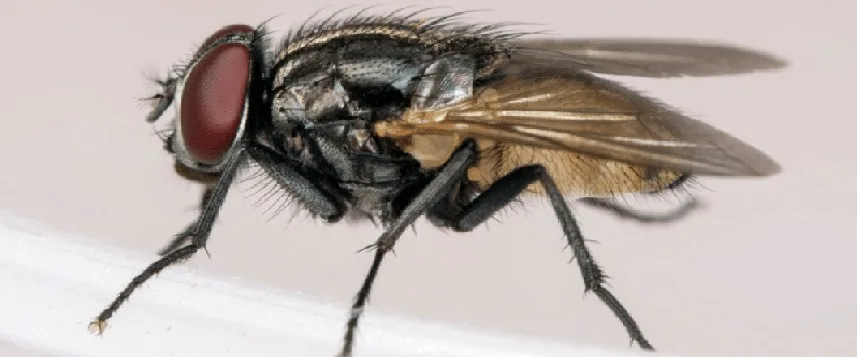
Flies have been a pest to human life for thousands of years. Flies such as the common housefly are classified as filth flies because they breed in rotten food, manure, and garbage. It's crucial to know how to eliminate house flies effectively as these pests affect human welfare because they can transmit diseases.
Despite their size, a housefly can be one of the most irritating pests for homeowners to deal with. Though we connect house flies with the summer months, they multiply all year round and may be a nuisance regardless of the season.
House flies reproduce quickly so it is crucial to remove breeding sites and any possible locations for flies to lay eggs.
How to Get Rid Of House Fliesn
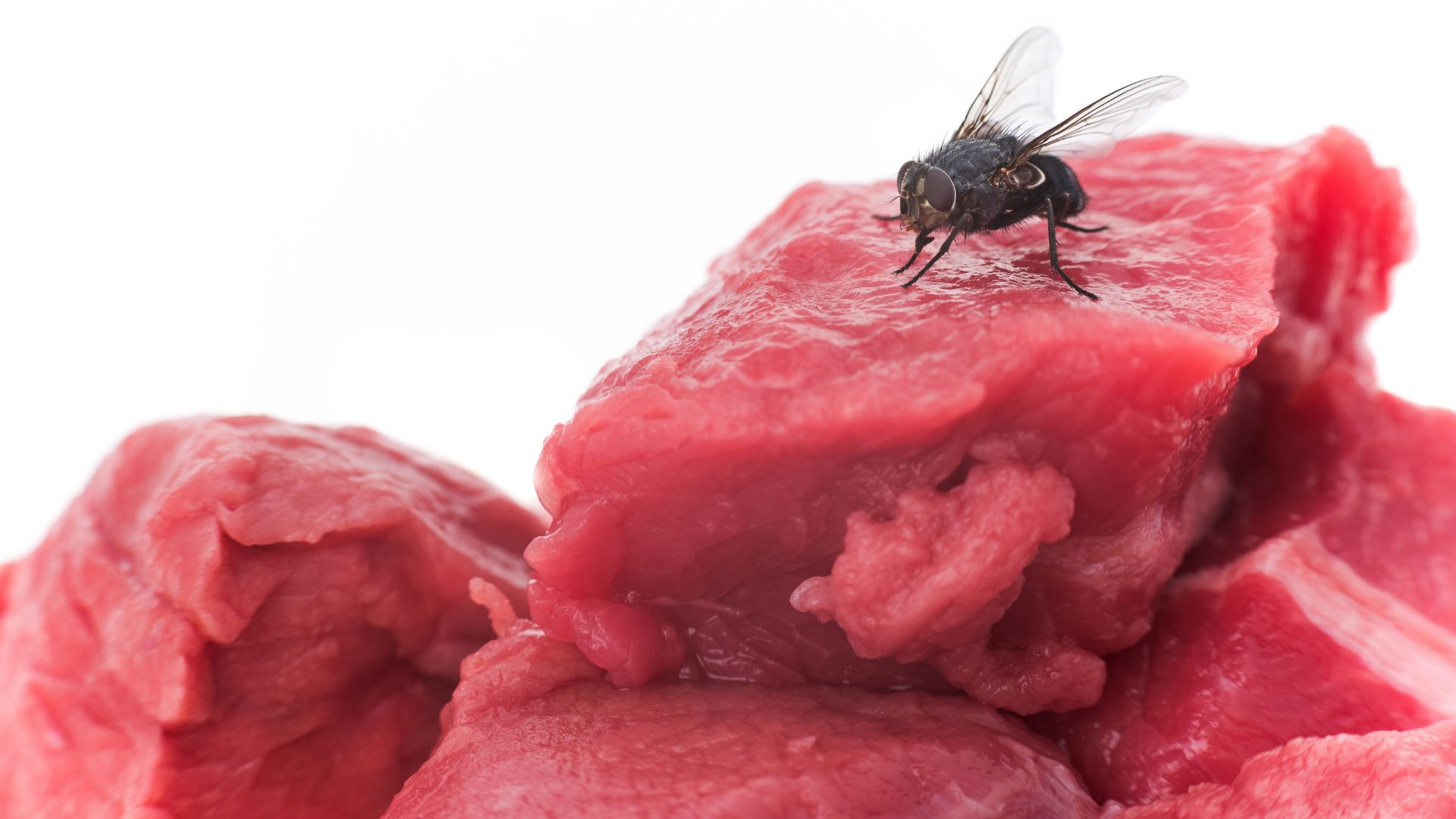
The First step to get rid of flies is exclusion and sanitation. After these measures, you can use insecticides in residual forms, aerosols, fogging materials, sticky traps, and baiting forms.
Flytraps have long been a favorite. There are many forms of fly traps, from disposable fly traps to electronic fly light traps with replaceable light bulbs and glue boards
Fly Control Product Recommendations
1. Residual Insecticide Concentrates to get rid of House Flies
flies rest on sunny surfaces in the daytime, and have a tendency to come inside or under eaves at night. These areas where the flies are resting can be sprayed with residual or contact insecticides. The flies rest on the sprayed surface and pick up enough insecticide to kill them. When spraying the surfaces, it should be wet enough to the point of runoff, but not enough to form puddles.
2. Insecticide Dusts to get rid of House Flies
You can also use a dust - D-Fense Dust. Dust this into all cracks and crevices. This dust will flow into the void areas. Pay attention to the west and south walls and caulk any openings.
3. Pyrethrin Insecticide Aerosols to Kill House Flies Instantly
For immediate results, use pyrethrins in an aerosol form and space spray. Pyrethrins work quickly but give no lasting residual. These aerosols can be used as a quick-kill insecticide, reducing flying insects' populations for short-term results.
4. Metered Aerosols + Dispensers
Metered aerosols with pyrethrin to use with automatic dispensers for inside use.
5. Fly Baits - To Kill Flies Outside
Insecticide granule fly baits can be used to aid in house-fly control. You can distribute these baits along walls, window sills, or other areas where flies congregate inside buildings and in areas outside where flies congregate. Maxforce Fly Spot Bait is a convenient form of Fly Bait to spray on a surface.
As with all fly control, sanitation is extremely critical when using fly bait. Remove trash and other breeding sources so that the fly bait will be their only feeding source. Make sure the baits are inaccessible to animals or children.
6. Fly Light Traps - To get rid of House Flies Inside the Home
These electronic fly light traps are very efficient and functional to be used inside only. They are very popular in restaurants and commercial buildings. We carry fly zappers, and fly lights with glue pads. The top recommendations for fly light traps are the Matrix II All Seasons Fly Traps.
The flytrap comes in two colors, white and black.
7. Fly Glue Traps, Window Fly Traps, and Outside Fly Traps
Attract Flies with Baited Traps
Musca-Stik Sticky Fly Trap provides an insecticide-free solution to catch flies. The Musca-Stik will attract flies with a sex pheromone called Muscalure and an orange color that visibly lures flies. This fly paper type trap is discreet and odor-free (minus the flies caught on it).
Another easy-to-use fly paper is Revenge Window Fly Traps. You can use this on windows to get rid of flies in your home.
Flies-Be-Gone Flytrap is a disposable, non-toxic flytrap, and a green solution fly trap. This fly trap may be used outside in such areas as gardens, farms, yards, trash areas, corrals, and stables. It will catch up to 20,000 flies, with a range of 50-100 yards.
Natural Methods
Apple Cider Vinegar Fly Trap
For those who are looking to avoid traditional chemical insecticides or standard fly traps to get rid of a fly problem, an apple cider vinegar and dish soap homemade trap might work as an alternative option.
To make one, place sugar water or apple cider vinegar in a bowl and mix it with a few drops of fruit-scented dish soap. Ensure the bowl is at least half full. Place plastic wrap across the top of the bowl and poke a few small holes big enough to let flies enter the trap.
The apple cider vinegar or sugar water will lure flies, but they will not be able to exit easily. Once they contact with the mixture, they will get stuck in the soap layer of the liquid and will die. This is a straightforward way to get rid of flies indoors, however, it may not be as effective as some of the other methods we've listed above.
Repel Flies Indoors with Essential Oils
One of the other natural ways to deter flies is cotton balls soaked in an essential oil like eucalyptus oil. These can be placed around the home where flies are entering. While this method can keep these pests away, it is not as effective as some of the above-listed insecticides and traps.
Identification of Houseflies
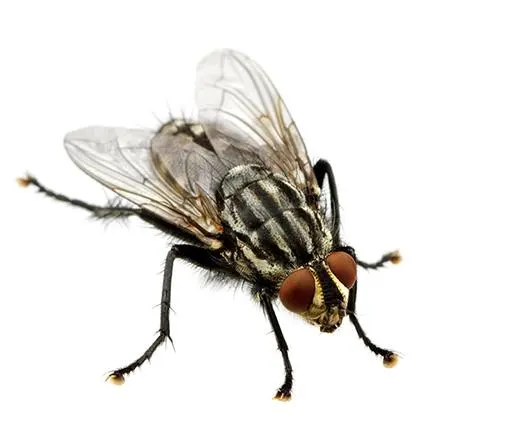
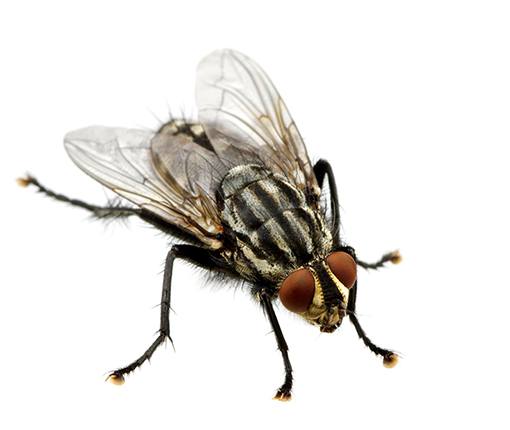
The common housefly is medium-sized (1/6 to 1/4 inch long). The common housefly is a pest all over the world. The adult has the fourth wing vein sharply angled and four length-wise dark stripes on the thorax's top. Its face has two velvety stripes, which are silver above and gold below. The female fly has a much wider space between the eyes than the male.
The house fly is often confused with the face fly, which also infests structures. The face fly is similar in appearance but a little larger and darker than the House Fly.
House Fly Biology and Habits
To get rid of house flies successfully, it pays to know more about their habits and behavior. During daylight hours, House Flies will rest on floors, walls, and ceilings indoors. Outdoors, they rest on plants, on the ground, on fence wires, garbage cans, and other similar surfaces.
At night, they will rest principally on ceilings, electric wires, outdoor lights, and dangling light cords indoors. In all situations, House Flies prefer corners and edges or thin objects such as wires and strings. Night resting places are usually near daytime food sources and are usually 5 to 15 feet off the ground.
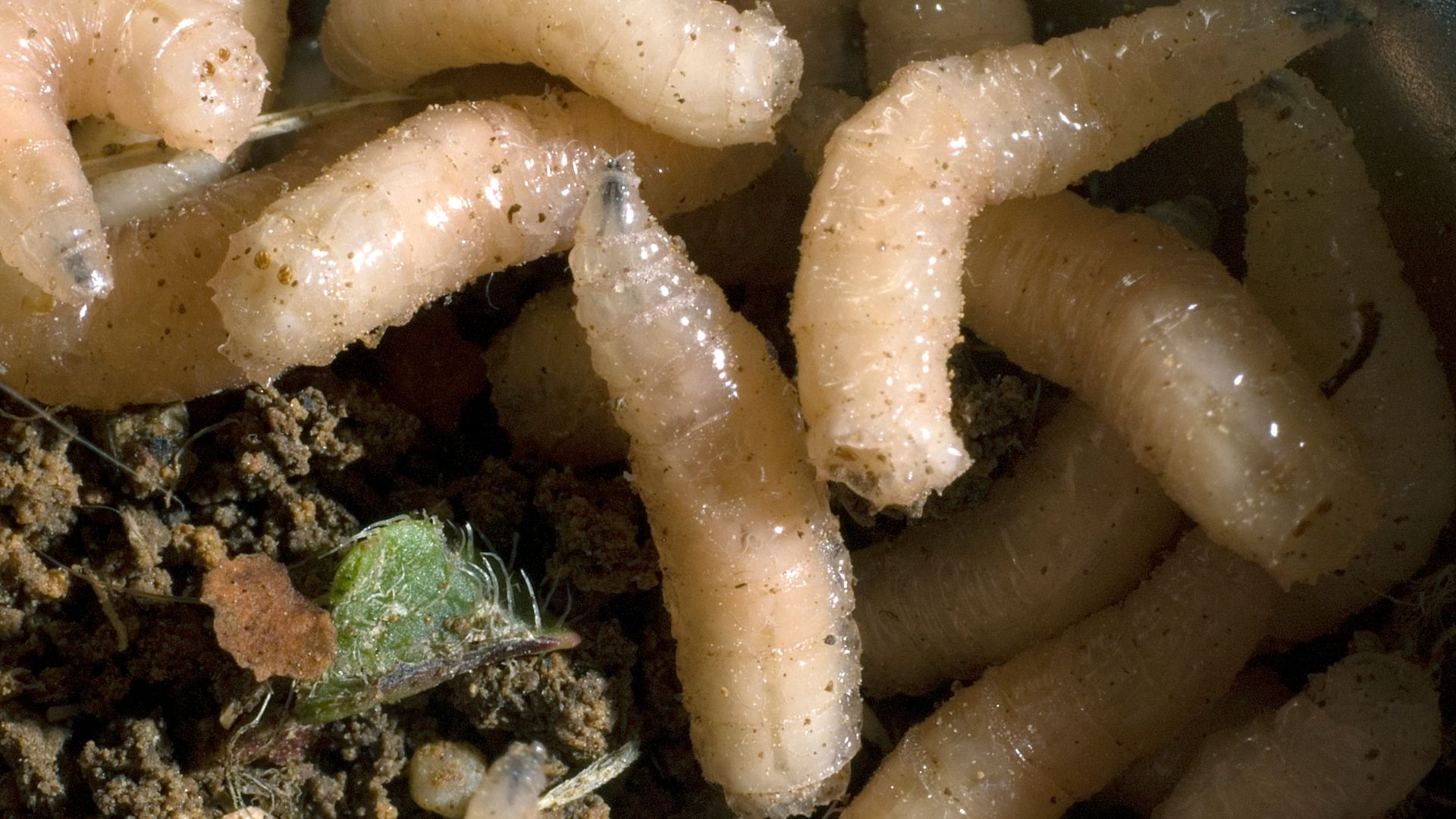
Each adult female begins laying eggs a few days after hatching, laying a total of five to six batches of 75 to 100 small white oval eggs. In warm weather, these hatch in 12 to 24 hours into cream-colored larvae, which burrow into the food material they hatched. These larvae grow and pupate in 4 to 7 days in warm weather. The mature larva contracts until its skin forms a case about 1/4 inch long. Inside this case, the true pupa forms.
When fully developed, the adult fly breaks open the end of the pupal case and emerges. It is ready to mate within a few hours after merging. The hardened larval skin, which is left behind, still exhibits most of the characteristics used in larval identification; thus, a determination can often be made based on the skin alone.
During warm weather, two or more generations of House Flies may be completed in a month. Normally the population builds up and is greatest in the early fall months. The overwintering method of most flies is not well understood, but in some areas, populations develop indoors throughout the winter.
Housefly eggs are laid in almost any warm moist material that will furnish suitable food for the growing larvae. Animal manure, human excrement, garbage, decaying vegetable material, and ground contaminated with organic materials are appropriate materials.
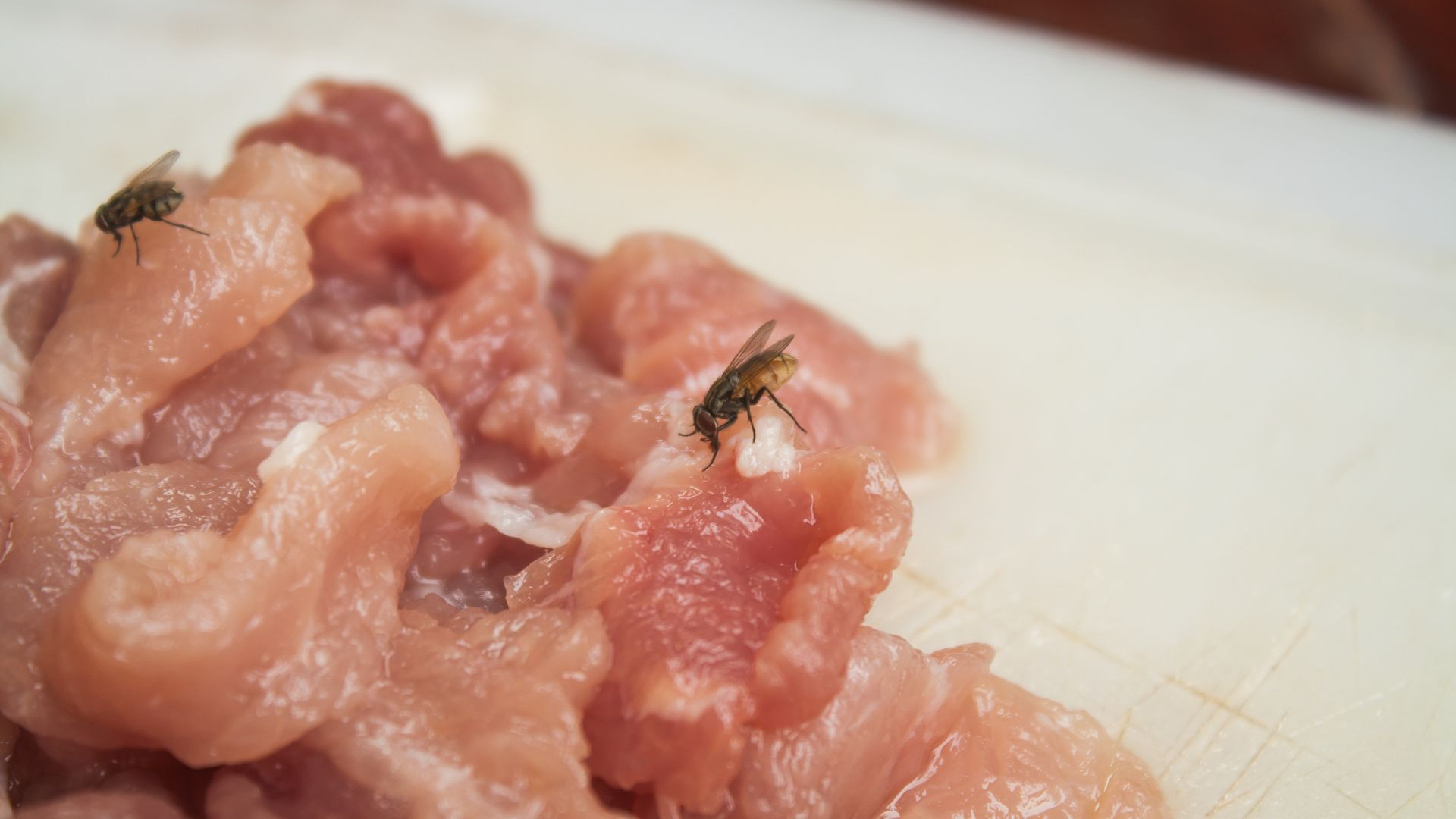
Although they are attracted to a wide variety of food materials, house flies have mouth parts that enable them to ingest only liquid materials. Solid materials are liquefied using regurgitated saliva. This liquefied food is then drawn up by the mouthparts and passed onto the digestive tract.
House Fly Inspection
House flies feed on the things that make you cringe. Common feeding grounds include pet waste, drain sludge, overripe vegetables, trash cans, and spilled liquids. To get rid of house fly infestations; maintain your litter box, pick up dog feces, frequently clean your drains, disinfect the trash can, and wipe up spills properly.
Inside Breeding Sites
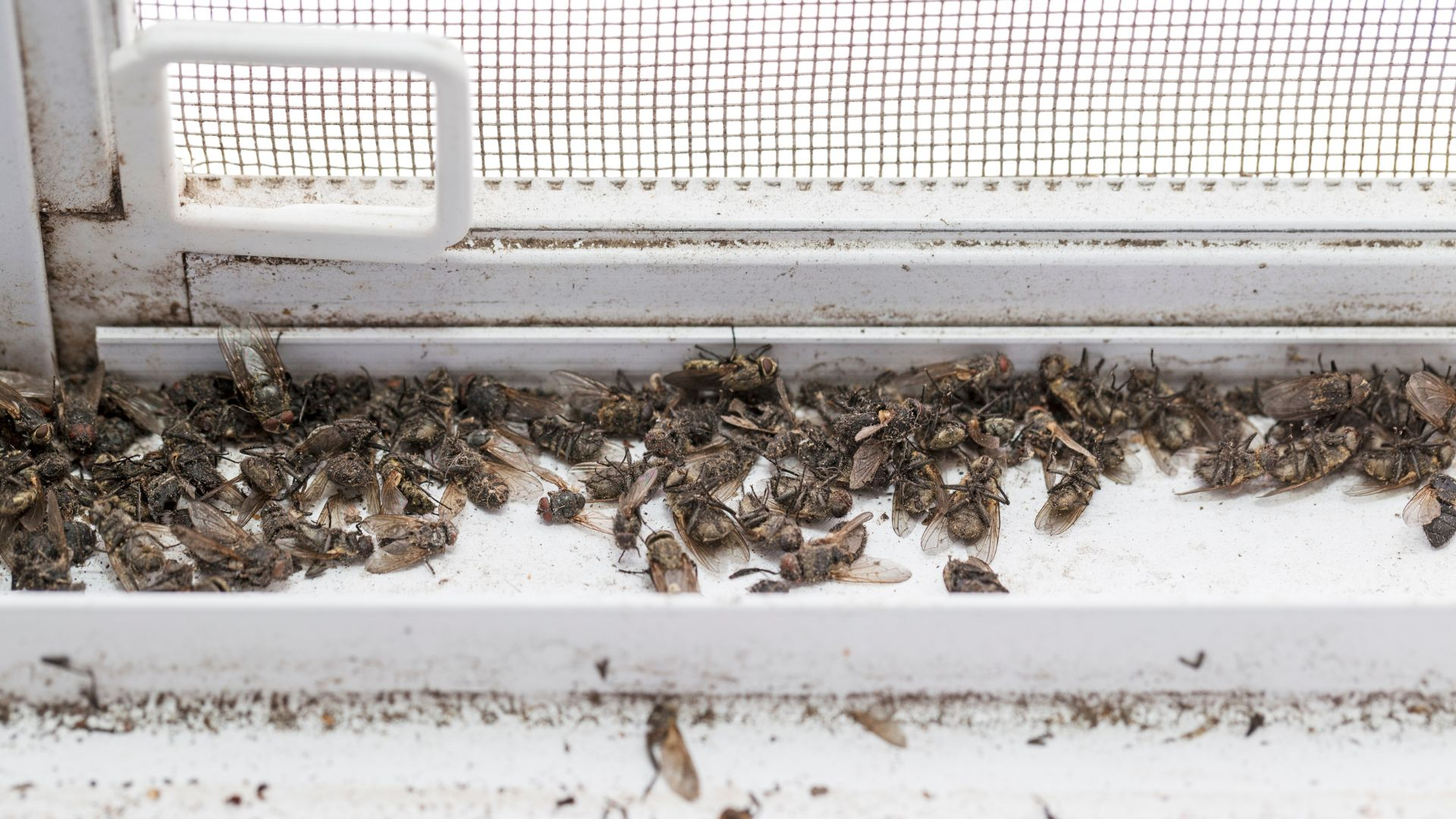
Trash cans, dirty diapers, dirty dishes, rotten foods, food debris, etc. are possible breeding areas for inspecting House Fly activity. Most of the time, when you find house flies inside, it is because they are coming inside the structures. Check cracks around windows, doors, and vents as possible entry points.
In order to successfully get rid of flies, it is crucial to determine where the breeding sources are located and how they are entering the buildings.
Outside-Breeding Sites
Flies may be found feeding and breeding in fresh manure, rotting fruits and vegetables, garbage, damp garbage, and decaying organic materials that are located outside of the structure.
Rural areas where farms are present may be more problematic for the higher number of breeding sites than areas in an urban setting. In residential areas, pet manure, which is not picked up regularly, can be a breeding source for flies.
Prevent House Flies
-
Garbage cans and dumpsters should have tight-fitting lids and be cleaned regularly.
-
Drainage will often aid control, getting rid of extra moisture.
-
Openings of buildings should be tightly screened with a screen.
Exclusion and Sanitation
Sanitation is the first measure of defense when trying to combat flies. Even though various traps and sprays are used to kill flies, it is necessary to eliminate the source to remove them.
Whenever possible, food and materials on which the flies can lay eggs must be removed or destroyed, which will isolate the egg-laying adult. Keeping a tight lid on garbage cans deter flies and deprives them of feeding on rotting meat, food scraps, and animal feces.
Killing adult flies will reduce infestation, but eliminating breeding areas is necessary for good House Fly control management.
How To Get Rid Of House Flies
Learn the best ways to get rid of and prevent house flies.

House fly control
The First step in House fly control is exclusion and sanitation. After these measures, you can use insecticides that come in residual forms, aerosols, fogging materials, and baiting forms.
Flytraps have long been a favorite. There are many forms of fly traps, from disposable fly traps to electronic fly light traps with replaceable light bulbs and glue boards
Exclusion and Sanitation-First Step
- Sanitation is the first measure of defense. Even though various traps and sprays are used to kill flies, it is necessary to eliminate the source to remove them.
- Whenever possible, food and materials on which the flies can lay eggs must be removed or destroyed, which will isolate the egg-laying adult. Killing adult flies will reduce infestation, but the elimination of breeding areas is necessary for good House Fly control management.
House Flies are part of the Filth Flies category
Key Takeaway
Fly control is best achieved with a multi-pronged approach that can consist of a combination of sanitation, exclusion, fly baits, residual sprays, and fogging.
Residual Insecticide Concentrates
House flies rest on sunny surfaces in the daytime, and have a tendency to come inside or under eaves at night. These areas where the flies are resting can be sprayed with residual or contact insecticides. The flies rest on the sprayed surface and pick up enough insecticide to kill them. When spraying the surfaces, it should be wet enough to the point of runoff, but not enough to form puddles.
Insecticide Dusts
You can also use a dust D-Fense Dust. Dust this into all cracks and crevices. This dust will flow into the void areas. Pay attention to the west and south walls and caulk any openings.
Pyrethrin Insecticide Aerosols
For immediate results, use pyrethrins in an aerosol form and space spray. Pyrethrins work quickly but give no lasting residual. These aerosols can be used as a quick kill insecticide, reducing flying insects' populations for short term results.
Metered Aerosols + Dispensers
Metered aerosols with pyrethrin to use with automatic dispensers for inside use.
Get Rid Of Flies - Fly Control Product Recommendations
Fly Baits - Outside Use
Insecticide granule fly baits such as can be used to aid in house-fly control. You can distribute these baits along walls, window sills, or other areas where flies congregate inside buildings and in areas outside where flies congregate. Maxforce Fly Spot Bait is a convenient form of Maxforce Fly Bait, where you are may spray in on a surface.
As with all fly control, sanitation is extremely critical when using a fly bait. Remove trash and other breeding sources so that the fly bait will be their only feeding source. Make sure the baits are inaccessible to animals or children.
Fly Light Traps - Inside Use
These electronic fly light traps are very efficient and functional to be used inside only. They are very popular in restaurants and commercial buildings. We carry fly zappers, fly lights with glue pads. The top recommendations for fly light traps are the Matrix II All Seasons Fly Traps.
Fly Glue Traps, Window Fly Traps, and Outside Fly Traps
Musca-Stik Sticky Fly Trap provides an insecticide-free solution to catch flies. The Musca-Stik attracts flies with a sex pheromone called Muscalure and an orange color that visibly lures flies. It is discreet and odor-free (minus the flies caught on it ).
Revenge Window Fly Traps fly paper to use on windows to catch flies.
Flies-Be-Gone Flytrap is a disposable, non-toxic flytrap, and a green solution fly trap. This fly trap may be used outside in such areas as gardens, farms, yards, trash areas, corrals and stables. It will catch up to 20,000 flies, with a range of 50-100 yards.
House Fly Identification and Inspection
Inspection for Houseflies
Inside:
Trash cans, dirty diapers, rotten foods, etc. are possible breeding areas for inspecting House Fly activity.
Outside-Breeding Sites:
House Flies may be found feeding and breeding in fresh manure, rotting fruits and vegetables, garbage, damp garbage, and decaying organic materials that are located outside of the structure.
Most of the time, when you find house flies inside, it is because they are coming inside the structures. Check cracks around windows, doors, and vents as possible entry points. It is crucial to determine where the breeding sources are located and how they are entering the buildings. Rural areas where farms are present may be more problematic for the higher number of breeding sites than areas in an urban setting. In residential areas, pet manure, which is not picked up regularly, can be a breeding source for house flies.
Identification of Houseflies
The common housefly is medium-sized (1/6 to 1/4 inch long. The common housefly is a pest all over the world. The adult has the fourth wing vein sharply angled and four length-wise dark stripes on the thorax's top. Its face has two velvety stripes, which are silver above and gold below. The female fly has a much wider space between the eyes than the male. The house fly is often confused with the face fly, which also infests structures. The face fly is similar in appearance but a little larger and darker than the House Fly.
House Fly Biology and Habits
During daylight hours, House Flies will rest on floors, walls, and ceilings indoors. Outdoors they will rest on plants, on the ground, on fence wires, garbage cans, and other similar surfaces. At night, they will rest principally on ceilings, electric wires, and dangling light cords indoors. In all situations, House Flies prefer corners and edges or thin objects such as wires and strings. Night resting places are usually near daytime food sources and are usually 5 to 15 feet off the ground.
Each adult female begins laying eggs a few days after hatching, laying a total of five to six batches of 75 to 100 small white oval eggs. In warm weather, these hatch in 12 to 24 hours into cream-colored larvae, which burrow into the food material they hatched. These larvae grow and pupate in 4 to 7 days in warm weather. The mature larva contracts until its skin forms a case about 1/4 inch long. Inside this case, the true pupa forms. When fully developed, the adult fly breaks open the end of the pupal case and emerges. It is ready to mate within a few hours after merging. The hardened larval skin, which is left behind, still exhibits most of the characteristics used in larval identification; thus, a determination can often be made based on the skin alone.
During warm weather, two or more generations of House Flies may be completed in a month. Normally the population builds up and is greatest in the early fall months. The overwintering method is not well understood, but in some areas, populations develop indoors throughout the winter.
Housefly eggs are laid in almost any warm moist material that will furnish suitable food for the growing larvae. Animal manure, human excrement, garbage, decaying vegetable material, and ground contaminated with organic materials are appropriate materials. Although they are attracted to a wide variety of food materials, house flies have mouth parts that enable them to ingest only liquid materials. Solid materials are liquefied using regurgitated saliva. This liquefied food is then drawn up by the mouthparts and passed onto the digestive tract.
Prevent House Flies
- Garbage cans and dumpsters should have tight-fitting lids and be cleaned regularly.
- Drainage will often aid control, getting rid of extra moisture.
- Openings of buildings should be tightly screened with a screen.
Fogging Insecticides and Professional Foggers
If you find that fogging inside a building would be necessary, we also carry fogging material and professional fogger equipment.
Written by our resident pest control expert Ken Martin.