




Trapping Raccoons
How to trap and catch a raccoon safely & effectively

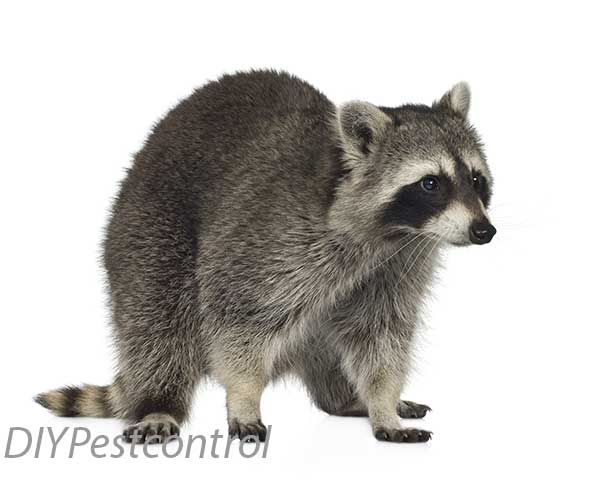
The adult raccoon varies in size from 24-46 inches in total length and weighs 12 - 25 pounds. They are easy to recognize because of their ringed tail and black mask. The raccoon has a long fine coat and a bushy tail with 4 to 7 prominent dark rings. Raccoons are members of the bear family and are very strong. They are generally not aggressive towards humans but will defend itself if it feels threatened, or if you are near, it's young.
Biology & Habits
Raccoon Habits
Raccoons live near streams, lakes, and marshes. Raccoons prefer swampy areas or woods near water and are absent from very high elevations and very arid regions. They are found throughout the United States except for large parts of some Western states; they are omnivorous.
They usually prefer hollow trees or logs, rock crevices, and abandoned animal burrows for dens. They will also use your home structures for dens, including chimneys, attics, and hollow areas beneath porches and buildings. Raccoons can make a nuisance of themselves, raiding the garbage and tearing up lawns.
Raccoons and Rabies
Raccoons can contract several diseases, some of which can be transmitted to humans or pets. Rabies is the most significant concern. The eastern states have the highest incidence of rabies in animals. Although very few US residents get rabies from these animals, people should be careful with ones that act abnormally.
Raccoons mate from January to March and have a 63 day gestation period. A litter commonly contains one to seven young. In some areas, raccoons become dormant in winter.
The family group is sociable, remaining together for about one year. Although raccoons may live 14 years or more in captivity, they seldom survive beyond seven years in the wild. Their diet consists primarily of insects, crayfish, mussels, fish, and frogs during the Spring and early Summer. During the late summer and fall, fruits, berries, nuts, and grains are also eaten.
Raccoons are most active at night and are not commonly spotted. If you see one during the day, it could be a possibility that they are sick or injured. Do not approach a raccoon at any time, especially one spotted during the daytime.
Prevention & Control
The best method to remove raccoons around buildings is to trap them with a trap such as Havahart Raccoon Traps. Crisp bacon, fish, fresh vegetables, cat food, chicken parts and entrails, corn, sardines are suggested baits. Bait should be changed every two days for optimal results.
Set traps as close to the den as possible where damage occurs, e.g., at corners of gardens, breaks in stone walls, or along visible animal trails. Set multiple traps in many different locations.
Since these animals are active at night, check traps every morning, preferably twice a day. Check traps often to spot and release non-target animals.
When releasing the raccoon, do it far away from human dwellings. The release site for these large animals should be over ten miles away. Some states are a protected species, so check with your game and wildlife department before trapping and releasing them.
One of the most common household entry points for raccoons is down the fireplace chimney. Therefore, to prevent raccoons from entering houses, roofs and chimneys should be well-maintained. Raccoons can easily access rooftops by climbing trees, downspouts, vines, or a trellis near the house. The access to chimneys can be prevented by fastening a commercial spark arrestor cap of sheet metal and hardware cloth over the top of the chimney or fastening heavy screen wire securely over the opening.
Limiting access to the roof by trimming trees and shrubs may also be helpful.
How To Trap Raccoons
More Raccoon Control Tips
- Replace loose shingles, repair any holes near the eaves of the roof.
- Garbage cans fitted with tight-fitting lids will help keep out most raccoons. However, wiring the cans shut may be necessary if they can be tipped over. When you exclude or remove raccoons from buildings during the spring and summer, there may be the possibility of the young present.
- Do not completely exclude until you are sure all have left, so you don't seal them inside. Sealing them inside might cause a painful death for the animal and may cause extensive damage to the building.
- If the young are old enough to climb out, cap the chimney after the raccoons have left for the night.
- Sometimes, a female raccoon can be encouraged to move her young to another location by using repellents, such as ammonia or mothballs, combined with light and noise from a portable radio placed near the damper. After they temporarily leave, you can properly exclude the entry points.
- Mothballs or crystals are relatively ineffective in an open-air situation.
- Electric fences may help to keep raccoons out of gardens. The wires must be spaced close together and close to the ground to be effective.
FAQs
Any hole you repair, raccoons can tear back open. The mothballs will not help the situation at all. The raccoon needs to be caught and relocated per your state regulations. Check your state statutes for the relocation of fur-bearing animals.
Live traps are the best choice. I would secure the bait to the trap so the raccoons would have to work to remove it. This should ensure a catch.
Trapping is the best method. They most definitely will make a thumping noise from the roof area. A light will deter these raccoons for a little while, but they quickly become accustomed to it and ignore it.