



How to Get Rid of Rats
A comprehensive guide on how to get rid of rats. We teach you how to identify rats, prevent infestations, and find the best rat control treatments for your home or yard.
Rat control is never an easy task, but thankfully, there are effective methods to get rid of rats in your home.
December 16th, 2023
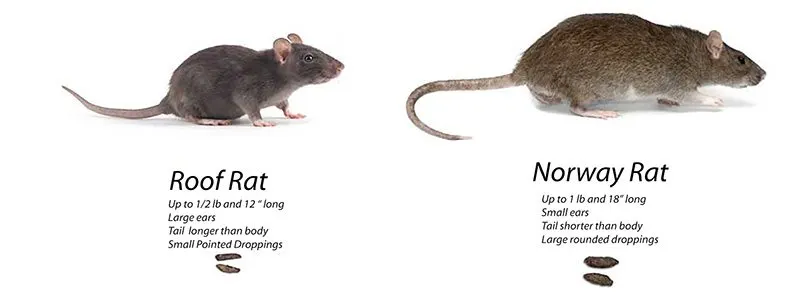
The first step in rat control is to identify the species you are dealing with. The second is a thorough inspection of your home, this inspection will help determine where to place the rat traps and rat bait.
Once you have done these steps, there are two main treatment options when you are dealing with rats: poison them or trap them.
We have various rat traps and rat baits to choose from, so you can find the perfect solution for your specific needs.Check out the guide below for an in-depth look at how to get rid of rats.
How to Get Rid of Rats
Follow the Rat Control Treatment Steps below to get rid of rats in your home, office, or yard.
1. The First Step for Rat Control is Sanitation, Inspection, and Exclusion
The first step is a complete inspection with proper sanitation and exclusion procedures. The next step is choosing between using rodent baits, rat traps, or a combination of both methods.
Inspection is an essential first step in getting rid of rats. Once you know the location of the rats, you can set traps or place rat bait.
Exclusion is an important rodent control technique. It will eliminate the rats by making it difficult for them to enter the home or structure. Rats are easier to exclude than mice because rats are typically larger.
Mice can enter an opening as small as 3/8" wide. All openings greater than 1/4" should be sealed to exclude mice. For rats, all openings greater than 1/2 inches should be sealed.
Please also read the section on Sanitation, as it is an important consideration in rodent control.
Rats (especially Roof rats) are wary of new objects, new foods, or environmental changes. They are always exploring surroundings and notice changes, and are suspicious by nature.
Their suspicious nature is why traps and bait stations may be avoided for a day or two. They approach new food or objects with caution.
Within a rat colony, they may be a few extra cautious rats that manage to avoid traps or eating rodent baits.
2. The Second Step for Rat Control is Trapping
The most effective method to get rid of rats is trapping them and placing rodent baits.
Reducing Rat Populations By Trapping
There are various advantages to trapping over baiting. It gives folks who don't want to kill rats or use rodenticides another option. Trapping can produce immediate results if the rat populations are modest enough.
Dead Rats
Trapping also ensures that the dead rats can be disposed of before their stink becomes an issue in your home. Your local rat exterminator can likely assist you if you are uncomfortable dealing with dead rats and other deceased rodents.
Dead Rats
Trapping also ensures that the dead rats can be disposed of before their stink becomes an issue in your home. Your local rat exterminator can likely assist you if you are uncomfortable dealing with dead rats and other deceased rodents.
Types of Rat Traps
The three top traps we recommend for getting rid of a rat infestation in your home include:
-
Snap Traps Get Rid of Rats Quickly
Snap traps have been used for a long time since they are cheap and effective at getting rid of a rat infestation. They kill rats instantly.
-
Live Traps Get rid Of Rats Without Killing Them
An effective alternative to snap traps includes live traps. When you catch a rodent, release it at least a couple of miles away from where you caught it.
-
Use Glue Traps to Get Rid of Rats
When rodents escape other traps, glue traps can be quite successful. They do kill rats, but are sometimes considered inhumane.
Key Takeaway
Trapping is more labor-intensive but it is the best way to avoid odor problems associated with rodent baits.
3. How to Get Rid Of Rats With Rodent Bait
Rodenticides are rat poison baits and should be used in areas where domestic animals and children can't access them.
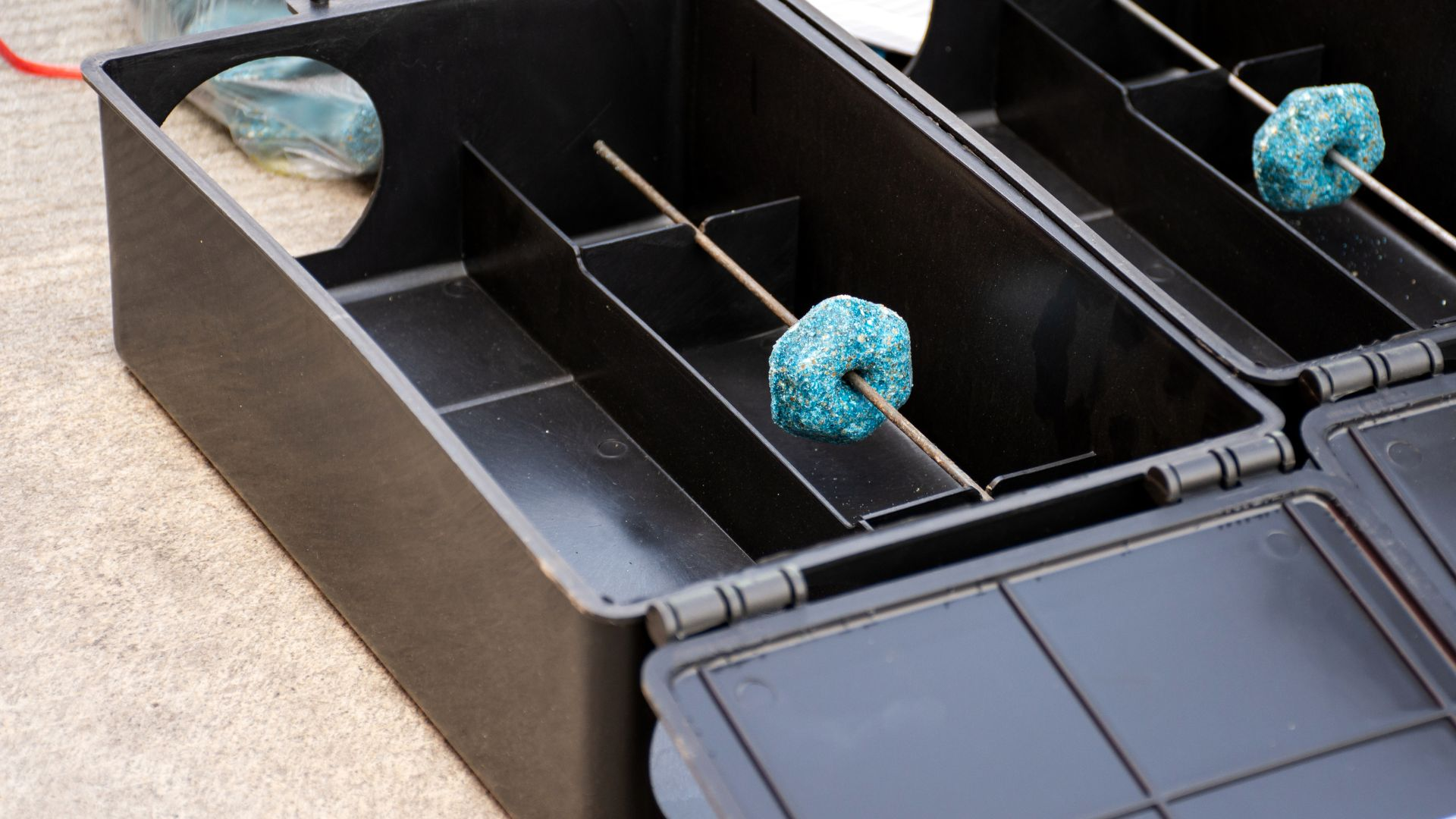
For protection against accidental poisoning, use tamper-resistant bait stations that hold the bait in place and keep children and pets out.
Rodent bait stations are also available to keep the rat poison bait out of the reach of youngsters and pets. It is a national law and guideline to use tamper-resistant bait stations in areas where children or pets can access them.
We carry single-feed bait (which requires just one feeding for a lethal dose.) Rat Baits come in pellets, meal, and block forms.
If you disturb rats' original habitats during baiting, they may flee to another location. Continue with cleanliness practices, food source removal, and harborage removal after baiting has begun to ensure that new rodents from neighboring locations are not drawn to your place.
Key Takeaway
Rodent Baits are less labor-intensive but may result in an odor problem.
There is no rodenticide that makes them die outside or controls their odor.
Identify
The most common rats in the USA are Norway Rats and Roof Rats. A quick look at the habits of both will help you understand how to inspect your home and get rid of rat infestations.
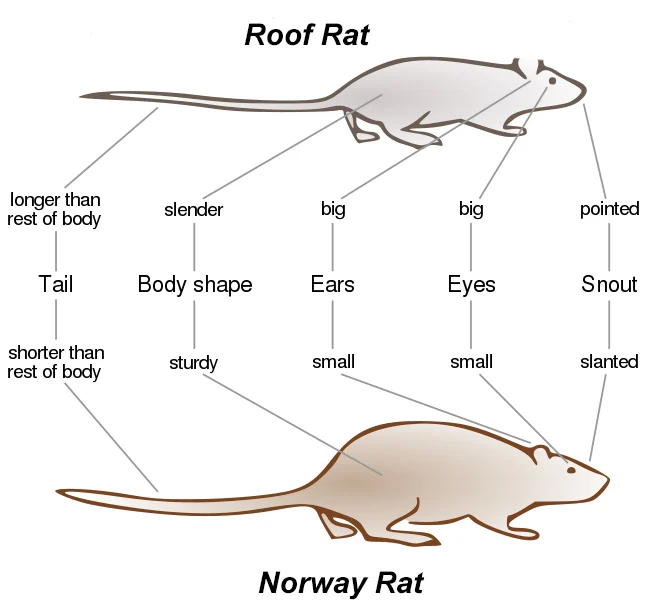
Norway rats are larger than the smaller and sleeker Roof Rats. Roof rats have bigger ears and longer tails than Norway rats. Also, the roof rat has a pointed nose, and they are excellent climbers.
Roof Rats inhabit attics, upper stories, and exterior vegetation. Norway rats occupy lower portions of the building and the ground.
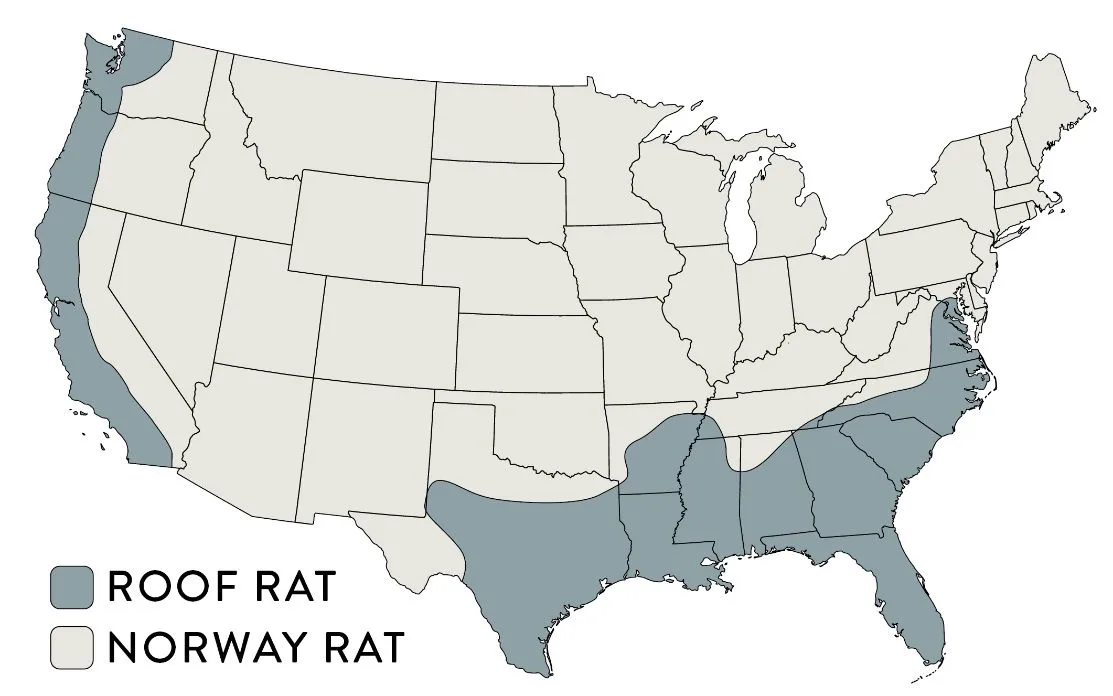
Roof Rats are predominantly found in coastal areas. Generally, Roof rats stay within 100 miles of the coast and in more temperate climates since they do not do well in cold temperatures.
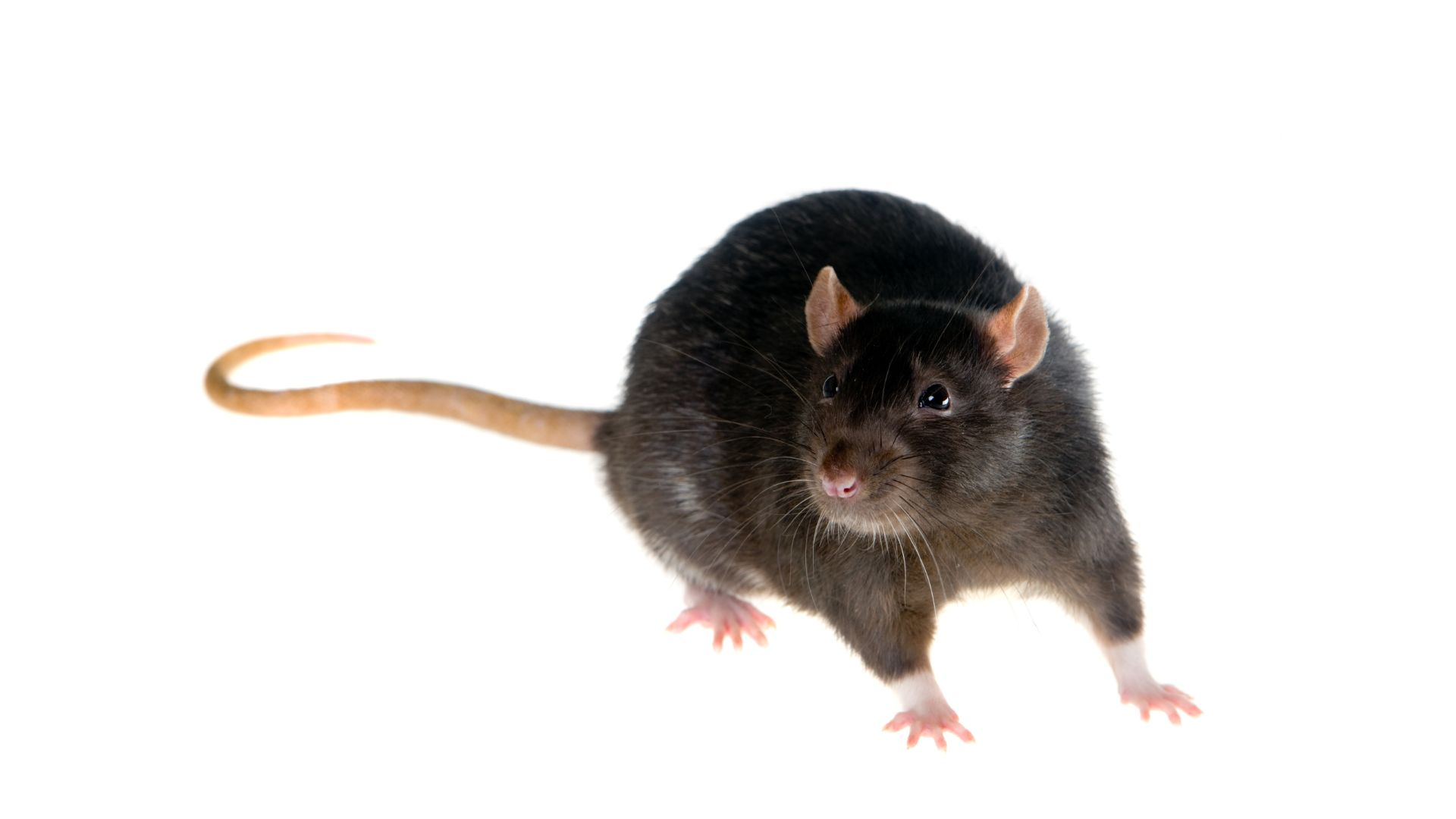
Roof Rats (Black rat, ship rat)
-
Sleek, agile
-
Belly color: gray, white
-
The fur is grayish-black to solid black
-
Weighs 5-9oz
-
The tail extends to the snout when pulled, fine-scaled and uniformly dark
-
Head is pointed
-
Ears are long enough to reach eyes if folded over.
-
Lives above ground and are good climbers but may expand nests to underground burrows
-
Read More: Roof Rats
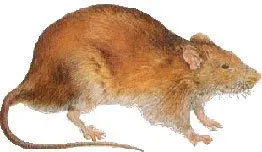
Norway Rats (Sewer rats, brown rats, house rats, wharf rats, water rats, gray rats)
-
Large and robust
-
The belly is mostly gray
-
Weighs 12-16 oz
-
Body fur is coarse; reddish to grayish brown
-
Nose is blunt
-
The ears are small and do not reach the eyes when pulled down
-
Lives in colonies, often ground-dwelling (burrows along foundational walls), may nest inside (usually on lower floors).
-
Read More: Norway Rats
How to Know if You Have a Rat Infestation
To successfully get rid of rats, it is crucial that you know how to detect an infestation in your home:
1. Strange Odors and Sounds in Your Home
Rats produce a strong ammonia odor, and a rat infestation will have a distinct smell. They're also extremely noisy, squeaking, scratching, and rustling their way through your house.
Either of these signs indicates that rats are present in the structure.
2. Rat Droppings
As rats walk through your home, they leave droppings behind. Along main rat paths, you may detect small, dark pellet-shaped droppings.
3. Oil Marks on your Walls
Rats will move along the walls of your home because they have weak eyesight. They leave oil marks and smudges on the walls as they travel these courses.
4. Look for Rat Footprints
If you believe you have a rat problem, examine a dusty, seldom-used corner of your house. Rats frequently leave foot and tail prints in the areas they visit.
A great test to see if you have a rat infestation is to sprinkle a fine coating of baking soda on the floor and look for fresh rat footprints the next morning.
5. Rat Damage
The final inspection step is to look for rat damage in your home. Rats leave a trail of destruction behind them. They may gnaw on furniture, storage containers, paper, and pet food, as well as devour food left out on the counter.
It is crucial to get rid of rat infestations as soon as you notice any of the signs listed above. Ideally, it's a good idea to learn how to get rid of rats before an issue arises.
Prevent Rats
As a professional pest control company, we can tell you that preventing rats is essential to keeping a safe, sanitary home.
The first step to prevent rats is to address any existing rats quickly. Getting rid of a few rats is more manageable than tackling an entire pack.
Rat traps and poisons are effective methods for eliminating rats, but it's important to handle them cautiously. Dead rats should be disposed of promptly, as they can attract more rats or other pests.
Additionally, it's crucial to identify and eliminate potential food sources for rats. This includes properly storing food in airtight containers and immediately cleaning up any spills or crumbs.
By taking these preventative measures, you can be one step ahead of any potential rat problem and keep your property free of these frustrating, filthy rodents.
Extra Rat Facts
-
Rats are excellent swimmers and can swim up to 1/2 mile in open water and go through sewer lines.
-
Norway rats prefer food with high carbohydrate and protein content, although they eat almost any type of food.
-
Roof rats prefer to eat grains, fruit, sweets, peanut butter, and nut butter but will eat what is available in their environment.
-
They are "picky" eaters, due to their natural suspicion of new items in their environment. Roof rats do not readily accept meat or fish.
-
Rats tend to be cautious with new objects. Since they are cautious of new elements in their environment, it may help to set unset rat traps.
-
Rats cannot survive long without water, while mice may survive longer.
-
Norway rats are not often found indoors, they typically nest outside in burrows. A young Norway rat may be mistaken for a mouse. The young Norway rat has a rounder body than the slender house mouse.
-
Roof rats like habitats in attics and trees. They may enter your home on a power line or a tree. Like mice, the roof rat is an excellent climber. You may be more likely to encounter a serious rat infestation with roof rats.
-
The larger Norway rat is not as agile as the roof rat or mouse. Since roof rats are often found in the upper levels, they may be undetected for a while.
-
A Norway or roof rat will move within a diameter of 98 to 164 ft. If conditions are unstable or there are changes such as new buildings, they may expand the diameter.
-
Roof rats and Norway rats are both opportunistic and will eat almost anything that is available. That is why baits work well during rodent extermination.