




Ultimate Rodent Control Guide
A comprehensive guide to DIY professional rodent control, rodent removal, and proper rodent extermination methods.
December 16th, 2023
How to Get Rid of Rodents
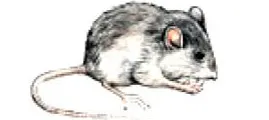
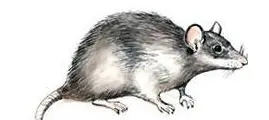
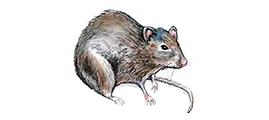
The three most common rodents you will encounter during a rodent pest control program are the House Mouse, the Norway Rat, and the Roof Rat.
These rodents carry diseases and eat and contaminate our food. They co-exist with humans and closely associate with human habitats for food, water, and shelter. If the living conditions for the rodents (food, water, and shelter), are right, they can multiply quickly.
Mice
Roof Rats
Norway Rats
Other types of rodents, such as the white-footed mouse, deer mouse, harvest mouse, pocket mouse, or pack rats may enter buildings, particularly if they are near wooded areas or fields.
In your rodent control program, the essential first step is to eliminate or control rodents' food, water, and shelter provisions. After this, use the methods of trapping and baiting that we have listed below in order to get rid of the rodent population.
How to Get Rid Of Rodents
A successful rodent control program includes a combination of baiting and trapping for the highest rate of success. However, if the rodent population is large, begin with a high-quality rodent bait, in order to quickly knock down a population and prevent rapid growth.
Consider integrating any rodent control program with exclusion techniques, a general cleanup, and removal of their hiding places (harboring areas.)
The most effective methods to eliminate and control rodent populations are the use of traps and rodent baits.
All rodents (but especially Roof Rats) are wary of new foods or new objects in their environment, so you have to be patient when trapping or baiting them. They are always exploring their surroundings and will quickly notice even small changes. They are naturally suspicious. This suspicious nature may cause them to initially avoid new traps or bait placements.
Once they are accustomed to seeing the new food or new objects in their environment, they will begin to explore them. Once you place bait or a trap in a given area, don't move it for 3 to 5 days. Give them time to accept it.
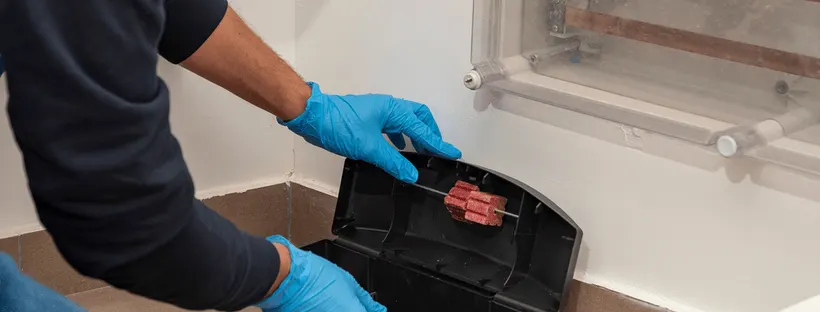
1. Rodent Control Method: Using Rodent Baits with Rodent Bait Stations
When baiting initially, try not to disturb their original habitats or they may run to another area. After baiting has begun, continue with sanitation procedures, food source removal, and harborage removal to ensure additional rodents from nearby areas are not attracted to your location. We also carry rodent bait stations to hold the bait to ensure that children and pets can not access the poison bait.
Rodenticides are poison baits used to kill rodents and should be used in areas where domestic animals and children can't access them. For protection against accidental poisoning, use tamper-resistant bait stations that hold the bait in place. They allow rodents to access the bait but keep children, pets, and non-target wildlife out.
A rat-sized bait station will allow mice to enter, but a mouse-sized bait station will be too small for rats to enter. Some of these rodent bait stations also hold the T Rex Rat Snap Traps or Mini Rex Mice Bait Stations.
Single Feed Rodent Bait
We carry single-feed baits (they require just one feeding for a lethal dose) and multiple-feed rodenticides(they require several feedings for a lethal dose.) Rat Baits come in several forms:
-
Pellet Baits
-
Meal Baits
-
Block Baits
Block forms of bait are the most widely used, and for good reasons.
-
They are very attractive to rodents.
-
Their wax formulation resists molding and keeps them fresh, especially when using them outdoors.
-
They have a hole through the center that allows for them to be secured inside of bait stations, making them the safest and most secure form of rodent bait.
See our Rat Baiting Tips page for more detailed information on rodent control.
Shop Here: Rodenticides and Bait Stations
Key Takeaway
Even if you have no pets or small children, it is a good idea to use bait stations.
Studies show that rats and mice consume rodent baits more readily when they are placed in bait stations.
2. Rodent Control Method: Using Rodent Traps
Trapping does have some advantages over baiting. It provides an alternative for those who do not want to use rodenticides. If the rodent population is small enough, trapping can yield quick results. Trapping also ensures that you can dispose of the dead rodents before their odor becomes a problem in your home. If you are uncomfortable dealing with dead rodents, your local rodent exterminator can likely help.
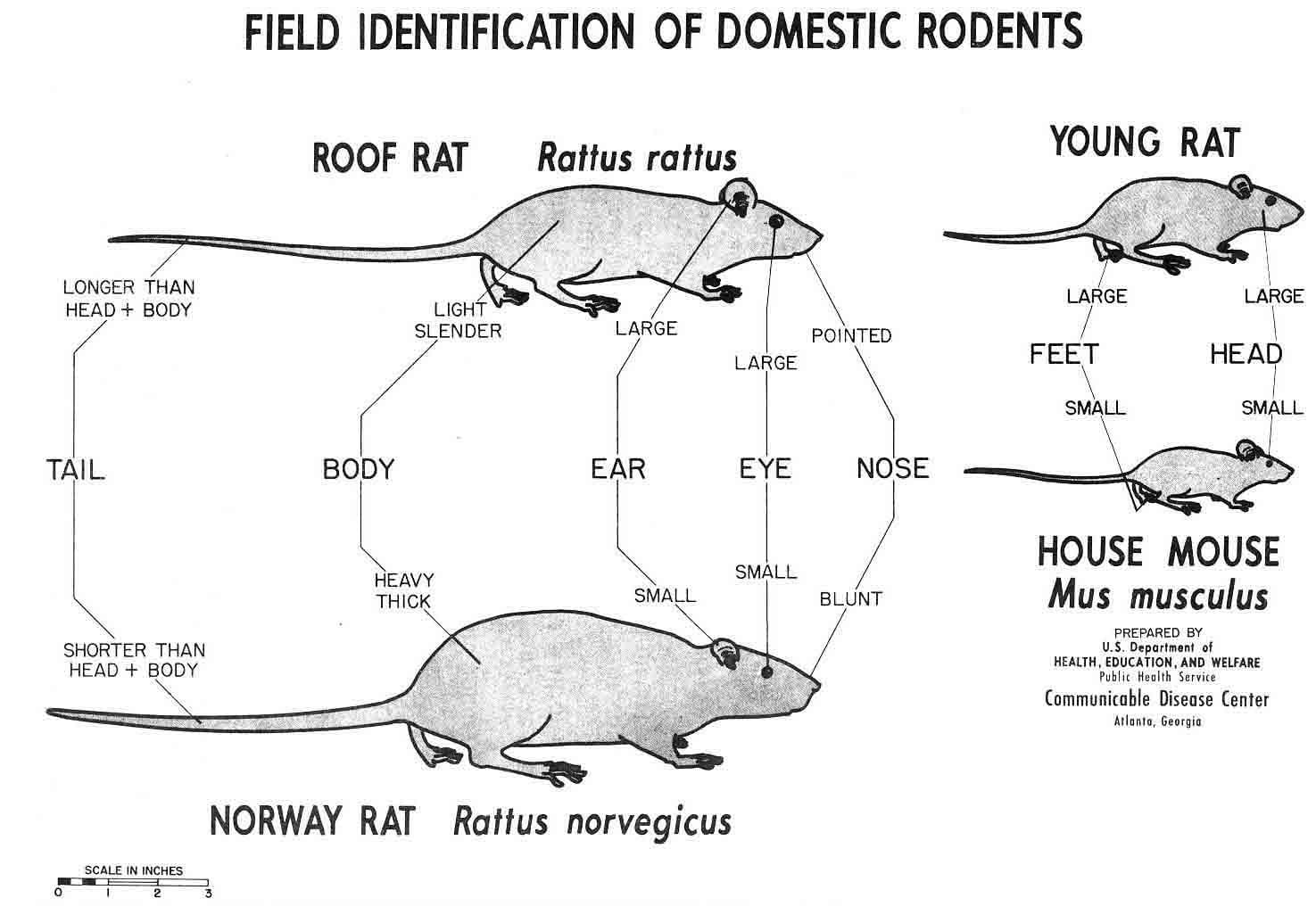
Rodent size and feature comparison
Most people that begin trapping during a rodent control program, do not set out enough traps. Be sure to place enough traps in the area where you have noticed signs of a mouse or rat infestation. If you have mice, place the traps a couple of feet apart in the area of activity. If you have rats, place the traps about 15-20 feet apart.
Choose the Correct Size Trap
Choosing the right size trap is critical for rodent control. Inspect for signs of rat activity or mice activity.
If you have rats and select mice traps, the traps would be too small (the trapping mechanism would not be sufficient for a rat). If you have mice and choose rat traps, the traps would be too large (not sensitive enough to trigger the trap) for the body weight of a mouse.
One of the ways to tell the difference between rats and mice is their feces. If you have mice, you will discover a lot of droppings. They look like small beads.
Types of Traps
Once you have made the decision to trap rodents, you can choose from traps like:
-
Snap Traps
-
Live Traps
-
Glue Traps
Snap traps have been around for a very long time because they are inexpensive and they work.
Live traps are a good alternative to other lethal traps. Once a rodent is caught you can release them at least a couple of miles from where you caught them.
Glue traps can be very effective when rodents are avoiding other traps.
See our page on Trapping Rats for more detailed information.
Shop Here: Rat Traps
Do I Have Mice or Rats? Tips for Identification
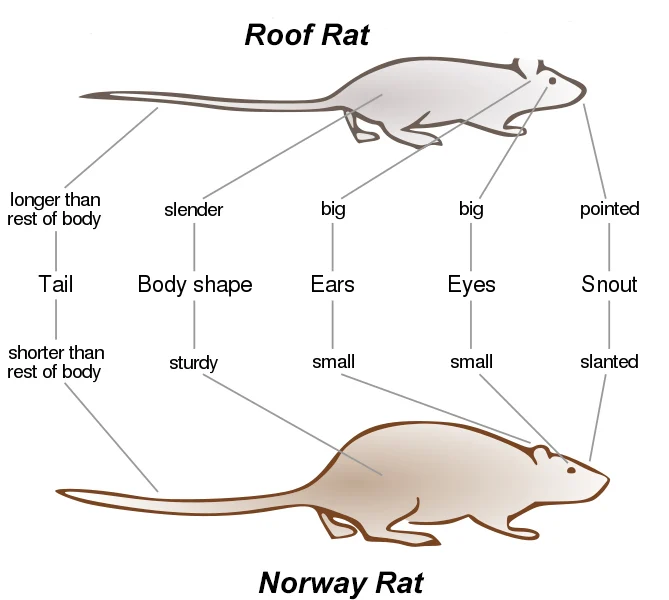
Rats are larger than mice, with correspondingly larger heads and feet. Rats also have coarser fur than mice. Mice are curious, while the rat is cautious. You will find Norway rats in burrows and the lower levels of a structure, while Roof rats prefer the upper levels of structures.
Inspecting the rodent activity is an essential step in rodent control. Use a flashlight to inspect their particular activity. Look for rodent droppings, rodent tracks, gnawing damage, burrows, runways, urine stains, rub/grease marks, and any other signs of dead or live rodents. They also make screeching sounds, digging, or scratching sounds.
If an infestation is well established, you may be able to detect a rodent odor. To successfully get rid of mice and rats, it is critical to determine which type of rodent you have in your home.
For example, choosing the correct size trap is critical in rodent extermination. A mouse trap would be too small for a rat, and a rat trap may not be sensitive enough to catch mice.
Understanding the unique differences between mice and rats will increase your success in your rodent control efforts. Rats will have a tendency to shy away from the Bromethalin products, such as Fastrac and Top Gun rodent baits, while the mice will readily accept them.
Commensal Rodent Identification
-
The house mouse is about 1/2 - 1 oz in size and is slender. The ears are large, with their tail as long as the head and body together. The mouse's tail is seminaked.
-
Mouse fur is usually dark gray on the back and light gray on the belly, but there are other color variations.
-
The Roof rat is 5-9 oz and is sleek, and the Norway rat is larger and more robust and is between 7-18 oz in weight.
-
Roof rats are often mistaken for house mice. Young roof rats have larger heads and feet in comparison to their bodies; their bodies are slender. They have a very long tail (longer than head and body combined.) A house mouse's head and feet are proportionally smaller than their bodies.
Rodent Droppings
-
Mice excrement droppings average 1/4" and have a rod-like shape. Roof rats have a rod or spindle shape dropping but have an average length of 1/2 inch. The excrement dropping of the larger Norway rat is an average of 3/4 inch and is shaped more like a capsule.
Excrement (rodent droppings) varies between the Norway Rat, Roof Rat, and House Mouse.
-
The table Of Commensal Rodents is a chart to summarize the differences between rats and mice. This difference becomes critical if you choose to trap as a rodent control option. You need to choose the proper size.
-
FAQs on Rodent Control and Extermination
Since rodents are dependent on their environment, it may be difficult to describe typical behavior and habits. But there are generalizations of their habits for practical purposes of rodent control around and inside buildings. For further information, go to Rats, or Mice.
Differences Between a Rat and a Mouse
Rat Facts
-
Rats are excellent swimmers and can swim up to 1/2 mile in open water and go through sewer lines.
-
Norway rats prefer food with high carbohydrate and protein content, although they eat almost any type of food.
-
Roof rats prefer to eat grains, fruit, sweets, and peanut butter and nut butter but will eat what is available in their environment. They are "picky" eaters, due to their natural suspicion of new items in their environment. Roof rats do not readily accept meat or fish.
-
Rats tend to be cautious with new objects. Since they are cautious of new elements in their environment, it pays to set unset rat traps.
-
Rats cannot survive a long time without water, while mice may survive longer.
-
Norway rats are not often found indoors, they typically nest outside in burrows. A young Norway rat may be mistaken for a mouse. The young Norway rat has a rounder body than the slender house mouse.
-
Roof rats like habitats in attics and trees. They may enter your home on a power line or a tree. Like mice, the roof rat is an excellent climber. The larger Norway rat is not as agile as the roof rat or mouse. Since roof rats are often found in the upper levels, they may be undetected for a while.
-
A Norway or roof rat will move within a diameter of 98 to 164 ft. If conditions are unstable or there are changes, such as new buildings, they may expand the diameter.
-
Roof rats and Norway rats are both opportunistic and will eat almost anything that is available. That is why baits work well during rodent extermination.
Mice Facts
Mice can fit into some of the smallest openings in your home, so sealing entry points is crucial.
-
Mice will nibble a little at a time. If food is plentiful, they may make 20-30 visits to their food source at night. They feed heaviest at dawn or dusk.
-
Mice prefer grains and seeds but may eat meats, peanut butter, and sweet items.
-
Mice are curious about new objects, so it is easier to place new traps or bait placements in their habitat or running space.
-
Mice are easier to trap than rats.
-
A mouse may spend its entire life in a building in an urban/city setting.
-
In rural/suburban settings, they can be found both inside and outside among foundations, shrubs, below structures, or in-ground burrows.
-
Once inside, they may establish their nests close to a food source. Common inside nesting sites include appliances, in walls, closets, cabinet and ceiling voids, and storage boxes. Mice make their nests with soft material that has been chewed up from paper, insulation, furniture stuffing, etc.
-
Mice constantly explore their territory. They investigate any changes due to their curiosity. Their average territory ranges between 10-30 feet, but mice readily adapt to their environment.
What Mice and Rats Have In Common
When you notice a rodent infestation, you may be tempted to think rats and mice are virtually the same, with the exception of their size. While there are a lot of differences between a rat and a mouse, they also share many similarities.
Mice and rats reproduce rapidly with significant activity at night.
Rats and mice have poor eyesight. When placing our rodent bait, place the bait where they travel and live. Do not randomly make rodent or trap placements when implementing a rodent control program.
Generally speaking, place rat baits out every 25 feet, and mice bait out every 10 feet, as the rat's territory is larger than the mouse's.
Rodents have a strong sense of touch from their whiskers. They explore with these whiskers. They prefer a stationary object on one side of them as they travel, so they commonly travel along walls.
When trapping rodents, place rat traps spaced 15-20 feet apart. Place mice traps every 3-5 feet.
Both rats and mice can squeeze through tiny openings; 1/4 inch for mice and 1/2 inch for rats. If they can not get around an object, they may chew through it. They can gnaw through cinderblock, lead sheathing, aluminum siding, and glass.
Rodent Damage and Disease
Mice and Rats can be found not only in our homes, but in supermarkets, restaurants, warehouses, food processing facilities, livestock facilities, and farm fields. They also cause damage to our buildings with their burrowing and gnawing activity.
Rodents will gnaw through many types of materials in order to reach a location including lead sheathing, cinder block, aluminum siding, and some concrete. Rodents are suspected of causing fires by gnawing on electrical wiring.
Through the ages, rodents have been the cause of some tremendous plagues and diseases. In years past, rodents were responsible for the spread of many diseases. Today, due to increased sanitation and effective rodent and insect control programs, the threat of most diseases from rodents is not as critical.
The common House mouse is the most common health pest, due to allergens that it spreads causing asthma and allergic rhinitis. The mouse carries a protein in its blood that can trigger these reactions in susceptible people.
In the southwestern part of the United States, the hantaviruses have been active. Most of these cases have been attributed to the cotton rat and white-foot mice, although the Norway rat has been associated with various hantavirus strains. Rodents also contaminate a huge amount of the world's food supply by their urine and feces.
Rodent Control: Inspection, Exclusion, and Sanitation
Inspection is an essential first step in getting rid of rodents. Once you know the location of the rodents, the type of rodents you have, and how they are entering the structure, then you can proceed to exclude them.
Exclusion is an important rodent control technique. It will help to eliminate the rats by making it difficult for them to enter the home or structure. Roof Rats are easier to exclude than mice because they are larger.
How to Control Rodents:
-
All openings greater than 1/2" should be sealed
-
Likely access points for rodents are where utility lines come into walls and openings around air conditioning, drainpipes, and vents.
-
Look for broken basement windows, warped doors, and unscreened vents as possible points of entry.
-
All spaces beneath doors should be checked if the opening is too large. Door sweeps can be installed to close the gap.
-
Roofs should be checked to see that shingles are intact and the sheathing is not damaged. Also, check to see that screening is in place and secure on attic ventilators, soffit vents, and louvered gable vents.
-
Look for a gap between the fascia and the roof deck often called a "construction gap." It is a common entry point for roof rats and can be sealed with "drip-edge" metal flashing, which is available in most hardware stores.
See our Rodent Exclusion page for more in-depth information.

Top Sanitation Tips for Rodent Control
In rodent control, sanitation is more than just cleaning. It also involves removing debris and maintenance of the landscape so that rodents don't have easy access to suitable nesting sites adjacent to structures on your property.
-
All rubbish piles and refuse should be eliminated.
-
Landscaped areas need to be appropriately maintained with firewood piles elevated off the ground.
-
All garbage containers and dumpsters should have tight-fitting covers.
-
Spilled food from bird feeders should be picked up regularly
-
Pet food should be left out no longer than necessary.
-
Roof Rats require food, water, and shelter. Look around your property to see what can be addressed to deny them any of those needs. When there is a heavy rat infestation, it is usually indicative of sanitation issues
See our Rodent Sanitation page for more in-depth information on rodent infestations and mouse control.
DIY Pest Control Is Here to Help With Rat Control and Other Rodent Control Measures
Here at DIY Pest Control, we offer rodent traps and bait for both mice control and for rat control programs. Contact us if you have any questions, our team of pest control professional rodent exterminators is happy to help.